AISI 4130 Steel, water quenched
Product Code : STI-CSTI-1463-CU
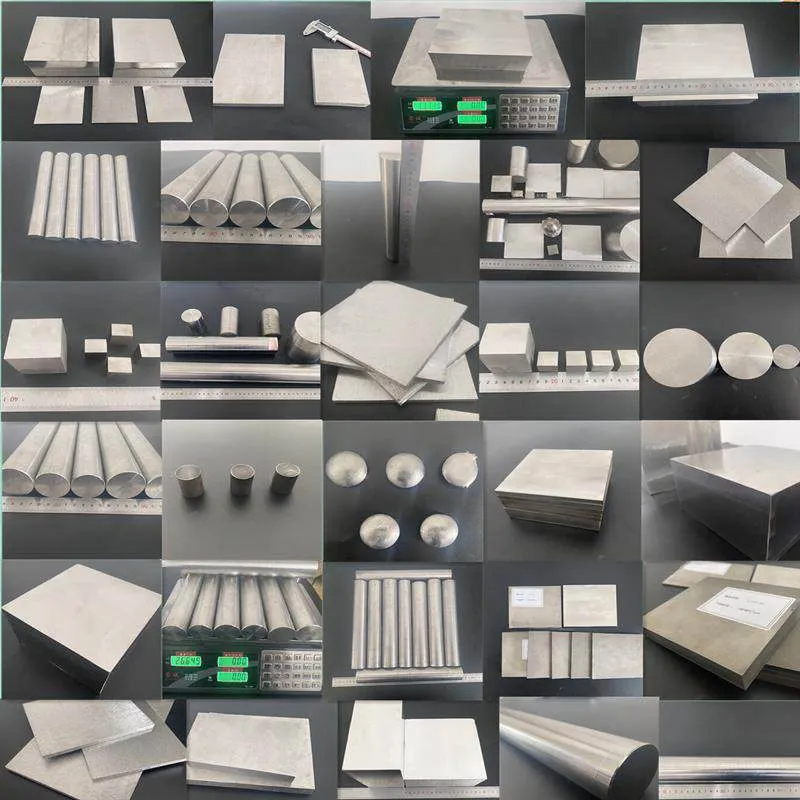
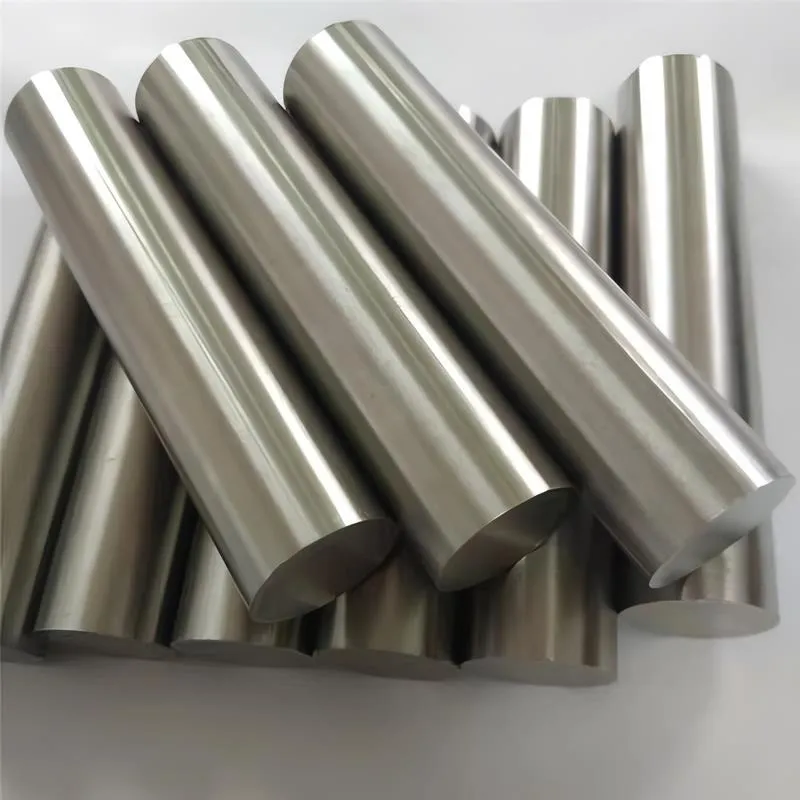
We provide AISI 4130 Steel, water quenched 855°C (1570°F), 595°C (1100°F) temper, 100 mm (4 in.) round is available in Bar (Round bar, Flat bar), Ribbon, Wire, Rods, Tube,Seamless Tube,Pipe, Ingots, Plate, Sheet, Strip and Forging Stock.,Purity, chemical composition, size, etc. can all be customized to meet specific requirements.
Please contact us if you need customized services. We will contact you with the price and availability in 24 hours.
AISI 4130 Steel, water quenched 855°C (1570°F), 595°C (1100°F) temper, 100 mm (4 in.) round Product Information
-:-
For detailed product information, please contact sales.
-:
AISI 4130 Steel, water quenched 855°C (1570°F), 595°C (1100°F) temper, 100 mm (4 in.) round Synonyms
-:-
For detailed product information, please contact sales.
-:
AISI 4130 Steel, water quenched 855°C (1570°F), 595°C (1100°F) temper, 100 mm (4 in.) round Product Information
-:-
For detailed product information, please contact sales.
-:
# **Product Technical Data: AISI 4130 Steel, Water Quenched & Tempered Condition**
## **Product Overview**
**AISI 4130 Steel in the Water Quenched and Tempered Condition** represents this versatile chromium-molybdenum alloy in its **highest strength state** for large-section applications. The specific heat treatment of **water quenching from 855°C (1570°F) followed by tempering at 595°C (1100°F)** produces a tempered martensite microstructure optimized for components requiring exceptional strength-to-weight ratio, good toughness, and fatigue resistance. This data sheet specifically addresses the properties achieved in a **100 mm (4 inch) diameter round** section, demonstrating the material's capability to develop high-strength properties even in substantial cross-sections.
---
## **1. Chemical Composition**
The chemical composition conforms to AISI 4130 standards and is critical to achieving the specified properties through water quenching:
| Element | Content Range (%) | Role in Water Quenching Response |
|---------|-------------------|----------------------------------|
| **Carbon (C)** | 0.28 - 0.33 | Enables martensite formation; primary strength contributor |
| **Manganese (Mn)** | 0.40 - 0.60 | Enhances hardenability; critical for through-hardening 100mm sections |
| **Phosphorus (P)** | ≤ 0.035 | Residual element (strictly controlled) |
| **Sulfur (S)** | ≤ 0.040 | Residual element |
| **Silicon (Si)** | 0.15 - 0.35 | Deoxidizer; provides solid solution strengthening |
| **Chromium (Cr)** | 0.80 - 1.10 | Significant hardenability enhancer; enables water quenching of large sections |
| **Molybdenum (Mo)** | 0.15 - 0.25 | Improves hardenability depth; reduces temper embrittlement risk |
**Critical Note for Water Quenching:** The combined effect of Cr and Mo is essential for achieving martensitic transformation in the center of a 100 mm round during water quenching, minimizing the risk of pearlite or bainite formation.
---
## **2. Heat Treatment Process Details**
### **Specific Parameters for 100 mm (4") Round:**
1. **Austenitizing:**
- Temperature: 855°C (1570°F) ± 10°C
- Time: Minimum 2 hours (20 minutes per inch plus 30 minutes)
- Atmosphere: Protective to prevent decarburization
2. **Quenching:**
- Medium: Water at 20-30°C (68-86°F)
- Agitation: Vigorous to break vapor blanket
- Transfer time: < 10 seconds from furnace to quench
- **Critical Achievement:** Through-hardening to martensite in 100 mm section
3. **Tempering:**
- Temperature: 595°C (1100°F) ± 15°C
- Time: 2 hours minimum (plus 1 hour per inch over 2 inches)
- Cooling: Air cool after tempering
### **Microstructural Result:**
- **Core:** Tempered martensite with fine carbides
- **Surface:** Fully martensitic structure tempered to specified hardness
- **Uniformity:** Minimal microstructural gradient from surface to center
- **Prior Austenite Grain Size:** ASTM 6-8 (fine grain due to 855°C austenitizing)
---
## **3. Physical & Mechanical Properties**
### **Physical Properties (After Heat Treatment):**
| Property | Value | Conditions |
|----------|-------|------------|
| **Density** | 7.85 g/cm³ | Unchanged by heat treatment |
| **Modulus of Elasticity** | 205 GPa (29.7 × 10⁶ psi) | |
| **Shear Modulus** | 80 GPa | |
| **Thermal Conductivity** | 41.5 W/m·K | At 100°C |
| **Coefficient of Thermal Expansion** | 12.2 × 10⁻⁶/°C | 20-400°C |
### **Mechanical Properties - 100 mm (4") Round:**
#### **Typical Properties at Center of Section:**
| Property | Value Range | Test Standard |
|----------|-------------|---------------|
| **Hardness** | 28-32 HRC | ASTM E18 |
| **Tensile Strength** | 860-930 MPa (125-135 ksi) | ASTM A370 |
| **Yield Strength (0.2% offset)** | 760-830 MPa (110-120 ksi) | ASTM A370 |
| **Elongation (in 50mm)** | 18-22% | ASTM A370 |
| **Reduction of Area** | 50-58% | ASTM A370 |
| **Charpy V-Notch Impact @ 21°C** | 40-54 J (30-40 ft-lb) | ASTM E23 |
| **Charpy V-Notch Impact @ -40°C** | 27-40 J (20-30 ft-lb) | ASTM E23 |
| **Fatigue Strength (Rotating Bending)** | 380-415 MPa (55-60 ksi) | 10⁷ cycles |
| **Fracture Toughness (K₁C)** | 70-85 MPa√m | |
#### **Property Gradient Across 100 mm Diameter:**
| Location from Surface | Hardness (HRC) | Yield Strength (MPa) | Impact Energy (J) |
|-----------------------|----------------|----------------------|-------------------|
| **Surface (0 mm)** | 30-33 | 790-850 | 35-45 |
| **1/4 Radius (12.5 mm)** | 29-32 | 780-840 | 38-48 |
| **Center (50 mm)** | 28-31 | 760-830 | 40-54 |
| **Variation** | ±2 HRC | ±35 MPa | Surface: slightly lower |
*Note: The minimal gradient demonstrates excellent through-hardening capability.*
---
## **4. Special Characteristics for 100 mm Section**
### **Hardenability Performance:**
- **Ideal Critical Diameter (D₁):** ~125 mm in water quench
- **90% Martensite Depth:** > 50 mm radius in water quench
- **Quench Severity (H-value):** ~1.0 for water with agitation
### **Comparison with Other Quench Media:**
| Quench Medium | Surface Hardness | Center Hardness (100mm) | Distortion Risk |
|---------------|------------------|-------------------------|-----------------|
| **Water** | 52-55 HRC (as-quenched) | 45-48 HRC (as-quenched) | High |
| **Oil** | 48-52 HRC | 35-40 HRC | Medium |
| **Polymer** | 45-50 HRC | 30-35 HRC | Low |
### **Tempering Response at 595°C:**
- **Primary Tempering Stage:** Completion of martensite decomposition
- **Secondary Hardening:** Minor contribution from alloy carbides
- **Tempered Martensite Embrittlement Range Avoided:** 350-575°C range bypassed
---
## **5. Manufacturing & Processing Considerations**
### **Machinability in Hardened State:**
- **Condition:** Difficult - requires carbide tools
- **Hardness for Machining:** 28-32 HRC is machinable with proper tools
- **Recommended:** Perform heavy machining in annealed/normalized state, final heat treat, then finish machine
### **Weldability Considerations:**
- **Preheat Required:** 200-250°C (400-480°F) for 100 mm thickness
- **Post-Weld Heat Treatment:** Mandatory - re-temper at 595°C minimum
- **Welding Processes:** SMAW with low-hydrogen electrodes recommended
- **Caution:** HAZ softening will occur; must be re-austenitized and quenched for full properties
### **Grinding & Finishing:**
- **Grindability:** Good with proper wheels and cooling
- **Surface Finish:** Can achieve 0.4 μm Ra (16 μin) with precision grinding
- **Stress Relieving:** May be required after heavy grinding to prevent re-tempering effects
---
## **6. Product Applications**
### **Oil & Gas Industry (Primary Application):**
- **Drill Collars:** 100-200 mm diameter sections requiring high strength and stiffness
- **Tool Joints:** Connection points between drill pipe sections
- **Heavy Wall Tubing:** For high-pressure applications
- **Example:** API Spec 7-1 drill collar material
### **Aerospace & Defense:**
- **Landing Gear Components:** High-strength forgings and machined parts
- **Rotor Hubs:** Helicopter dynamic components
- **Missile Bodies:** Structural sections requiring strength/weight optimization
- **Specific:** Sikorsky Black Hawk rotor components
### **Power Generation:**
- **Turbine Shafts:** For steam and gas turbines
- **Generator Rotors:** Large diameter sections
- **High-Pressure Bolting:** 75-150 mm diameter studs and bolts
### **Heavy Equipment:**
- **Axle Shafts:** For mining and construction equipment
- **Hydraulic Cylinder Rods:** Large diameter, high-pressure applications
- **Crankshafts:** For large diesel engines
### **Marine & Offshore:**
- **Propeller Shafts:** Intermediate sizes
- **Subsea Connectors:** High-pressure applications
- **Mooring Components:** For offshore platforms
---
## **7. International Standards & Specifications**
### **Base Material Standards:**
| Standard | Designation | Title | Notes |
|----------|-------------|-------|-------|
| **SAE/AISI** | 4130 | Chemical Composition | Primary standard |
| **ASTM** | A29/A29M | Alloy Steel Bars | Grade 4130 |
| **ASTM** | A519 | Seamless Mechanical Tubing | |
| **AMS** | 6350/6351 | Sheet, Strip, Plate | Aerospace |
| **API** | Spec 7-1 | Drill Collar Specification | Oil industry |
### **Heat Treatment Standards:**
- **AMS 2759/1:** Pyrometry for heat treatment
- **ASTM A988:** Heat treatment of steel for pressure components
- **NADCAP:** Aerospace heat treatment accreditation
### **Global Equivalents:**
| Region | Standard | Equivalent | Notes |
|--------|----------|------------|-------|
| **Europe** | EN 10083-3 | 25CrMo4 (1.7218) | Similar, verify hardenability |
| **Germany** | DIN 17200 | 25CrMo4 | |
| **Japan** | JIS G4105 | SCM430 | Slightly lower Cr |
| **China** | GB/T 3077 | 30CrMo | |
| **UK** | BS 970 | 708A25 | |
### **Industry Specifications for 100 mm Rounds:**
- **ASTM A434:** Quenched and tempered alloy steel bars
- **SAE J1268:** Hardenability bands (4130H for better control)
- **Customer Specifications:** Often include additional requirements for large sections
---
## **8. Quality Control & Testing**
### **Mandatory Testing for 100 mm Rounds:**
1. **Chemical Analysis:** Ladle and product analysis
2. **Hardness Survey:** Surface and mid-radius measurements
3. **Tensile Testing:** From center of cross-section
4. **Charpy Impact:** At center location at specified temperatures
5. **Macroetch Test:** To evaluate quenching uniformity
### **Non-Destructive Testing:**
- **Ultrasonic Testing:** 100% volume examination per ASTM A388
- **Magnetic Particle:** Surface examination per ASTM E709
- **Dye Penetrant:** For surface defects
### **Microstructural Requirements:**
- **Tempered Martensite:** 100% at center (no ferrite or pearlite)
- **Grain Size:** ASTM 5 or finer
- **Inclusion Rating:** ASTM E45, maximum A3, B2, C1, D1
---
## **9. Advantages & Limitations**
### **Advantages of Water Quenched 4130:**
1. **Highest Strength:** Maximum strength achievable in 100 mm sections
2. **Through-Hardening:** Minimal property gradient in thick sections
3. **Fatigue Resistance:** Excellent for dynamically loaded components
4. **Cost-Effective:** Water quenching is economical vs. oil for large sections
5. **Weight Savings:** High strength allows reduced section sizes
### **Limitations & Considerations:**
1. **Distortion Risk:** High with water quenching - must be addressed in design
2. **Quench Cracking:** Potential risk requires careful process control
3. **Residual Stress:** Higher than oil quenching - may require stress relieving
4. **Machining Difficulty:** Hardened state requires appropriate tooling
5. **Size Limitation:** Maximum effective diameter ~150 mm for full hardening
---
## **10. Design Guidelines**
### **For 100 mm Rounds:**
- **Minimum Bend Radius:** 3× diameter in heat treated condition
- **Threading:** Use fine threads (UNF rather than UNC)
- **Stress Concentrations:** Generous fillet radii (minimum 3 mm)
- **Section Changes:** Gradual transitions to avoid quenching stresses
### **Safety Factors:**
- **Static Loading:** 2.0-2.5 typical
- **Fatigue Loading:** 3.0-4.0 depending on surface finish
- **Impact Loading:** 4.0-5.0 for critical applications
---
## **11. Supply Information**
### **Available Forms for This Heat Treatment:**
- **Rounds:** 75-150 mm diameter (3-6 inches)
- **Forgings:** Custom shapes up to 500 kg
- **Billets:** For subsequent machining
- **Condition:** Rough machined + heat treated + finish machined options
### **Lead Times & Quantities:**
- **Standard:** 8-12 weeks for heat treated material
- **Minimum Order:** Typically 500 kg for custom heat treatment
- **Certification:** Full traceability with heat treat charts
---
**Important Notice:** The properties specified are achievable with proper heat treatment of material meeting AISI 4130 chemical requirements. Actual results may vary based on specific melt chemistry, prior processing history, and exact heat treatment parameters. For critical applications, prototype testing is recommended. Always consult with metallurgical and design engineering professionals when specifying this material condition for safety-critical components.
**Document Reference:** Q&T-4130-100mm-Rev2.4
**Compliance:** This data sheet is informative. For contractual purposes, refer to applicable material and heat treatment specifications.
-:-
For detailed product information, please contact sales.
-:
AISI 4130 Steel, water quenched 855°C (1570°F), 595°C (1100°F) temper, 100 mm (4 in.) round Specification
Dimensions
Size:
Diameter 20-1000 mm Length <6195 mm
Size:We can customized as required
Standard:
Per your request or drawing
We can customized as required
Properties(Theoretical)
Chemical Composition
-:-
For detailed product information, please contact sales.
-:
AISI 4130 Steel, water quenched 855°C (1570°F), 595°C (1100°F) temper, 100 mm (4 in.) round Properties
-:-
For detailed product information, please contact sales.
-:
Applications of AISI 4130 Steel, water quenched 855°C (1570°F), 595°C (1100°F) temper, 100 mm (4 in.) round
-:-
For detailed product information, please contact sales.
-:
Chemical Identifiers AISI 4130 Steel, water quenched 855°C (1570°F), 595°C (1100°F) temper, 100 mm (4 in.) round
-:-
For detailed product information, please contact sales.
-:
Packing of AISI 4130 Steel, water quenched 855°C (1570°F), 595°C (1100°F) temper, 100 mm (4 in.) round
-:-
For detailed product information, please contact sales.
-:
Standard Packing:
-:-
For detailed product information, please contact sales.
-:
Typical bulk packaging includes palletized plastic 5 gallon/25 kg. pails, fiber and steel drums to 1 ton super sacks in full container (FCL) or truck load (T/L) quantities. Research and sample quantities and hygroscopic, oxidizing or other air sensitive materials may be packaged under argon or vacuum. Solutions are packaged in polypropylene, plastic or glass jars up to palletized 2666 gallon liquid totes Special package is available on request. E FORUs’ is carefully handled to minimize damage during storage and transportation and to preserve the quality of our products in their original condition