AISI 4140H Steel, oil quenched
Product Code : STI-CSTI-1491-CU
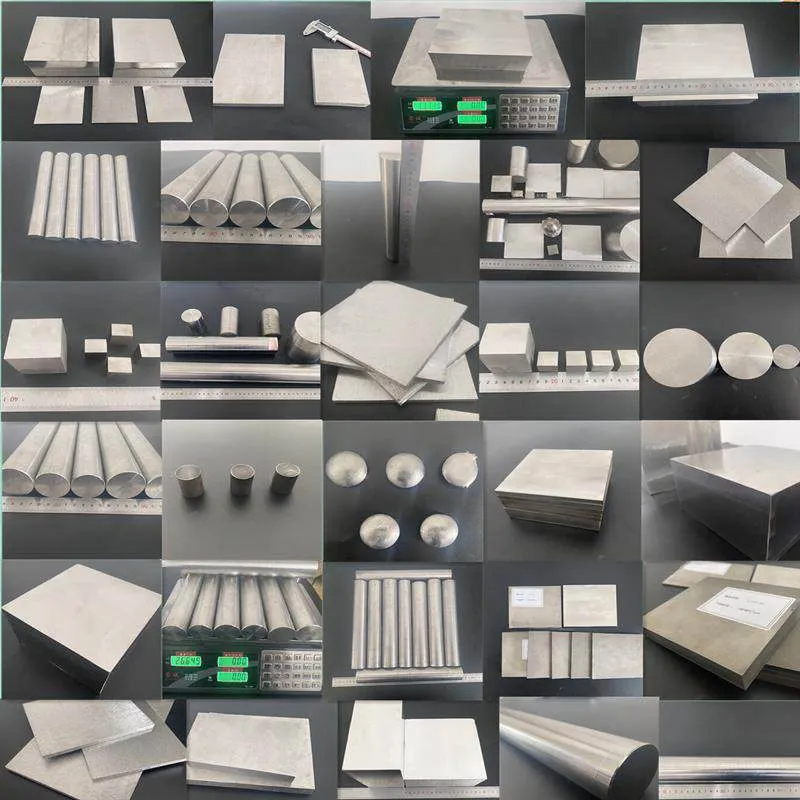
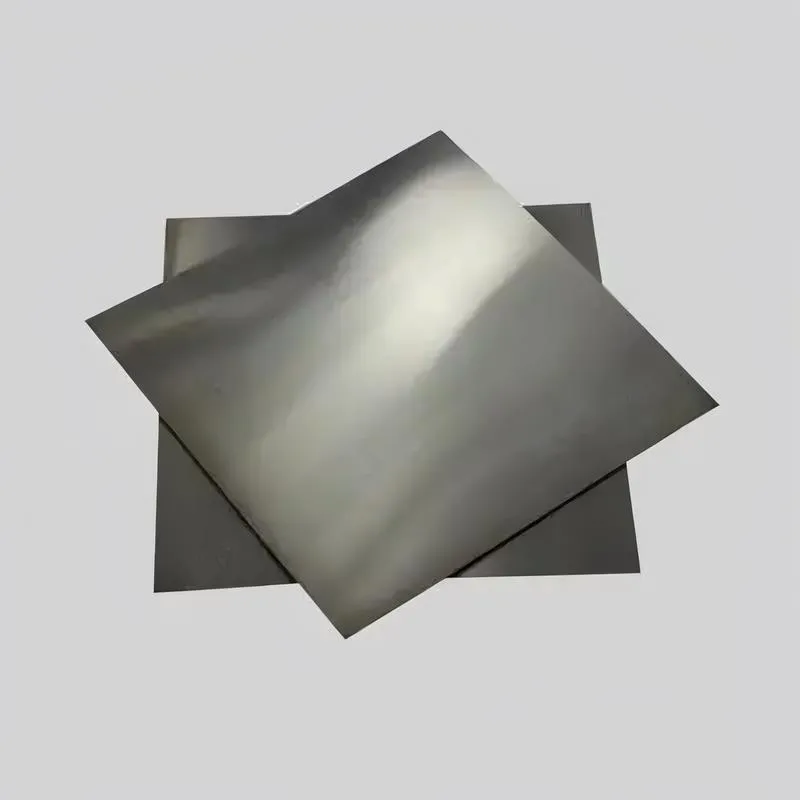
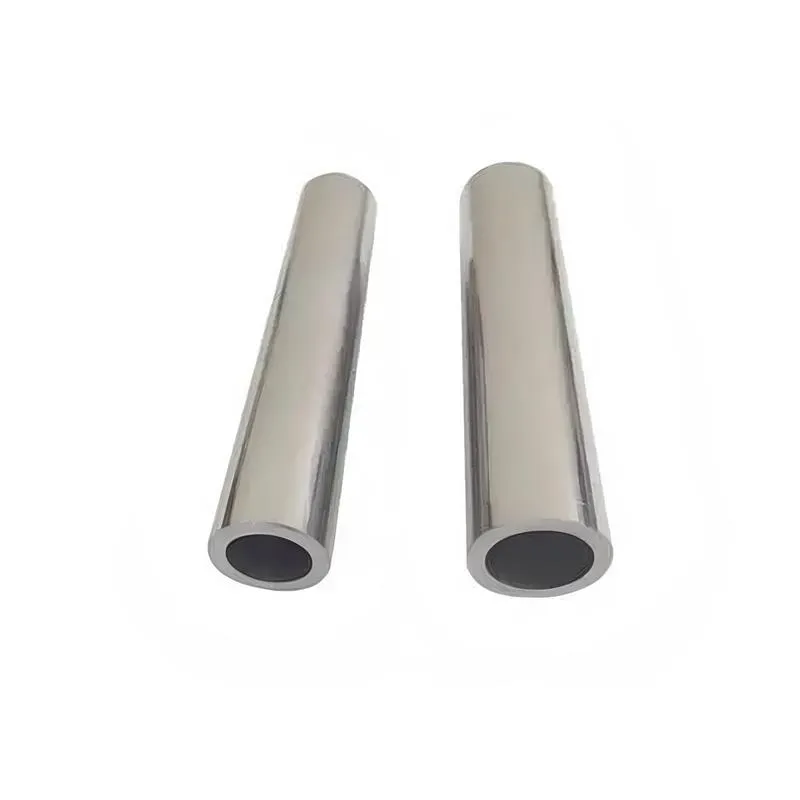
We provide AISI 4140H Steel, oil quenched 845°C (1550°F), tempered 540°C (1000°F), is available in Bar (Round bar, Flat bar), Ribbon, Wire, Rods, Tube,Seamless Tube,Pipe, Ingots, Plate, Sheet, Strip and Forging Stock.,Purity, chemical composition, size, etc. can all be customized to meet specific requirements.
Please contact us if you need customized services. We will contact you with the price and availability in 24 hours.
AISI 4140H Steel, oil quenched 845°C (1550°F), tempered 540°C (1000°F), Product Information
-:-
For detailed product information, please contact sales.
-:
AISI 4140H Steel, oil quenched 845°C (1550°F), tempered 540°C (1000°F), Synonyms
-:-
For detailed product information, please contact sales.
-:
AISI 4140H Steel, oil quenched 845°C (1550°F), tempered 540°C (1000°F), Product Information
-:-
For detailed product information, please contact sales.
-:
# **AISI 4140H Steel (Oil Quenched & Tempered Condition) Product Specification**
## **1. PRODUCT IDENTIFICATION & THERMAL PROCESS**
**Product:** AISI 4140H Alloy Steel
**Material State:** Fully Heat Treated, Quenched and Tempered (Q&T) Condition
**Specified Heat Treatment:**
- **Austenitizing:** 845°C (1550°F)
- **Quenching:** Oil quench (vigorous agitation)
- **Tempering:** 540°C (1000°F) → Air Cool
**Metallurgical Significance:** This specific heat treatment produces the **optimal balance of strength and toughness** for AISI 4140H steel. The "H" designation (hardenability grade) ensures consistent through-hardening characteristics, guaranteeing uniform mechanical properties throughout the cross-section. The 540°C tempering temperature provides an excellent combination of high tensile strength and good impact resistance, making this condition ideal for dynamically loaded components.
## **2. CHEMICAL COMPOSITION (Hardenability Controlled)**
Composition is controlled to meet both base 4140 chemistry and SAE J1268 hardenability band requirements.
| Element | Composition Range (% by weight) | Metallurgical Role in This Condition |
| :--- | :--- | :--- |
| **Carbon (C)** | 0.38 - 0.43 | Forms tempered martensite matrix; determines achievable hardness and strength. Fine carbides (Fe₃C) precipitate during 540°C tempering. |
| **Manganese (Mn)** | 0.75 - 1.00 | **Key hardenability element.** Ensures full martensitic transformation in specified sections during oil quenching. |
| **Phosphorus (P)** | ≤ 0.030 | Kept at strict low limit to prevent temper embrittlement at 540°C. |
| **Sulfur (S)** | ≤ 0.030 | Controlled for good transverse ductility and impact properties. |
| **Silicon (Si)** | 0.15 - 0.35 | Provides solid solution strengthening; retards tempering softening. |
| **Chromium (Cr)** | 0.80 - 1.10 | Forms fine (Cr,Fe)₇C₃ carbides during tempering, contributing to secondary hardening and wear resistance at 540°C. |
| **Molybdenum (Mo)** | **0.15 - 0.25** | **Critical for this application.** Completely suppresses temper embrittlement at 540°C, allows safe tempering in the critical range. Forms Mo₂C carbides that enhance creep resistance. |
## **3. CERTIFIED HARDENABILITY (SAE J1268)**
The "H" grade provides guaranteed hardenability bands, ensuring predictable core hardness in heat-treated components.
**Standard Hardenability Band for 4140H:**
| Jominy Distance (1/16 in.) | As-Quenched Hardness Range, HRC (Min - Max) |
| :--- | :--- |
| **J1.5** | 50 - 58 |
| **J5** | 42 - 52 |
| **J10** | 34 - 44 |
| **J20** | 26 - 36 |
**Practical Implication:** For a 50mm (2") diameter bar oil-quenched from 845°C, the core will achieve **100% martensite** prior to tempering. After tempering at 540°C, the core hardness will be within a predictable 3-4 HRC range across all production lots.
## **4. MECHANICAL PROPERTIES (After Q&T at 540°C)**
*Typical for sections up to 75mm (3") diameter after specified treatment*
| Property | Typical Range | Test Standard / Notes |
| :--- | :--- | :--- |
| **Ultimate Tensile Strength** | 950 - 1100 MPa (138,000 - 160,000 psi) | ASTM A370 |
| **Yield Strength (0.2% Offset)** | 850 - 1000 MPa (123,000 - 145,000 psi) | High yield ratio (~0.90) |
| **Elongation (in 50mm)** | 16% - 20% | Good ductility for this strength |
| **Reduction of Area** | 50% - 60% | |
| **Hardness** | **30 - 36 HRC** (285 - 340 HB) | Primary specification parameter |
| **Charpy V-Notch Impact (21°C)** | **40 - 65 J** (30 - 48 ft-lb) | Excellent toughness at this strength |
| **Fatigue Endurance Limit** | ~500 - 600 MPa | For polished specimens, R=-1 |
| **Shear Strength** | ~570 - 660 MPa | ~60% of UTS |
| **Modulus of Elasticity** | 205 GPa (29,700 ksi) | |
## **5. PHYSICAL PROPERTIES**
| Property | Value / Condition |
| :--- | :--- |
| **Density** | 7.85 g/cm³ |
| **Thermal Conductivity** | 42.5 W/m·K @ 100°C |
| **Coefficient of Thermal Expansion** | 11.3 µm/m·°C (20-100°C) |
| **Specific Heat Capacity** | 460 J/kg·K |
| **Electrical Resistivity** | 0.23 µΩ·m @ 20°C |
## **6. MICROSTRUCTURE & METALLURGY**
**Microstructural Features:**
- **Matrix:** Fine tempered martensite (tempered at 540°C)
- **Carbides:** Fine dispersion of alloy carbides (Mo₂C, Cr₇C₃)
- **Grain Size:** ASTM 7-9 (fine)
- **Prior Austenite Grain:** ASTM 8-10 (very fine due to 845°C austenitizing)
**Transformation Characteristics:**
- **Mₛ Temperature:** ~330°C
- **M_f Temperature:** ~120°C
- **Retained Austenite:** <2% after 540°C tempering
- **Tempering Response:** Strong secondary hardening due to Cr and Mo carbides
## **7. TARGET APPLICATIONS**
This specific condition is engineered for **high-stress, dynamically loaded components** requiring optimal strength-toughness balance.
* **Power Transmission Components:**
- Heavy-duty gears and pinions
- Transmission shafts and output shafts
- Differential gears and carriers
* **Hydraulic & Fluid Power:**
- High-pressure hydraulic piston rods
- Pump shafts and gear sets
- Valve stems and bodies
* **Oil & Gas Equipment:**
- Drill collars and tool joints
- Valve components for high-pressure service
- Wellhead equipment parts
* **Aerospace & Defense:**
- Landing gear components (after certification)
- Helicopter dynamic components
- Weapon system mounts and fittings
* **General Heavy Machinery:**
- Axles and shafts for construction equipment
- Connecting rods and crank arms
- High-strength fasteners (bolts, studs)
## **8. INTERNATIONAL STANDARDS & EQUIVALENTS**
| Standard / Country | Designation | Equivalent Status | Notes |
| :--- | :--- | :--- | :--- |
| **AISI/SAE** | **4140H** | Primary Standard | SAE J1268 governs hardenability |
| **ASTM** | **A304 Grade 4140H** | US Standard | For bars with hardenability requirements |
| **UNS** | **H41400** | Unified Numbering | |
| **DIN/EN** | **42CrMo4H (1.7225+H)** | Direct Equivalent | "+H" suffix is mandatory |
| **JIS** | **SCM440H** | Japanese Equivalent | G4105 for hardenability grade |
| **GB** | **42CrMoH** | Chinese Equivalent | GB/T 3077 |
| **ISO** | **ISO 683-18 Type 42CrMo4** | International | Can specify hardenability |
## **9. FABRICATION & PROCESSING CONSTRAINTS**
**Machining (in Heat-Treated State):**
- **Condition:** Difficult
- **Tooling:** Carbide or CBN required
- **Parameters:** Low speed, moderate feed, heavy cuts
- **Coolant:** Essential for heat dissipation
- **Recommended:** Machine in annealed state, then heat treat
**Welding:**
- **NOT RECOMMENDED** in heat-treated condition
- **If unavoidable:** Preheat 300-350°C, use low-hydrogen electrodes, post-heat to 595-650°C immediately
- **Best practice:** Weld in annealed state, then full re-heat treatment
**Grinding:**
- Well-suited to precision grinding
- Use aluminum oxide or CBN wheels
- Maintain coolant flow to prevent thermal damage
- Light passes recommended
**Straightening:**
- Limited cold straightening possible
- Hot straightening at 300-400°C preferred
- Maximum strain: 0.5%
## **10. QUALITY ASSURANCE & TESTING**
**Mandatory Certification:**
1. Hardenability Test Report (Jominy curve per SAE J1268)
2. Chemical Analysis Certificate
3. Mechanical Test Report (tensile, hardness, impact)
4. Heat Treatment Certificate with temperature charts
**Additional Testing Available:**
- Ultrasonic Testing (ASTM A388)
- Magnetic Particle Inspection (ASTM E709)
- Macro-etch examination
- Grain size determination (ASTM E112)
## **11. PERFORMANCE CHARACTERISTICS**
**Advantages of This Specific Condition:**
1. **Optimal Balance:** Best strength-toughness combination for 4140H
2. **Predictable Properties:** Guaranteed by "H" grade certification
3. **Good Fatigue Resistance:** Suitable for dynamically loaded components
4. **Wear Resistance:** Adequate for many industrial applications
5. **Dimensional Stability:** Good after tempering at 540°C
**Limitations & Considerations:**
- **Notch Sensitivity:** Moderate; require generous fillet radii (R > 2mm)
- **Corrosion Resistance:** Poor; requires protective coatings
- **Maximum Service Temperature:** ~300°C continuous
- **Weldability:** Poor in heat-treated state
**Section Size Limitations:**
- **Full hardening in oil:** Up to 100mm (4") diameter
- **Recommended max:** 75mm (3") for optimal properties
- **Minimum:** 10mm (0.4") to avoid excessive distortion
## **12. DESIGN & APPLICATION GUIDELINES**
**Optimal Design Practices:**
1. Use generous fillet radii (minimum 3mm)
2. Avoid sharp corners and notches
3. Specify polished or ground surfaces for fatigue applications
4. Consider stress relief after heavy machining
5. Design for uniform section thickness where possible
**Safety Factors Recommended:**
- Static loading: 2.5 minimum
- Dynamic loading: 4.0 minimum
- Fatigue loading: Based on actual S-N data
**Environmental Considerations:**
- Operating temperature: -40°C to +300°C
- Corrosion protection required for most environments
- Avoid hydrogen-producing environments if not properly protected
---
**TECHNICAL SUMMARY:** **AISI 4140H steel, oil quenched from 845°C and tempered at 540°C,** represents the **benchmark condition for high-performance engineering components** requiring the optimal balance of strength and toughness. The guaranteed hardenability ("H" grade) ensures consistent through-hardening and predictable mechanical properties, making this material specification ideal for safety-critical applications in aerospace, automotive, energy, and heavy machinery sectors. This heat treatment condition provides the best overall performance profile for dynamically loaded components, offering an exceptional combination of tensile strength (~1000 MPa), yield strength (~900 MPa), and impact toughness (~50 J). When material consistency, predictable performance, and reliable service life are paramount, this specific 4140H condition is the engineered choice for critical mechanical components.
-:-
For detailed product information, please contact sales.
-:
AISI 4140H Steel, oil quenched 845°C (1550°F), tempered 540°C (1000°F), Specification
Dimensions
Size:
Diameter 20-1000 mm Length <6223 mm
Size:We can customized as required
Standard:
Per your request or drawing
We can customized as required
Properties(Theoretical)
Chemical Composition
-:-
For detailed product information, please contact sales.
-:
AISI 4140H Steel, oil quenched 845°C (1550°F), tempered 540°C (1000°F), Properties
-:-
For detailed product information, please contact sales.
-:
Applications of AISI 4140H Steel, oil quenched 845°C (1550°F), tempered 540°C (1000°F),
-:-
For detailed product information, please contact sales.
-:
Chemical Identifiers AISI 4140H Steel, oil quenched 845°C (1550°F), tempered 540°C (1000°F),
-:-
For detailed product information, please contact sales.
-:
Packing of AISI 4140H Steel, oil quenched 845°C (1550°F), tempered 540°C (1000°F),
-:-
For detailed product information, please contact sales.
-:
Standard Packing:
-:-
For detailed product information, please contact sales.
-:
Typical bulk packaging includes palletized plastic 5 gallon/25 kg. pails, fiber and steel drums to 1 ton super sacks in full container (FCL) or truck load (T/L) quantities. Research and sample quantities and hygroscopic, oxidizing or other air sensitive materials may be packaged under argon or vacuum. Solutions are packaged in polypropylene, plastic or glass jars up to palletized 2694 gallon liquid totes Special package is available on request. E FORUs’ is carefully handled to minimize damage during storage and transportation and to preserve the quality of our products in their original condition