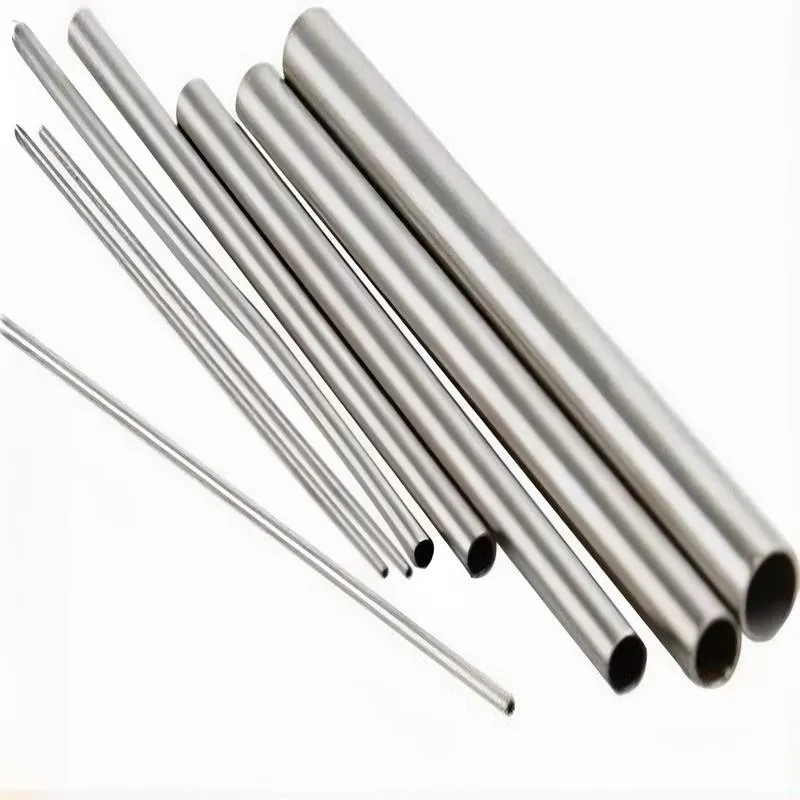
AISI 4419 Steel, single quenched
Product Code : STI-CSTI-868-CU
We provide AISI 4419 Steel, single quenched, 150°C (300°F) temper is available in Bar (Round bar, Flat bar), Ribbon, Wire, Rods, Tube,Seamless Tube,Pipe, Ingots, Plate, Sheet, Strip and Forging Stock.,Purity, chemical composition, size, etc. can all be customized to meet specific requirements.
Please contact us if you need customized services. We will contact you with the price and availability in 24 hours.
AISI 4419 Steel, single quenched, 150°C (300°F) temper Product Information
-:-
For detailed product information, please contact sales.
-:
AISI 4419 Steel, single quenched, 150°C (300°F) temper Synonyms
-:-
For detailed product information, please contact sales.
-:
AISI 4419 Steel, single quenched, 150°C (300°F) temper Product Information
-:-
For detailed product information, please contact sales.
-:
# **Technical Data Sheet: AISI 4419 Steel - Single Quenched & Tempered Condition**
## **Product Overview**
**Material Designation:** AISI 4419 (SAE 4419) Alloy Steel
**Heat Treatment Condition:** Single Quenched & 150°C (300°F) Tempered
**Product Description:** AISI 4419 steel subjected to a single-step quenching process from austenitizing temperature followed by low-temperature tempering at 150°C (300°F). This treatment produces a high-strength, fully martensitic structure with maximum hardness and wear resistance, making it suitable for applications requiring exceptional surface durability and load-bearing capacity.
---
## **1. Chemical Composition**
### **Standard Specification Ranges** (Weight %)
| Element | Minimum | Maximum | Target | Metallurgical Role |
|---------|---------|---------|--------|-------------------|
| **Carbon (C)** | 0.18 | 0.23 | 0.20-0.22 | Primary hardenability & strength |
| **Manganese (Mn)** | 0.45 | 0.65 | 0.55-0.62 | Austenite stabilization, hardenability |
| **Silicon (Si)** | 0.15 | 0.35 | 0.20-0.30 | Deoxidation, solid solution strengthening |
| **Chromium (Cr)** | 0.85 | 1.15 | 1.00-1.10 | Hardenability, corrosion resistance |
| **Molybdenum (Mo)** | 0.20 | 0.30 | 0.23-0.27 | Temper resistance, secondary hardening |
| **Nickel (Ni)** | 0.40 | 0.70 | 0.55-0.65 | Toughness enhancement, hardenability |
| **Phosphorus (P)** | — | 0.035 | ≤0.020 | Impurity control |
| **Sulfur (S)** | — | 0.040 | ≤0.025 | Machinability improvement |
| **Iron (Fe)** | Balance | | | Matrix |
### **Key Composition Characteristics**
- **Carbon Equivalent (CE):** 0.68-0.72 (IIW formula)
- **Hardenability Index (DI):** 110-135 mm in ideal quench
- **Alloy Factor:** 4.2-4.8 (Grossman method)
- **Quench Sensitivity:** Medium-Low
---
## **2. Heat Treatment Process**
### **Single Quenching Process**
**Step 1: Austenitization**
- **Temperature:** 850-870°C (1560-1600°F)
- **Time:** 1 hour per 25 mm of section thickness (minimum 30 minutes)
- **Atmosphere:** Protective atmosphere (endothermic gas or vacuum) to prevent decarburization
- **Furnace Type:** Batch or continuous, temperature uniformity ±10°C
**Step 2: Quenching**
- **Medium:** Fast quenching oil at 40-60°C (104-140°F)
- **Agitation:** Moderate to vigorous circulation
- **Quench Severity (H-value):** 0.30-0.40
- **Critical Cooling Rate:** ~25°C/sec at 700°C
- **Transformation:** Complete martensitic transformation (>95%)
**Step 3: Tempering**
- **Temperature:** 150°C ±5°C (300°F ±9°F)
- **Duration:** 2 hours per 25 mm of section (minimum 1 hour)
- **Purpose:** Stress relief, slight hardness reduction, improved toughness
- **Cooling:** Air cool to room temperature
### **Microstructural Features**
- **Primary Structure:** Tempered martensite (lath type)
- **Retained Austenite:** <5% (typically 2-4%)
- **Prior Austenite Grain Size:** ASTM 7-9 (10-20 μm)
- **Carbide Formation:** Fine ε-carbides (transition carbides)
- **Dislocation Density:** High (as-quenched structure partially recovered)
---
## **3. Mechanical Properties**
### **Tensile Properties** (Room Temperature, Longitudinal)
| Property | Minimum | Typical Range | Maximum | Test Standard |
|----------|---------|---------------|---------|---------------|
| **Ultimate Tensile Strength** | 1400 MPa | 1450-1600 MPa | 1650 MPa | ASTM A370 |
| **Yield Strength (0.2% Offset)** | 1200 MPa | 1250-1400 MPa | 1450 MPa | ASTM A370 |
| **Elongation (in 4D)** | 5% | 6-10% | 12% | ASTM A370 |
| **Reduction of Area** | 20% | 25-40% | 45% | ASTM A370 |
| **True Fracture Strength** | — | 1850-2100 MPa | — | Calculated |
### **Hardness Properties** (Section Size Dependent)
| Section Diameter | Surface Hardness | Core Hardness | Uniformity |
|------------------|------------------|---------------|------------|
| ≤25 mm (1") | 44-48 HRC | 44-48 HRC | Excellent |
| 26-50 mm (1-2") | 43-47 HRC | 42-46 HRC | Very Good |
| 51-75 mm (2-3") | 42-46 HRC | 41-45 HRC | Good |
| 76-100 mm (3-4") | 41-45 HRC | 40-44 HRC | Moderate |
**Hardness Conversions:**
- 44 HRC ≈ 415 HBW ≈ 435 HV
- 46 HRC ≈ 440 HBW ≈ 460 HV
- 48 HRC ≈ 465 HBW ≈ 485 HV
### **Impact Toughness** (Charpy V-Notch)
| Test Temperature | Impact Energy Range | Fracture Mode |
|------------------|---------------------|---------------|
| **+20°C (68°F)** | 15-30 J (11-22 ft·lb) | 70-100% fibrous |
| **0°C (32°F)** | 10-20 J (7-15 ft·lb) | 50-80% fibrous |
| **-20°C (-4°F)** | 5-12 J (4-9 ft·lb) | 20-60% fibrous |
| **Ductile-to-Brittle Transition (FATT₅₀)** | **Approx. -10°C to +10°C** | — |
### **Fatigue Properties**
- **Rotating Bending Fatigue Limit:** 550-620 MPa (R=-1, 10⁷ cycles)
- **Fatigue Ratio (σₑ/UTS):** 0.36-0.40
- **Notch Sensitivity Index (q):** 0.80-0.85
- **Endurance Limit at Kt=3.0:** 180-220 MPa
### **Additional Mechanical Data**
- **Modulus of Elasticity:** 205 GPa (29.7 × 10⁶ psi)
- **Shear Modulus:** 80 GPa (11.6 × 10⁶ psi)
- **Poisson's Ratio:** 0.29
- **Compressive Yield Strength:** 1300-1450 MPa
- **Torsional Strength:** 800-900 MPa
- **Bending Strength:** 1500-1650 MPa
---
## **4. Physical Properties**
| Property | Condition | Value | Unit |
|----------|-----------|-------|------|
| **Density** | 20°C | 7.85 | g/cm³ |
| **Thermal Conductivity** | 20°C | 41.5 | W/m·K |
| | 200°C | 40.0 | W/m·K |
| **Specific Heat Capacity** | 20°C | 460 | J/kg·K |
| **Mean Coefficient of Thermal Expansion** | 20-100°C | 11.5 | ×10⁻⁶/K |
| | 20-300°C | 12.1 | ×10⁻⁶/K |
| **Electrical Resistivity** | 20°C | 0.22 | μΩ·m |
| **Magnetic Properties** | 20°C | Ferromagnetic, μᵣ ≈ 350 | — |
---
## **5. International Standards Compliance**
### **Material Standards**
- **AISI/SAE:** 4419
- **UNS:** G44190
- **ASTM:** A322 Grade 4419 (Alloy Steel Bars)
- **ASTM:** A534 Grade 4419 (Carburizing Steels)
- **ISO:** 683-18:2023 (Designation: 41CrMo4+Ni)
- **DIN/EN:** 1.6565 / 41CrMo4+Ni
- **JIS:** G4105 SCM 4 (Similar)
- **AMS:** 6260 (Aerospace Carburizing Steel)
### **Testing & Inspection Standards**
- **Chemical Analysis:** ASTM E415, ISO 4948
- **Tensile Testing:** ASTM A370, ISO 6892-1
- **Hardness Testing:** ASTM E18, ISO 6508
- **Impact Testing:** ASTM E23, ISO 148-1
- **Microstructural:** ASTM E112, E45, ISO 643
---
## **6. Applications**
### **Primary Application Areas**
**1. High-Wear Components**
- **Cutting & Forming Tools:** Blades, punches, dies, shear blades
- **Wear Plates:** Chute liners, conveyor components, slide plates
- **Agricultural Implements:** Plow shares, cultivator points, harrow teeth
- **Mining Equipment:** Crusher parts, bucket teeth, drill bits
**2. High-Strength Fasteners & Pins**
- **Structural Fasteners:** ASTM A490 equivalent bolts, high-strength studs
- **Pivot Pins:** Excavator pins, hinge pins, articulation joints
- **Wear Pins:** Guide pins, locating pins, dowel pins
- **Special Fasteners:** Aerospace fasteners, defense applications
**3. Bearing & Gear Components**
- **Bearing Races:** High-load ball and roller bearing races
- **Gear Blanks:** High-strength gear cores (for subsequent carburizing)
- **Spline Shafts:** High-torque transmission components
- **Cam Components:** Camshafts, cam followers
**4. Tooling & Fixtures**
- **Jig & Fixture Components:** Drill bushings, wear plates, guide rails
- **Mold Components:** Injection mold cores, die casting inserts
- **Machine Tool Parts:** Lathe centers, milling machine arbors
- **Inspection Fixtures:** Gauge blocks, precision parallels
**5. Automotive & Transportation**
- **Drivetrain Components:** Axle shafts, drive shafts, CV joints
- **Suspension Parts:** Ball studs, king pins, torsion bars
- **Engine Components:** Valve train parts, timing components
- **Brake Components:** Caliper pins, brake camshafts
**6. Special Applications**
- **Oil & Gas:** Downhole tools, valve components
- **Defense:** Armor components, weapon parts
- **Marine:** Shafting, propeller components
- **Construction:** Reinforcement couplers, anchor bolts
### **Industry-Specific Advantages**
- **Manufacturing:** Extended tool life, reduced downtime
- **Mining:** Superior wear resistance in abrasive environments
- **Construction:** High strength for structural applications
- **Automotive:** Lightweight high-strength components
- **Aerospace:** Reliability in demanding service conditions
---
## **7. Machining & Processing Guidelines**
### **Important Note**
**This material is supplied in final heat-treated condition (44-48 HRC). All machining must be performed with appropriate tools and techniques.**
### **Machining in Hardened State**
**Turning Operations:**
- **Tool Material:** PCBN (Polycrystalline Cubic Boron Nitride) or ceramic
- **Cutting Speed:** 80-150 m/min
- **Feed Rate:** 0.05-0.15 mm/rev
- **Depth of Cut:** 0.1-0.5 mm
- **Coolant:** High-pressure coolant recommended
- **Tool Geometry:** Positive rake, sharp cutting edges
**Grinding Operations:**
- **Wheel Type:** CBN or diamond impregnated wheels
- **Wheel Grade:** Medium to hard bond
- **Wheel Speed:** 25-35 m/sec
- **Workpiece Speed:** 15-25 m/min
- **Depth of Cut:** 0.005-0.015 mm/pass
- **Coolant:** Essential to prevent thermal damage
**Electrical Discharge Machining (EDM):**
- **Preferred Method:** Wire EDM for complex profiles
- **Parameters:** Use finishing settings with multiple skim cuts
- **Electrode Material:** Copper or graphite
- **Surface Finish:** Ra 0.4-1.6 μm achievable
**Drilling & Tapping:**
- **Drilling:** Solid carbide drills, peck drilling recommended
- **Speed:** 10-20 m/min
- **Feed:** 0.02-0.08 mm/rev
- **Coolant:** Through-tool high pressure essential
- **Tapping:** Generally avoided; use thread milling instead
### **Special Processing Considerations**
1. **Stress Relief:** Not typically required due to tempering
2. **Surface Treatments:**
- Shot peening for improved fatigue resistance
- Nitriding for enhanced surface hardness (limited depth)
- Coating (TiN, TiCN, DLC) for specific applications
3. **Joining Methods:**
- Not recommended for welding in hardened state
- Mechanical fastening preferred
- Adhesive bonding possible with proper surface preparation
---
## **8. Technical Advantages**
### **Single Quenching Benefits**
1. **Maximum Hardness Achievement:**
- Achieves highest possible hardness for given carbon content
- Full martensitic transformation
- Minimal retained austenite
2. **Superior Wear Resistance:**
- High surface hardness (44-48 HRC)
- Good resistance to abrasive wear
- Suitable for sliding and rolling contact
3. **High Strength-to-Weight Ratio:**
- Exceptional strength properties
- Lighter than many alternative materials at same strength level
- Space and weight savings in design
4. **Good Dimensional Stability:**
- Low temperature tempering minimizes distortion
- Stable microstructure at moderate temperatures
- Predictable dimensional changes
### **Performance Advantages**
1. **Fatigue Resistance:** Good performance in cyclic loading
2. **Impact Resistance:** Adequate toughness for many applications
3. **Corrosion Resistance:** Moderate (similar to other low-alloy steels)
4. **Temperature Stability:** Maintains properties to ~200°C
---
## **9. Limitations & Design Considerations**
### **Material Limitations**
1. **Machinability:** Very difficult in hardened state
2. **Toughness:** Limited at this hardness level
3. **Weldability:** Not recommended in final condition
4. **Section Size Limitations:** Optimal properties for sections ≤75 mm
5. **Temperature Limitations:** Maximum service temperature 200°C
### **Design Guidelines**
1. **Stress Concentrations:**
- Minimum fillet radius: 3 mm
- Avoid sharp corners and notches
- Gradual transitions in cross-section
2. **Surface Conditions:**
- Surface finish critical for fatigue applications
- Consider shot peening for improved fatigue life
- Grinding marks should be parallel to principal stress direction
3. **Loading Considerations:**
- Excellent in compression and shear
- Good in bending and torsion
- Moderate in tension (consider notch sensitivity)
4. **Manufacturing Considerations:**
- Design for net shape or near-net shape
- Minimize machining requirements
- Consider EDM for complex features
---
## **10. Quality Assurance**
### **Testing Protocol**
1. **Chemical Analysis:**
- Ladle analysis with product verification
- Optical emission spectroscopy
- Carbon and sulfur determination
2. **Mechanical Testing:**
- Hardness testing at multiple locations
- Tensile testing from representative samples
- Charpy impact testing at specified temperatures
3. **Metallurgical Examination:**
- Grain size determination (ASTM E112)
- Microstructure evaluation
- Inclusion rating (ASTM E45)
4. **Non-Destructive Testing:** Available upon request
- Ultrasonic testing (UT)
- Magnetic particle inspection (MPI)
- Dye penetrant inspection (PT)
### **Certification**
- **Material Test Certificate:** EN 10204 3.1
- **Heat Treatment Records:** Complete process documentation
- **Traceability:** Full manufacturing history
- **Additional Certifications:** NORSOK, ABS, DNV, etc. available
### **Quality Standards**
- **Manufacturing:** ISO 9001:2015 certified
- **Heat Treatment:** AMS 2750 compliant
- **Testing:** Accredited laboratory testing
---
## **11. Comparative Analysis**
### **vs. Double Quenched & Tempered**
| Parameter | Single Quenched | Double Quenched | Notes |
|-----------|-----------------|-----------------|-------|
| **Hardness** | 44-48 HRC | 42-46 HRC | Higher |
| **Toughness** | Lower | Higher | Trade-off |
| **Distortion** | More | Less | Better control with double |
| **Cost** | Lower | Higher | Additional processing |
| **Grain Size** | ASTM 7-9 | ASTM 8-10 | Finer with double |
### **vs. Alternative High-Strength Steels**
| Material | Condition | Hardness | UTS | Cost Factor |
|----------|-----------|----------|-----|-------------|
| **AISI 4419 (Single Q)** | 150°C Temper | 44-48 HRC | 1450-1600 MPa | 1.0 |
| AISI 4140 | Q&T 205°C | 40-44 HRC | 1150-1300 MPa | 0.8 |
| AISI 4340 | Q&T 205°C | 38-42 HRC | 1100-1250 MPa | 1.2 |
| H13 Tool Steel | Hardened | 48-52 HRC | 1650-1800 MPa | 2.5 |
---
## **12. Storage & Handling**
### **Storage Requirements**
- **Environment:** Dry, temperature-controlled storage (15-25°C)
- **Relative Humidity:** <60% recommended
- **Packaging:** VCI (Vapor Corrosion Inhibitor) paper wrapping standard
- **Protective Coating:** Rust preventive oil available upon request
- **Stacking:** Maximum 1.0 meter height with proper support
- **Shelf Life:** 18 months with proper protection
### **Handling Precautions**
- **Sharp Edges:** Material has sharp edges due to high hardness
- **Weight:** Heavier than equivalent sized mild steel
- **Safety Equipment:** Gloves, safety glasses, steel-toe boots required
- **Lifting:** Use appropriate lifting equipment with spreader bars
- **Transportation:** Secure properly to prevent damage during transit
---
## **13. Ordering Information**
### **Standard Product Specifications**
- **Material Designation:** AISI 4419 Single Quenched & 150°C Tempered
- **Available Forms:** Round bars, square bars, flats
- **Size Range:** 10-100 mm diameter (rounds), similar cross-sections
- **Lengths:** Standard 3000 mm, 4000 mm, 6000 mm; custom lengths available
- **Condition:** Final heat treated, ready for finish machining
- **Surface:** Scale-free, may have light oxidation or grinding marks
### **Available Options**
1. **Special Processing:**
- Cryogenic treatment for reduced retained austenite
- Special tempering cycles
- Custom hardness ranges
2. **Additional Services:**
- Precision grinding to specific dimensions
- Cutting to exact lengths with deburred ends
- Stress relieving after machining
3. **Testing & Certification:**
- Extended mechanical testing
- Special metallurgical analysis
- Industry-specific certifications
4. **Packaging:**
- Individual wrapping
- Custom crate packaging
- Export packaging with desiccants
### **Lead Times**
- **Standard Product:** 2-4 weeks
- **Custom Processing:** 4-6 weeks
- **Rush Orders:** Available with premium
---
## **14. Technical Support Services**
### **Available Support**
1. **Application Engineering:**
- Component design consultation
- Material selection assistance
- Failure analysis and prevention
- Life prediction services
2. **Processing Support:**
- Machining parameter recommendations
- Heat treatment advice
- Surface treatment selection
- Quality control planning
3. **Laboratory Services:**
- Complete mechanical testing
- Metallurgical analysis
- Non-destructive evaluation
- Corrosion testing
4. **Training Programs:**
- Material properties and applications
- Heat treatment technology
- Machining hardened steels
- Quality assurance methods
### **Contact Requirements**
For technical support, please provide:
- Component drawings and specifications
- Service conditions and loading requirements
- Manufacturing processes planned
- Industry standards to be met
- Any special requirements or concerns
---
## **15. Health, Safety & Environmental**
### **Safety Considerations**
1. **Material Handling:**
- Sharp edges present due to high hardness
- Heavy weight requires proper lifting techniques
- Use appropriate personal protective equipment
2. **Machining Safety:**
- Hard particles generated during machining
- High cutting temperatures possible
- Proper machine guarding required
3. **Storage Safety:**
- Secure stacking to prevent falling
- Proper ventilation in storage areas
- Clear labeling of material condition
### **Environmental Aspects**
1. **Recyclability:**
- 100% recyclable as scrap steel
- No hazardous materials in composition
- Can be remelted and reused
2. **Processing Considerations:**
- Coolants and lubricants should be properly managed
- Grinding dust should be collected and disposed properly
- Energy efficient heat treatment processes used
3. **Compliance:**
- Meets REACH requirements
- RoHS compliant
- Conflict minerals policy in place
---
## **Revision History & Document Control**
**Document Information:**
- **Document Number:** TDS-4419-SQ150
- **Revision:** 3.0
- **Effective Date:** October 26, 2023
- **Supersedes:** Revision 2.2, July 2023
- **Next Review Date:** October 2024
**Approval Signatures:**
- Technical Manager: _________________________
- Quality Manager: ___________________________
- Product Manager: ___________________________
**Distribution:**
- Controlled document for customer use
- Internal distribution to sales and technical departments
- Available electronically upon request
---
## **DISCLAIMER**
### **Important Legal Notice**
The information contained in this technical data sheet is based on extensive testing and represents typical properties and characteristics. Actual values for specific production lots may vary within acceptable specification limits. This data is provided for informational purposes only and does not constitute a warranty of fitness for any particular application.
### **User Responsibilities**
1. **Application Verification:** Users are responsible for verifying suitability for their specific applications through appropriate testing and engineering analysis.
2. **Professional Consultation:** Always consult with qualified engineering professionals for critical applications.
3. **Process Validation:** Validate all manufacturing processes with the material in its supplied condition.
4. **Testing Requirements:** Conduct application-specific testing before full-scale production.
### **Limitation of Liability**
The manufacturer shall not be liable for any damages, losses, or expenses arising from the use of this material, including but not limited to direct, indirect, incidental, or consequential damages. This limitation applies regardless of the form of action, whether in contract, tort (including negligence), or otherwise.
### **Intellectual Property**
This document contains proprietary information. No part may be reproduced, stored in a retrieval system, or transmitted in any form without prior written permission.
---
**For Technical Inquiries or Additional Information:**
Please contact our Technical Services Department with specific application details and requirements.
**Customer Support:**
- Email: [technical@materials-supplier.com]
- Phone: [+1-XXX-XXX-XXXX]
- Website: [www.materials-supplier.com]
---
*End of Document*
-:-
For detailed product information, please contact sales.
-:
AISI 4419 Steel, single quenched, 150°C (300°F) temper Specification
Dimensions
Size:
Diameter 20-1000 mm Length <5600 mm
Size:We can customized as required
Standard:
Per your request or drawing
We can customized as required
Properties(Theoretical)
Chemical Composition
-:-
For detailed product information, please contact sales.
-:
AISI 4419 Steel, single quenched, 150°C (300°F) temper Properties
-:-
For detailed product information, please contact sales.
-:
Applications of AISI 4419 Steel, single quenched, 150°C (300°F) temper
-:-
For detailed product information, please contact sales.
-:
Chemical Identifiers AISI 4419 Steel, single quenched, 150°C (300°F) temper
-:-
For detailed product information, please contact sales.
-:
Packing of AISI 4419 Steel, single quenched, 150°C (300°F) temper
-:-
For detailed product information, please contact sales.
-:
Standard Packing:
-:-
For detailed product information, please contact sales.
-:
Typical bulk packaging includes palletized plastic 5 gallon/25 kg. pails, fiber and steel drums to 1 ton super sacks in full container (FCL) or truck load (T/L) quantities. Research and sample quantities and hygroscopic, oxidizing or other air sensitive materials may be packaged under argon or vacuum. Solutions are packaged in polypropylene, plastic or glass jars up to palletized 2071 gallon liquid totes Special package is available on request. E FORUs’ is carefully handled to minimize damage during storage and transportation and to preserve the quality of our products in their original condition