1,We Manufacturing processes are primarily classified into four types:
1:Forging,
2:Casting,
3:Cutting,
4:Rolling.
2,We can manufacture in accordance with these standards.
Standards:
GB Series (Chinese Standards), JB Series (Machinery Standards), HG Series (Chemical Industry Standards), ASME B16.5 (American Standards), BS4504 (British Standards), DIN (German Standards), and JIS (Japanese Standards).
Internationally, there are two primary systems of pipe flange standards: the European system, represented by the German DIN standards (including those of the former Soviet Union), and the American system, represented by the US ANSI pipe flange standards. Other common standards include: the Chinese Ministry of Machinery Industry standards (JB series), the Ministry of Chemical Industry standards (HG series), the Chinese National Standard *GB/T 9112–9124-2010 Steel Pipe Flanges*, as well as US standards (ASME B16.5), British standards (BS4504), German standards (DIN), Japanese standards (JIS), and marine standards (CBM), among others.
The nominal pressure ratings for the PN series are designated by "PN" and comprise the following nine levels: PN2.5, PN6, PN10, PN16, PN25, PN40, PN63, PN100, and PN160.
The nominal pressure ratings for the Class series are designated by "Class" and comprise the following six levels: Class150, Class300, Class600, Class900, Class1500, and Class2500.
Flange Classification
1. **According to Chemical Industry Standards:** Flanges are classified as follows:
Plate Flat Welding Flange (PL), Necked Flat Welding Flange (SO), Necked Butt Welding Flange (WN), Integral Flange (IF), Socket Welding Flange (SW), Threaded Flange (Th), Butt Welding Ring Loose Flange (PJ/SE), Blind Flange (BL), Flat Welding Ring Loose Flange (PJ/PJ), and Lined Blind Flange (BL(s)).
2. **According to Petrochemical (SH) Industry Standards:** Flanges are classified as follows:
Threaded Flange (PL), Butt Welding Flange (WN), Flat Welding Flange (SO), Socket Welding Flange (SW), Loose Flange (LJ), and Blind Flange (no specific designation).
3. **According to Machinery (JB) Industry Standards:** Flanges are classified as follows:
Integral Flange, Butt Welding Flange, Plate Flat Welding Flange, Butt Welding Ring Plate Loose Flange, Flat Welding Ring Plate Loose Flange, Lap Joint Ring Plate Loose Flange, and Blind Flange.
4. **According to Connection Method/Type:** Flanges are classified as follows:
Plate Flat Welding Flange, Necked Flat Welding Flange, Necked Butt Welding Flange, Socket Welding Flange, Threaded Flange, Blind Flange, Necked Butt Welding Ring Loose Flange, Flat Welding Ring Loose Flange, Ring-Type Joint (RTJ) Flange and Blind Flange, Large-Diameter Plate Flange, Large-Diameter High-Neck Flange, Figure-8 Blind Plate, Butt Welding Ring Loose Flange, etc.
5. **According to the Component Being Connected:** Flanges can be classified into Vessel Flanges and Pipe Flanges.
6. **According to Structural Type:** Flanges include Integral Flanges, Threaded Flanges, Flat Welding Flanges, Butt Welding Flanges, Lap Joint (Loose/Swivel) Flanges, and Blind Flanges.
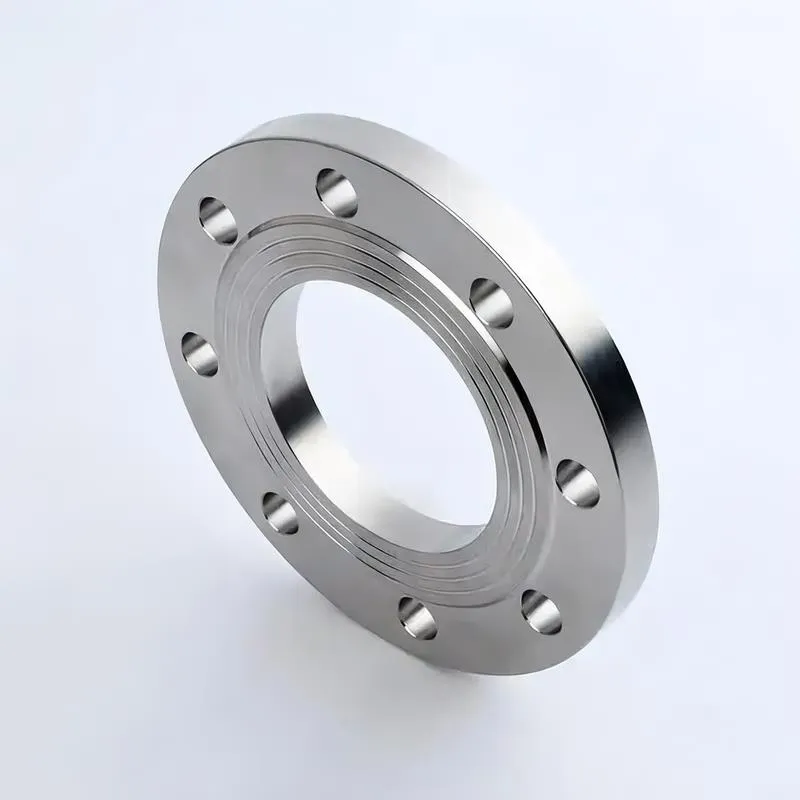
A flange—also referred to as a flange plate or rim—is a component used to connect shafts to one another, or, more commonly, to join the ends of pipes. Flanges are also utilized at the inlet and outlet ports of equipment to facilitate connections between two devices—for instance, the flange on a speed reducer. A "flange connection" or "flanged joint" refers to a detachable joint assembly comprising three interconnected elements—a flange, a gasket, and bolts—that together form a sealed structural unit. In the context of piping systems, a "pipe flange" specifically denotes a flange used for plumbing within the installation; when applied to equipment, it refers to the inlet or outlet flange of that specific device. Flanges feature a series of holes through which bolts are inserted to securely fasten the two flanges together, while a gasket placed between the flanges ensures a leak-proof seal. Flanges are broadly categorized into three types: threaded (screw-in) flanges, welded flanges, and clamp-type flanges. Flanges are invariably used in pairs; threaded flanges are suitable for low-pressure piping applications, whereas welded flanges are required for systems operating at pressures exceeding 4 kilograms per square centimeter. A sealing gasket is inserted between the two flange plates, which are then firmly secured using bolts. The thickness of a flange—as well as the specifications of the bolts used to fasten it—vary depending on the specific pressure rating required for the application. When connecting equipment such as water pumps or valves to piping systems, the corresponding connection points on these devices are often manufactured in the shape of a matching flange; this method of attachment is also referred to as a "flange connection." Generally, any connecting component that utilizes bolts to join and seal the perimeters of two flat surfaces—such as the joints in ventilation ducts—is termed a "flange"; such components may collectively be classified as "flange-type parts." However, since such a connection often constitutes merely a *portion* of a larger device—for instance, the interface between a flange and a water pump—it would be inappropriate to classify the entire water pump itself as a "flange-type part." Conversely, smaller components—such as valves—that feature such flanged interfaces may indeed be appropriately categorized as "flange-type parts."
-:-
For detailed product information, please contact sales.
-:
AISI 4037H Steel Flange Product Information
-:-
For detailed product information, please contact sales.
-:
AISI 4037H Steel Flange Synonyms
-:-
For detailed product information, please contact sales.
-:
AISI 4037H Steel Product Information
-:-
For detailed product information, please contact sales.
-:
# **Product Introduction: AISI 4037H Steel**
## **Executive Summary**
**AISI 4037H** is a **hardenability-controlled, medium-carbon molybdenum alloy steel** specifically engineered for applications requiring **predictable and consistent heat treatment response** across production batches and varying component sizes. As the H-grade variant of AISI 4037, this material is manufactured with **guaranteed hardenability bands** as defined by standardized end-quench (Jominy) testing. This performance-based specification system ensures uniform mechanical properties after quenching and tempering, making it particularly valuable for high-volume production of critical components in automotive, agricultural, and heavy equipment industries where heat treatment consistency directly impacts quality, reliability, and manufacturing economics.
---
## **1. Chemical Composition & Hardenability Control Philosophy**
### **SAE J1268 Composition Ranges for Hardenability Control**
| Element | Content Range (% by weight) - **AISI 4037H** | Hardenability Control Function |
| :--- | :--- | :--- |
| **Carbon (C)** | 0.34 - 0.41 | **Primary hardenability control:** Wider range (0.34-0.41% vs. 0.35-0.40% for standard 4037) allows precise adjustment to achieve target Jominy curves |
| **Molybdenum (Mo)** | 0.15 - 0.35 | **Secondary control element:** Expanded range (0.15-0.35% vs. 0.20-0.30%) enables fine-tuning of hardenability depth and response |
| **Manganese (Mn)** | 0.60 - 1.00 | **Hardenability amplifier:** Broad range provides control over hardenability slope; improves quenching response |
| **Silicon (Si)** | 0.15 - 0.35 | Standard range; contributes to hardenability and solid solution strengthening |
| **Phosphorus (P)** | 0.035 max | Impurity control for ductility |
| **Sulfur (S)** | 0.040 max | Impurity control (may be specified lower for improved transverse properties) |
| **Iron (Fe)** | Balance | Matrix element |
### **Hardenability Control Fundamentals**
The AISI 4037H specification represents a paradigm shift from **chemical composition control** to **performance-based material engineering**:
1. **Chemistry Flexibility:** Elements are allowed to vary within specified bands to achieve guaranteed hardenability performance
2. **Performance Guarantee:** The primary specification is the **Jominy end-quench curve**, not fixed chemical percentages
3. **Production Optimization:** Steelmakers adjust chemistry within bands to optimize cost, processing, or availability while maintaining identical hardenability
4. **Engineering Predictability:** Designers receive certified hardenability data for precise calculation of heat treatment parameters and mechanical property predictions
### **Key Distinctions from Standard AISI 4037**
| Parameter | AISI 4037 (Standard) | AISI 4037H (Hardenability Controlled) |
| :--- | :--- | :--- |
| **Specification Basis** | Fixed chemical composition | Guaranteed hardenability bands |
| **Chemistry Control** | Narrow, rigid limits | Broad, adjustable ranges |
| **Primary Documentation** | Chemical analysis certificate | Jominy test certificate with actual curve |
| **Heat Treatment Predictability** | Statistical, variable | Guaranteed, consistent |
| **Design Application** | General property estimates | Precise property calculation |
---
## **2. Physical & Mechanical Properties with Hardenability Guarantee**
### **A. Fundamental Physical Properties**
| Property | Condition | Value/Range | Significance for H-Grade |
| :--- | :--- | :--- | :--- |
| **Density** | All conditions | 7.85 g/cm³ | Consistent despite chemistry variations |
| **Elastic Modulus** | Tempered | 200-205 GPa | Predictable within hardenability band |
| **Thermal Conductivity** | 100°C | 42.5-43.5 W/m·K | Slight variation with chemistry within band |
| **Thermal Expansion Coefficient** | 20-100°C | 11.7-11.9 × 10⁻⁶/°C | Consistent for heat treatment planning |
| **Magnetic Properties** | Below Curie temp | Ferromagnetic | Standard for alloy steels |
### **B. Certified Hardenability Characteristics (Jominy Test)**
#### **Typical Hardenability Bands for AISI 4037H**
Each production lot includes actual Jominy test results with guaranteed minimum and maximum hardness values:
| Distance from Quenched End | Hardness Range (HRC) | Component Design Significance |
| :--- | :--- | :--- |
| **1/16" (1.6 mm)** | 42-48 | Surface hardness potential for small components |
| **1/4" (6.4 mm)** | 35-42 | Hardness at moderate depth; critical for wear surfaces |
| **1/2" (12.7 mm)** | 30-37 | Core hardness for case-hardened parts |
| **1" (25.4 mm)** | 25-32 | Through-hardening capability for medium sections |
| **2" (50.8 mm)** | 20-27 | Maximum effective depth for property control |
#### **Critical Diameter Calculations from Hardenability Data**
- **Ideal Critical Diameter (DI):** 2.1-2.7 inches (53-69 mm) in oil quench
- **95% Martensite (D95):** 1.5-2.1 inches (38-53 mm) in fast oil
- **50% Martensite (D50):** 2.1-2.8 inches (53-71 mm) in fast oil
- **Maximum Effective Case Depth:** 1.5-2.0 mm achievable with optimized carburizing
### **C. Mechanical Properties Based on Hardenability Data**
#### **1. As-Supplied (Annealed/Normalized) Condition**
- **Hardness:** 179-229 HB (controlled range for consistent machinability)
- **Tensile Strength:** 620-760 MPa
- **Yield Strength:** 460-620 MPa
- **Machinability:** 55-60% of B1112 (consistent due to controlled hardness)
#### **2. Predicted Properties After Quenching & Tempering**
*Calculated from certified Jominy data and section size*
| Tempering Temperature | Hardness Range (HRC) | Tensile Strength Range | Impact Energy Range |
| :--- | :--- | :--- | :--- |
| **205°C (400°F)** | 46-51 | 1500-1650 MPa | 20-35 J |
| **425°C (800°F)** | 37-42 | 1200-1350 MPa | 35-55 J |
| **540°C (1000°F)** | 30-35 | 1000-1150 MPa | 50-75 J |
| **650°C (1200°F)** | 24-29 | 800-950 MPa | 70-100 J |
**Engineering Note:** Actual properties for specific components can be precisely calculated using the supplied Jominy curve, section size, and tempering temperature.
#### **3. Case-Hardened Properties with Predictable Core**
*Using hardenability data for core property prediction*
| Parameter | Minimum Guaranteed | Typical Achievable |
| :--- | :--- | :--- |
| **Core Hardness** | 34 HRC | 36-40 HRC |
| **Core Tensile Strength** | 900 MPa | 950-1150 MPa |
| **Case Hardness** | 58 HRC | 60-63 HRC |
| **Fatigue Strength Improvement** | +25% vs. non-H grade | +30-40% with optimized processing |
### **D. Special Advantages of Hardenability Control**
1. **Predictable Distortion:** Uniform transformation minimizes warpage during quenching
2. **Consistent Machinability:** Controlled starting hardness ensures uniform tool wear
3. **Optimized Heat Treatment:** Precise calculation of quenching parameters possible
4. **Reduced Scrap Rates:** Minimized heat treatment-related rejections
5. **Enhanced Fatigue Performance:** Consistent microstructure improves reliability
---
## **3. International Standards & Specifications**
### **Primary Hardenability Standards**
| Standard/Organization | Designation | Title & Scope |
| :--- | :--- | :--- |
| **SAE International** | **SAE J1268** | Hardenability Bands for Carbon and Alloy H-Steels |
| **SAE International** | **SAE J1868** | Standard Hardness and Hardenability Requirements |
| **ASTM International** | **ASTM A304** | Steel Bars Subject to End-Quench Hardenability Requirements |
| **ASTM International** | **ASTM A29/A29M** | With supplement for H-grade steels |
| **UNS** | **H40370** | Unified Numbering System for H-steels |
### **Hardenability Testing Standards**
| Standard | Test Method | Application to AISI 4037H |
| :--- | :--- | :--- |
| **ASTM A255** | End-Quench Hardenability Test | Mandatory for certification |
| **ISO 642** | Steel - Hardenability test by end quenching | International equivalent |
| **DIN 50191** | Jominy test (German standard) | European testing reference |
### **International Equivalents - Conceptual Comparison**
*Note: True H-grade system is primarily North American*
| Region | Similar Performance Concept | Notes |
| :--- | :--- | :--- |
| **ISO** | **Hardenability steels per ISO 683-18** | Type designation system |
| **Europe** | **No direct H-equivalent** | EN standards specify composition |
| **Germany** | **No direct H-equivalent** | DIN standards are composition-based |
| **Japan** | **No direct H-equivalent** | JIS standards lack H-band system |
| **China** | **Can be produced to customer specs** | Not standardized in national specs |
### **Industry-Specific Specifications**
| Industry | Typical Specification | Hardenability Requirements |
| :--- | :--- | :--- |
| **Automotive** | OEM-specific material specs | Tight bands for critical drivetrain parts |
| **Heavy Equipment** | Manufacturer specifications | Consistent properties for heavily loaded components |
| **Fastener Industry** | ASTM A574, SAE J429 | Controlled hardening for high-strength fasteners |
| **General Engineering** | Customer-specific requirements | Documentation and consistency focus |
---
## **4. Product Applications & Economic Justification**
### **Product Forms Available**
- **Hot-Rolled Bars:** With certified hardenability data
- **Cold-Finished Bars:** Precision bars with hardenability certification
- **Forging Stock:** Billets with guaranteed through-hardening characteristics
- **Wire Rod:** For high-reliability fastener manufacturing
### **Primary Industry Applications**
#### **1. Automotive Components (High-Volume Production)**
- **Transmission Components:** Gears, synchronizers, shift forks requiring consistent hardening
- **Drivetrain Parts:** Axle shafts, drive shafts in volume production
- **Steering Components:** Racks, pinions, steering arms for consistent performance
- **Engine Components:** Crankshafts, camshafts for production engines
- **Economic Justification:** Reduced heat treatment scrap, improved quality consistency
#### **2. Agricultural & Construction Equipment**
- **Gearbox Components:** Transmission gears requiring reliable hardening
- **Final Drive Parts:** Gears and shafts for heavy equipment
- **Implement Components:** PTO shafts, drive train elements
- **Wear Parts:** Bushings, pins, sleeves in production quantities
- **Economic Justification:** Fewer field failures, reduced warranty costs
#### **3. Industrial Machinery & Equipment**
- **Power Transmission Gears:** Industrial gear applications requiring consistency
- **Shafting:** Heavy-duty shafts requiring predictable properties
- **Machine Tool Components:** Spindles, arbors, feed screws
- **Hydraulic Components:** High-pressure cylinder rods, piston rods
- **Economic Justification:** Improved process control, reduced inspection
#### **4. Fastener & Special Component Manufacturing**
- **High-Strength Fasteners:** Grade 10.9 and similar requiring consistent heat treatment
- **Special Machined Parts:** Components with critical hardening requirements
- **Bearing Components:** Races, rollers requiring controlled hardening
- **Economic Justification:** Higher production yield, better quality consistency
### **Economic Analysis: H-Grade vs. Standard Grade**
| Cost Factor | AISI 4037 (Standard) | AISI 4037H (H-Grade) | Net Impact |
| :--- | :--- | :--- | :--- |
| **Material Cost** | 1.0x (baseline) | 1.15-1.35x | **15-35% premium** |
| **Heat Treatment Scrap** | 4-10% | 1-4% | **3-9% reduction** |
| **Inspection Costs** | 1.0x | 0.4-0.6x | **40-60% reduction** |
| **Process Optimization** | Limited | Significant | **10-20% efficiency gain** |
| **Warranty/Field Failures** | Baseline | Reduced | **3-12% cost avoidance** |
| **Total Cost Impact** | 1.0x | **0.92-1.08x** | **Often cost-neutral or slight savings** |
---
## **5. Heat Treatment Technology with Hardenability Data**
### **A. Utilizing Certified Hardenability Information**
Each AISI 4037H lot provides specific data enabling:
1. **Precise Quench Calculation:** Based on actual Jominy curve and section size
2. **Property Prediction:** Accurate estimation of hardness at any point in section
3. **Distortion Prediction:** More reliable anticipation of dimensional changes
4. **Process Optimization:** Fine-tuning of heat treatment parameters
### **B. Standard Heat Treatment Guidelines**
#### **Through-Hardening Applications**
- **Austenitizing:** 830-850°C (1525-1560°F)
- **Quenching:** Oil (parameters from Jominy data)
- **Tempering:** Temperature based on required properties
#### **Case Hardening Applications**
- **Carburizing:** 900-930°C (1650-1705°F)
- **Case Depth:** Optimized using hardenability data
- **Quenching:** Based on core hardenability requirements
- **Tempering:** 150-200°C for stress relief
### **C. Specialized Processes Enabled by Hardenability Control**
1. **Press Quenching:** Precise calculation of quenching parameters
2. **Induction Hardening:** Accurate prediction of hardened depth
3. **Austempering:** Reliable process design using hardenability data
4. **Martempering:** Optimized parameters for minimal distortion
### **D. Quality Assurance Advantages**
- **Reduced Testing:** Fewer hardness checks due to predictability
- **Process Validation:** Easier validation of heat treatment procedures
- **Documentation:** Complete traceability from material to heat treatment
- **Consistency:** Batch-to-batch repeatability in final properties
---
## **6. Design & Engineering with Hardenability Data**
### **A. Engineering Advantages**
1. **Predictable Properties:** Eliminates conservative over-design
2. **Optimized Sections:** Design to maximum effective hardening depth
3. **Reduced Safety Factors:** Material consistency allows smaller margins
4. **Reliable Performance:** Consistent behavior in service
### **B. Design Methodology**
**Step-by-Step Design Approach:**
1. **Determine Requirements:** Hardness, strength, depth of hardening
2. **Select Section Size:** Based on hardenability capability
3. **Calculate Heat Treatment:** Using supplied Jominy data
4. **Predict Final Properties:** For design verification
5. **Validate with Prototyping:** Limited testing due to predictability
### **C. Section Size Guidelines**
| Component Type | Maximum Effective Diameter | Hardenability Consideration |
| :--- | :--- | :--- |
| **Small Components** | ≤30 mm (1.2") | Full hardening achievable |
| **Medium Components** | 30-60 mm (1.2-2.4") | Good through-hardening |
| **Large Components** | 60-70 mm (2.4-2.8") | Limited through-hardening |
| **Case-Hardened Parts** | Any size | Core properties predictable |
### **D. Economic Design Optimization**
- **Material Reduction:** Smaller sections possible due to predictability
- **Process Simplification:** Reduced need for complex heat treatment
- **Quality Integration:** Design for manufacturability with known behavior
- **Lifecycle Cost:** Improved reliability reduces total cost
---
## **7. Manufacturing & Quality Assurance**
### **A. Machinability with Hardenability Control**
- **Consistent Starting Condition:** Controlled hardness ensures uniform machining
- **Predictable Tool Wear:** Consistent material behavior extends tool life
- **Reduced Variability:** Less adjustment of machining parameters
- **Quality Improvement:** More consistent final dimensions
### **B. Quality Assurance Advantages**
**For Manufacturers:**
- Reduced incoming material testing
- Fewer in-process inspections
- Lower final inspection requirements
- Improved statistical process control
**For End Users:**
- Consistent component performance
- Reduced failure rates
- Extended service life
- Lower maintenance requirements
### **C. Documentation & Traceability**
Each shipment includes:
1. **Certified Jominy Curve:** Actual test data with heat identification
2. **Chemical Analysis:** Actual composition within bands
3. **Mechanical Properties:** As-supplied condition data
4. **Heat Treatment Guidelines:** Recommended parameters
5. **Traceability Information:** Complete production history
---
## **8. Comparative Analysis**
### **Technical Comparison: H-Grade vs. Standard**
| Parameter | AISI 4037 (Standard) | AISI 4037H (Hardenability) |
| :--- | :--- | :--- |
| **Specification Basis** | Chemical composition | Hardenability performance |
| **Chemistry Control** | Tight, fixed limits | Broad, adjustable ranges |
| **Heat Treatment Predictability** | Statistical, variable | Guaranteed, consistent |
| **Design Utility** | Estimated properties | Calculated properties |
| **Production Impact** | Variable scrap rates | Reduced, predictable scrap |
| **Quality Assurance** | Extensive testing | Reduced testing required |
### **Application Suitability**
| Application Type | Standard 4037 | 4037H Recommendation |
| :--- | :--- | :--- |
| **Prototype/R&D** | Preferred | Not typically needed |
| **Low Volume Production** | Usually adequate | Only if critical |
| **Medium Volume Production** | Acceptable with controls | Recommended |
| **High Volume Production** | Risk of variability | Strongly recommended |
| **Critical/Safety Components** | Not recommended | Required |
| **Cost-Sensitive Applications** | Preferred | Only if justified |
---
## **9. Technical Summary & Selection Guidelines**
### **When to Specify AISI 4037H**
**Technical Justifications:**
1. Components requiring consistent heat treatment response
2. Applications where dimensional stability is critical
3. Production with high heat treatment volumes
4. Safety-critical or high-reliability applications
5. Components with challenging section size variations
**Economic Justifications:**
1. High-volume production where scrap reduction justifies premium
2. Applications with high heat treatment rejection rates
3. Components with expensive post-heat treatment machining
4. Products with significant warranty costs
5. Operations with tight quality standards
### **Selection Decision Framework**
```
Component Criticality → High → Must Specify 4037H
↓
Medium → Production Volume → High → Recommend 4037H
↓ ↓
Low Low
↓ ↓
Cost Sensitivity → High → Use Standard 4037
↓
Low
↓
Consider Total Cost → Favorable → Use 4037H
↓
Unfavorable
↓
Use Standard 4037
```
### **Procurement Specifications**
When ordering, specify:
1. **Grade:** AISI 4037H (UNS H40370)
2. **Hardenability Band:** If specific band required
3. **Certification:** SAE J1268 compliance with Jominy data
4. **Additional Requirements:** Special chemistry limits if needed
5. **Testing:** Any additional testing beyond standard
---
## **10. Future Trends & Industry Developments**
### **Technological Advancements**
1. **Digital Integration:** Hardenability data in digital manufacturing
2. **Predictive Modeling:** AI-based optimization using Jominy data
3. **Advanced Processing:** New quenching technologies
4. **Material Informatics:** Databases correlating hardenability with performance
### **Industry Trends**
- **Increased Adoption:** Growing in quality-critical industries
- **Global Harmonization:** Potential for wider H-grade adoption
- **Supply Chain Integration:** Closer producer-heat treater collaboration
- **Sustainability Focus:** Reduced scrap and energy through optimization
### **Research Directions**
- **Microstructural Prediction:** Correlating Jominy data with microstructure
- **Property Modeling:** Advanced prediction of mechanical properties
- **Process Innovation:** New heat treatment methods
- **Alloy Development:** Enhanced H-grades with improved performance
---
**AISI 4037H** represents a fundamental advancement in steel specification—from chemical control to performance-based engineering. By guaranteeing hardenability characteristics, this material provides manufacturers with unprecedented control over heat treatment outcomes, dimensional stability, and final properties. While commanding a modest premium, AISI 4037H delivers substantial value through reduced scrap, improved quality consistency, enhanced reliability, and optimized manufacturing. For applications where heat treatment consistency impacts performance, economics, or end-user satisfaction, AISI 4037H offers a compelling technical and economic solution that justifies its specification in demanding engineering applications.
-:-
For detailed product information, please contact sales.
-:
AISI 4037H Steel Specification
Dimensions
Size:
Diameter 20-1000 mm Length <4024 mm
Size:We can customized as required
Standard:
Per your request or drawing
We can customized as required
Properties(Theoretical)
Chemical Composition
-:-
For detailed product information, please contact sales.
-:
AISI 4037H Steel Properties
-:-
For detailed product information, please contact sales.
-:
Applications of AISI 4037H Steel Flange
-:-
For detailed product information, please contact sales.
-:
Chemical Identifiers AISI 4037H Steel Flange
-:-
For detailed product information, please contact sales.
-:
Packing of AISI 4037H Steel Flange
-:-
For detailed product information, please contact sales.
-:
Standard Packing:
-:-
For detailed product information, please contact sales.
-:
Typical bulk packaging includes palletized plastic 5 gallon/25 kg. pails, fiber and Steel Flange drums to 1 ton super sacks in full container (FCL) or truck load (T/L) quantities. Research and sample quantities and hygroscopic, oxidizing or other air sensitive materials may be packaged under argon or vacuum. Solutions are packaged in polypropylene, plastic or glass jars up to palletized 495 gallon liquid totes Special package is available on request. E FORUs’ is carefully handled to minimize damage during storage and transportation and to preserve the quality of our products in their original condition