1,We Manufacturing processes are primarily classified into four types:
1:Forging,
2:Casting,
3:Cutting,
4:Rolling.
2,We can manufacture in accordance with these standards.
Standards:
GB Series (Chinese Standards), JB Series (Machinery Standards), HG Series (Chemical Industry Standards), ASME B16.5 (American Standards), BS4504 (British Standards), DIN (German Standards), and JIS (Japanese Standards).
Internationally, there are two primary systems of pipe flange standards: the European system, represented by the German DIN standards (including those of the former Soviet Union), and the American system, represented by the US ANSI pipe flange standards. Other common standards include: the Chinese Ministry of Machinery Industry standards (JB series), the Ministry of Chemical Industry standards (HG series), the Chinese National Standard *GB/T 9112–9124-2010 Steel Pipe Flanges*, as well as US standards (ASME B16.5), British standards (BS4504), German standards (DIN), Japanese standards (JIS), and marine standards (CBM), among others.
The nominal pressure ratings for the PN series are designated by "PN" and comprise the following nine levels: PN2.5, PN6, PN10, PN16, PN25, PN40, PN63, PN100, and PN160.
The nominal pressure ratings for the Class series are designated by "Class" and comprise the following six levels: Class150, Class300, Class600, Class900, Class1500, and Class2500.
Flange Classification
1. **According to Chemical Industry Standards:** Flanges are classified as follows:
Plate Flat Welding Flange (PL), Necked Flat Welding Flange (SO), Necked Butt Welding Flange (WN), Integral Flange (IF), Socket Welding Flange (SW), Threaded Flange (Th), Butt Welding Ring Loose Flange (PJ/SE), Blind Flange (BL), Flat Welding Ring Loose Flange (PJ/PJ), and Lined Blind Flange (BL(s)).
2. **According to Petrochemical (SH) Industry Standards:** Flanges are classified as follows:
Threaded Flange (PL), Butt Welding Flange (WN), Flat Welding Flange (SO), Socket Welding Flange (SW), Loose Flange (LJ), and Blind Flange (no specific designation).
3. **According to Machinery (JB) Industry Standards:** Flanges are classified as follows:
Integral Flange, Butt Welding Flange, Plate Flat Welding Flange, Butt Welding Ring Plate Loose Flange, Flat Welding Ring Plate Loose Flange, Lap Joint Ring Plate Loose Flange, and Blind Flange.
4. **According to Connection Method/Type:** Flanges are classified as follows:
Plate Flat Welding Flange, Necked Flat Welding Flange, Necked Butt Welding Flange, Socket Welding Flange, Threaded Flange, Blind Flange, Necked Butt Welding Ring Loose Flange, Flat Welding Ring Loose Flange, Ring-Type Joint (RTJ) Flange and Blind Flange, Large-Diameter Plate Flange, Large-Diameter High-Neck Flange, Figure-8 Blind Plate, Butt Welding Ring Loose Flange, etc.
5. **According to the Component Being Connected:** Flanges can be classified into Vessel Flanges and Pipe Flanges.
6. **According to Structural Type:** Flanges include Integral Flanges, Threaded Flanges, Flat Welding Flanges, Butt Welding Flanges, Lap Joint (Loose/Swivel) Flanges, and Blind Flanges.
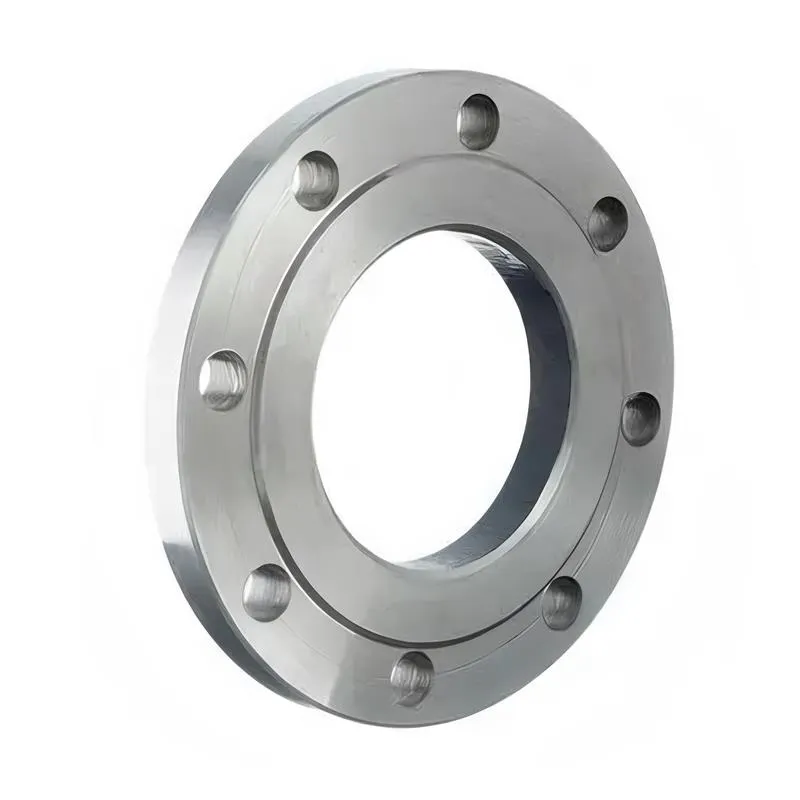
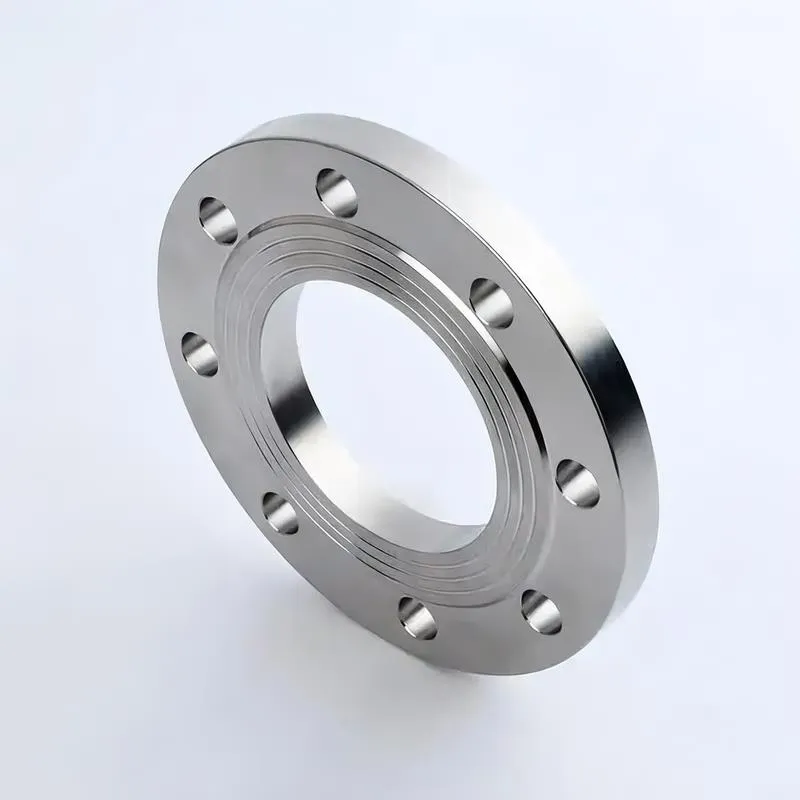
A flange—also referred to as a flange plate or rim—is a component used to connect shafts to one another, or, more commonly, to join the ends of pipes. Flanges are also utilized at the inlet and outlet ports of equipment to facilitate connections between two devices—for instance, the flange on a speed reducer. A "flange connection" or "flanged joint" refers to a detachable joint assembly comprising three interconnected elements—a flange, a gasket, and bolts—that together form a sealed structural unit. In the context of piping systems, a "pipe flange" specifically denotes a flange used for plumbing within the installation; when applied to equipment, it refers to the inlet or outlet flange of that specific device. Flanges feature a series of holes through which bolts are inserted to securely fasten the two flanges together, while a gasket placed between the flanges ensures a leak-proof seal. Flanges are broadly categorized into three types: threaded (screw-in) flanges, welded flanges, and clamp-type flanges. Flanges are invariably used in pairs; threaded flanges are suitable for low-pressure piping applications, whereas welded flanges are required for systems operating at pressures exceeding 4 kilograms per square centimeter. A sealing gasket is inserted between the two flange plates, which are then firmly secured using bolts. The thickness of a flange—as well as the specifications of the bolts used to fasten it—vary depending on the specific pressure rating required for the application. When connecting equipment such as water pumps or valves to piping systems, the corresponding connection points on these devices are often manufactured in the shape of a matching flange; this method of attachment is also referred to as a "flange connection." Generally, any connecting component that utilizes bolts to join and seal the perimeters of two flat surfaces—such as the joints in ventilation ducts—is termed a "flange"; such components may collectively be classified as "flange-type parts." However, since such a connection often constitutes merely a *portion* of a larger device—for instance, the interface between a flange and a water pump—it would be inappropriate to classify the entire water pump itself as a "flange-type part." Conversely, smaller components—such as valves—that feature such flanged interfaces may indeed be appropriately categorized as "flange-type parts."
-:-
For detailed product information, please contact sales.
-:
AISI 8617H Steel Flange, heat treated, machined, pseudocarburized, 150°C (300°F) temper Product Information
-:-
For detailed product information, please contact sales.
-:
AISI 8617H Steel Flange, heat treated, machined, pseudocarburized, 150°C (300°F) temper Synonyms
-:-
For detailed product information, please contact sales.
-:
AISI 8617H Steel, heat treated, machined, pseudocarburized, 150°C (300°F) temper Product Information
-:-
For detailed product information, please contact sales.
-:
## **Product Specification: AISI 8617H Controlled-Hardenability Steel - Pseudocarburized Test Condition**
### **Product Designation**
* **Standard Name:** AISI 8617H / SAE 8617H
* **UNS Number:** G86170 (with Hardenability Certification)
* **Condition:** **Heat Treated, Machined, Pseudocarburized & Tempered**
* **Tempering Temperature:** **150°C (300°F)**
* **Metallurgical State:** Simulated core microstructure of a carburized part, produced from a hardenability-controlled steel lot.
* **Key Feature:** This represents the **highest level of material qualification testing**, combining the precise core property simulation of pseudocarburization with the lot-to-lot consistency guaranteed by the **"H" hardenability band (ASTM A304)**.
### **Overview**
AISI 8617H is the hardenability-controlled version of the low-carbon Ni-Cr-Mo case-hardening steel 8617. The specified condition—**machined, pseudocarburized, quenched, and low-temperature tempered**—is a rigorous, standardized test protocol used to certify the **core mechanical properties** of high-reliability carburizing steels. The "H" designation ensures the steel's response to this thermal cycle is predictable and uniform across all material lots. This condition produces a high-strength, low-toughness core microstructure that is critically evaluated for applications where core fatigue or brittle fracture under bending loads is a primary design concern, such as in aerospace gearing and high-performance automotive components.
---
### **1. Chemical Composition (Range by Weight %, ASTM A304)**
The composition is tightly controlled to achieve the specific Jominy hardenability band required for 8617H, ensuring consistent core properties after the pseudocarburizing cycle.
| Element | 8617H Range (%) | Role & Effect |
| :--- | :--- | :--- |
| **Carbon (C)** | 0.15 - 0.20 | Provides base core strength. Its tight control is vital for consistent core hardness after pseudocarburizing. |
| **Manganese (Mn)** | 0.70 - 0.95 | Primary hardenability agent; range adjusted to control the Jominy curve and ensure core hardenability. |
| **Phosphorus (P)** | ≤ 0.030 | Impurity; controlled at low levels. |
| **Sulfur (S)** | ≤ 0.035 | Impurity; kept low for optimal transverse properties. |
| **Silicon (Si)** | 0.15 - 0.35 | Deoxidizer and solid solution strengthener. |
| **Nickel (Ni)** | 0.40 - 0.70 | **Essential for core toughness.** Mitigates the inherent brittleness of the low-temperature-tempered martensite. |
| **Chromium (Cr)** | 0.40 - 0.65 | Enhances hardenability and solid solution strengthening in the core. |
| **Molybdenum (Mo)** | 0.15 - 0.25 | **Critical for hardenability and grain control.** Increases core strength and tempering resistance. |
| **Iron (Fe)** | Balance | |
***Procurement Basis:*** This material is purchased to **SAE 8617H** with certification to **ASTM A304**. The test specimens are then subjected to the pseudocarburizing process as defined by industry or customer specifications (e.g., AMS 2759/3, SAE J406).
---
### **2. Physical & Mechanical Properties (Pseudocarburized, 150°C Temper)**
**A. Physical Properties (Typical)**
* **Density:** 7.85 g/cm³
* **Elastic Modulus (E):** ~205 GPa (29.7 x 10⁶ psi)
* **Poisson's Ratio:** 0.29
**B. Mechanical Properties (Representative & Controlled)**
* **Standard Process:** Machined to final test specimen dimensions → **Pseudocarburize** (e.g., 930°C / 1705°F for 4-8 hours in neutral atmosphere) → **Oil Quench** → **Temper at 150°C / 300°F**.
* **Core Hardness:** **38 - 45 HRC**. Slightly lower than through-hardening grades due to low carbon, but highly consistent within a narrow band due to "H" control.
* **Ultimate Tensile Strength:** **1200 - 1400 MPa (174 - 203 ksi)**
* **Yield Strength (0.2% Offset):** **1000 - 1200 MPa (145 - 174 ksi)**
* **Elongation:** **~6 - 12%**
* **Reduction of Area:** **~20 - 30%**
* **Impact Toughness (Charpy V-notch):** **15 - 30 J (11 - 22 ft-lbf)** at room temperature. The **primary property of interest**. The "H" grade ensures minimal variation in this critical and typically low-value metric.
* **Prior Austenite Grain Size:** Required to be fine (e.g., ASTM 5 or finer), often verified per ASTM E112. The "H" chemistry, particularly Mo, helps control grain growth during the high-temperature cycle.
---
### **3. Product Applications**
This is a **qualification and testing material**, not a standard finished product. Its use is mandated in the most critical, specification-driven industries.
* **Aerospace Gear & Bearing Certification (Primary Use):**
* **Material Lot Release:** Aerospace specifications (e.g., AMS, Pratt & Whitney, GE) often require destructive testing of pseudocarburized coupons from each heat lot of steel to release material for flight-critical gear manufacturing.
* **Design Allowable Generation:** Used to develop statistically valid design allowables (e.g., fatigue strength, fracture toughness) for core-driven failure modes in rotorcraft and jet engine transmission components.
* **High-Performance Automotive Racing:**
* **Supplier Qualification:** Used to validate that a steel mill or forge can consistently produce material meeting the rigorous core property requirements for Formula 1, NASCAR, or endurance racing transmission gears.
* **Defense & Heavy Industry:**
* **Qualification for Critical Drives:** Used in the qualification of steel for tank transmission gears, naval propulsion gears, and heavy mining equipment gearboxes where reliability is paramount.
* **Research & Benchmarking:**
* **Process Development:** Evaluating the effect of new carburizing or steelmaking processes on core properties in a controlled, simulated state.
---
### **4. International Standards & Designations**
| Standard System | Designation | Notes / Key Comparison |
| :--- | :--- | :--- |
| **SAE / AISI (USA)** | **SAE 8617H** | The base hardenability-grade designation. |
| **ASTM (USA)** | **ASTM A304** (G86170H) | Governs the hardenability band. **ASTM A534** covers carburizing bearing steels. |
| **AMS (Aerospace)** | **AMS 2300, AMS 2301, AMS 2759/3** | These standards define the **cleanness, microstructure, and pseudocarburizing procedures** for premium aircraft-quality steels. 8617H is commonly processed to these specs. |
| **DIN / EN (Germany/EU)** | **No direct H-equivalent.** | The nearest base grade is **1.5752 (15NiCr13)** or **1.6562 (17NiCrMo6-4)**. The pseudocarburized test condition is specified in customer or industry standards (e.g., **SEP 1614**). |
| **JIS (Japan)** | **SNC815H** | The Japanese hardenability-grade equivalent (JIS G4102). |
| **GB (China)** | **No direct H-equivalent.** | Similar grades like **20CrNiMo** exist, but the hardenability certification system differs. |
---
### **Technical Significance & Quality Assurance**
1. **"H" Grade Advantage:** Guarantees that the core hardness and strength after the pseudocarburizing cycle will be consistent. This reduces scatter in fatigue test data and ensures predictable performance in the field.
2. **Simulation Fidelity:** The 150°C temper represents a "minimum temper" condition, providing conservative (lower toughness) property data for design. Some specs may require tempering at a higher temperature (e.g., 175°C) for a better strength-toughness balance.
3. **Quality Gate:** This test condition acts as a final quality gate. If the pseudocarburized coupons fail to meet minimum impact energy or hardness requirements, the entire material lot is rejected for use in critical components.
4. **Distinction from Service:** It is crucial to remember that an **actual carburized part** will have a **tougher core** than this pseudocarburized test specimen, due to its lower carbon content and potentially finer grain structure from a shorter time at temperature.
### **Summary**
**AISI 8617H steel in the heat treated, machined, pseudocarburized, and 150°C tempered condition** represents the **pinnacle of material quality assurance for high-integrity case-hardened components**. It is not a functional engineering material but a **certification artifact**. By applying the most severe simulated thermal cycle to a hardenability-controlled steel, it provides engineers and regulators with validated, conservative data on core performance. This process is fundamental to ensuring the reliability and safety of aerospace transmissions, high-performance racing gears, and other applications where core failure is not an option. Its use is dictated by the world's most stringent material specifications, such as AMS 2300 and AMS 2759/3.
-:-
For detailed product information, please contact sales.
-:
AISI 8617H Steel, heat treated, machined, pseudocarburized, 150°C (300°F) temper Specification
Dimensions
Size:
Diameter 20-1000 mm Length <4147 mm
Size:We can customized as required
Standard:
Per your request or drawing
We can customized as required
Properties(Theoretical)
Chemical Composition
-:-
For detailed product information, please contact sales.
-:
AISI 8617H Steel, heat treated, machined, pseudocarburized, 150°C (300°F) temper Properties
-:-
For detailed product information, please contact sales.
-:
Applications of AISI 8617H Steel Flange, heat treated, machined, pseudocarburized, 150°C (300°F) temper
-:-
For detailed product information, please contact sales.
-:
Chemical Identifiers AISI 8617H Steel Flange, heat treated, machined, pseudocarburized, 150°C (300°F) temper
-:-
For detailed product information, please contact sales.
-:
Packing of AISI 8617H Steel Flange, heat treated, machined, pseudocarburized, 150°C (300°F) temper
-:-
For detailed product information, please contact sales.
-:
Standard Packing:
-:-
For detailed product information, please contact sales.
-:
Typical bulk packaging includes palletized plastic 5 gallon/25 kg. pails, fiber and Steel Flange drums to 1 ton super sacks in full container (FCL) or truck load (T/L) quantities. Research and sample quantities and hygroscopic, oxidizing or other air sensitive materials may be packaged under argon or vacuum. Solutions are packaged in polypropylene, plastic or glass jars up to palletized 618 gallon liquid totes Special package is available on request. E FORUs’ is carefully handled to minimize damage during storage and transportation and to preserve the quality of our products in their original condition