1,We Manufacturing processes are primarily classified into four types:
1:Forging,
2:Casting,
3:Cutting,
4:Rolling.
2,We can manufacture in accordance with these standards.
Standards:
GB Series (Chinese Standards), JB Series (Machinery Standards), HG Series (Chemical Industry Standards), ASME B16.5 (American Standards), BS4504 (British Standards), DIN (German Standards), and JIS (Japanese Standards).
Internationally, there are two primary systems of pipe flange standards: the European system, represented by the German DIN standards (including those of the former Soviet Union), and the American system, represented by the US ANSI pipe flange standards. Other common standards include: the Chinese Ministry of Machinery Industry standards (JB series), the Ministry of Chemical Industry standards (HG series), the Chinese National Standard *GB/T 9112–9124-2010 Steel Pipe Flanges*, as well as US standards (ASME B16.5), British standards (BS4504), German standards (DIN), Japanese standards (JIS), and marine standards (CBM), among others.
The nominal pressure ratings for the PN series are designated by "PN" and comprise the following nine levels: PN2.5, PN6, PN10, PN16, PN25, PN40, PN63, PN100, and PN160.
The nominal pressure ratings for the Class series are designated by "Class" and comprise the following six levels: Class150, Class300, Class600, Class900, Class1500, and Class2500.
Flange Classification
1. **According to Chemical Industry Standards:** Flanges are classified as follows:
Plate Flat Welding Flange (PL), Necked Flat Welding Flange (SO), Necked Butt Welding Flange (WN), Integral Flange (IF), Socket Welding Flange (SW), Threaded Flange (Th), Butt Welding Ring Loose Flange (PJ/SE), Blind Flange (BL), Flat Welding Ring Loose Flange (PJ/PJ), and Lined Blind Flange (BL(s)).
2. **According to Petrochemical (SH) Industry Standards:** Flanges are classified as follows:
Threaded Flange (PL), Butt Welding Flange (WN), Flat Welding Flange (SO), Socket Welding Flange (SW), Loose Flange (LJ), and Blind Flange (no specific designation).
3. **According to Machinery (JB) Industry Standards:** Flanges are classified as follows:
Integral Flange, Butt Welding Flange, Plate Flat Welding Flange, Butt Welding Ring Plate Loose Flange, Flat Welding Ring Plate Loose Flange, Lap Joint Ring Plate Loose Flange, and Blind Flange.
4. **According to Connection Method/Type:** Flanges are classified as follows:
Plate Flat Welding Flange, Necked Flat Welding Flange, Necked Butt Welding Flange, Socket Welding Flange, Threaded Flange, Blind Flange, Necked Butt Welding Ring Loose Flange, Flat Welding Ring Loose Flange, Ring-Type Joint (RTJ) Flange and Blind Flange, Large-Diameter Plate Flange, Large-Diameter High-Neck Flange, Figure-8 Blind Plate, Butt Welding Ring Loose Flange, etc.
5. **According to the Component Being Connected:** Flanges can be classified into Vessel Flanges and Pipe Flanges.
6. **According to Structural Type:** Flanges include Integral Flanges, Threaded Flanges, Flat Welding Flanges, Butt Welding Flanges, Lap Joint (Loose/Swivel) Flanges, and Blind Flanges.
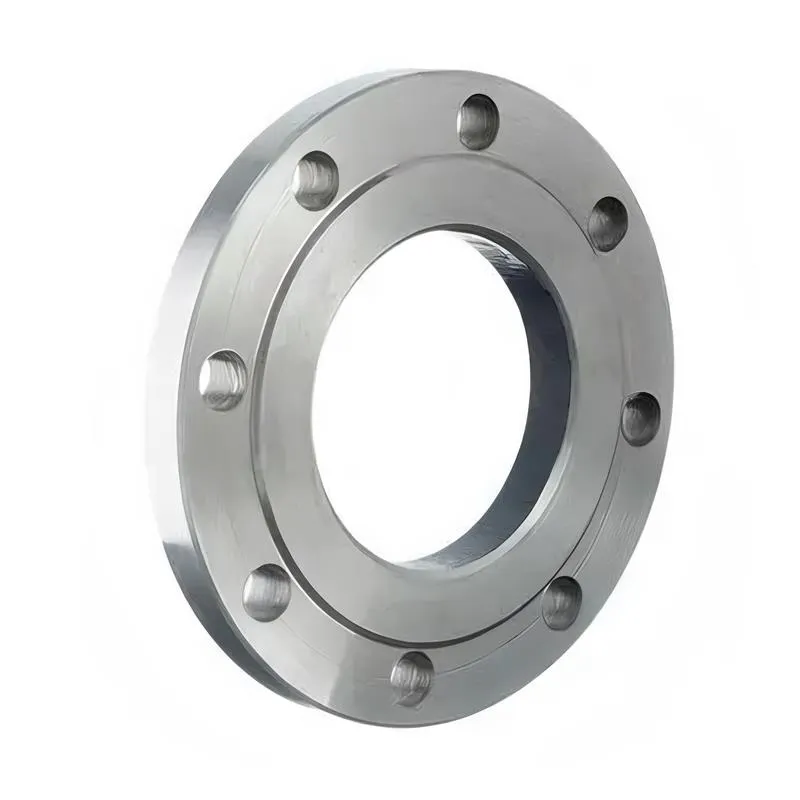
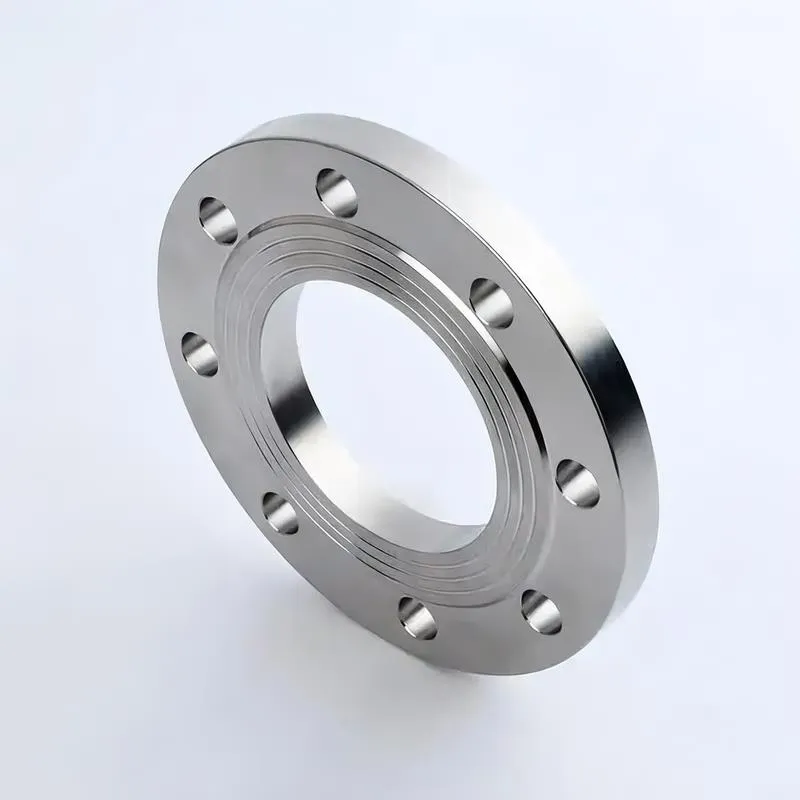
A flange—also referred to as a flange plate or rim—is a component used to connect shafts to one another, or, more commonly, to join the ends of pipes. Flanges are also utilized at the inlet and outlet ports of equipment to facilitate connections between two devices—for instance, the flange on a speed reducer. A "flange connection" or "flanged joint" refers to a detachable joint assembly comprising three interconnected elements—a flange, a gasket, and bolts—that together form a sealed structural unit. In the context of piping systems, a "pipe flange" specifically denotes a flange used for plumbing within the installation; when applied to equipment, it refers to the inlet or outlet flange of that specific device. Flanges feature a series of holes through which bolts are inserted to securely fasten the two flanges together, while a gasket placed between the flanges ensures a leak-proof seal. Flanges are broadly categorized into three types: threaded (screw-in) flanges, welded flanges, and clamp-type flanges. Flanges are invariably used in pairs; threaded flanges are suitable for low-pressure piping applications, whereas welded flanges are required for systems operating at pressures exceeding 4 kilograms per square centimeter. A sealing gasket is inserted between the two flange plates, which are then firmly secured using bolts. The thickness of a flange—as well as the specifications of the bolts used to fasten it—vary depending on the specific pressure rating required for the application. When connecting equipment such as water pumps or valves to piping systems, the corresponding connection points on these devices are often manufactured in the shape of a matching flange; this method of attachment is also referred to as a "flange connection." Generally, any connecting component that utilizes bolts to join and seal the perimeters of two flat surfaces—such as the joints in ventilation ducts—is termed a "flange"; such components may collectively be classified as "flange-type parts." However, since such a connection often constitutes merely a *portion* of a larger device—for instance, the interface between a flange and a water pump—it would be inappropriate to classify the entire water pump itself as a "flange-type part." Conversely, smaller components—such as valves—that feature such flanged interfaces may indeed be appropriately categorized as "flange-type parts."
-:-
For detailed product information, please contact sales.
-:
AISI 4620H Steel Flange, annealed, 25 mm (1 in.) round Product Information
-:-
For detailed product information, please contact sales.
-:
AISI 4620H Steel Flange, annealed, 25 mm (1 in.) round Synonyms
-:-
For detailed product information, please contact sales.
-:
AISI 4620H Steel, annealed, 25 mm (1 in.) round Product Information
-:-
For detailed product information, please contact sales.
-:
# **AISI 4620H Alloy Steel - Hardenability Controlled Annealed Round Bar**
## **25mm (1 inch) Diameter, Guaranteed Hardenability for Critical Applications**
---
### **1. PRODUCT OVERVIEW**
**AISI 4620H Alloy Steel - Annealed Condition, Hardenability Controlled**
- **Product Form:** 25mm (1.0 inch) diameter round bar
- **Material Standard:** AISI 4620H (Hardenability controlled version of 4620)
- **Condition:** Annealed with guaranteed hardenability characteristics
- **Key Feature:** "H" designation indicates controlled hardenability per SAE J1268/ASTM A304
- **Primary Advantage:** Predictable and consistent heat treatment response across production lots
- **Typical Supply:** Annealed for optimal machinability, with certified hardenability bands
- **Critical Distinction:** Chemistry adjusted to hit specific hardenability targets rather than fixed composition ranges
**Importance of H-Grade for 25mm Components:**
- **Consistent Case Depth:** Uniform hardening in production runs
- **Reduced Distortion:** Predictable transformation behavior
- **Interchangeability:** Components from different lots perform identically
- **Quality Assurance:** Mandatory Jominy testing provides certification
---
### **2. CHEMICAL COMPOSITION SPECIFICATION**
#### **AISI 4620H Controlled Composition Ranges:**
| Element | AISI 4620H Range (%) | Typical Aim Composition (%) | Control Significance |
|---------|---------------------|-----------------------------|---------------------|
| **Carbon (C)** | 0.17-0.22 | 0.19-0.21 | Primary hardenability control; centered for consistency |
| **Manganese (Mn)** | 0.45-0.65 | 0.55-0.60 | Major hardenability element; fine-tuned per heat |
| **Phosphorus (P)** | ≤ 0.025 | ≤ 0.015 | Tighter control than standard 4620 |
| **Sulfur (S)** | ≤ 0.025 | 0.015-0.020 | Tighter control; optimized for machinability |
| **Silicon (Si)** | 0.15-0.30 | 0.20-0.25 | Consistent deoxidation and strength |
| **Nickel (Ni)** | 1.65-2.00 | 1.75-1.85 | **Key alloy:** Tightly controlled for consistent toughness |
| **Molybdenum (Mo)** | 0.20-0.30 | 0.22-0.26 | Grain refinement; controlled for hardenability |
| **Chromium (Cr)** | Report | ≤ 0.20 | Residual; monitored for consistency |
| **Copper (Cu)** | Report | ≤ 0.20 | Residual; monitored |
| **Boron (B)** | Optional: 0.0005-0.003 | Optional | Hardenability enhancer (4620HB if specified) |
| **Aluminum (Al)** | - | 0.020-0.040 | Grain size control (typically added) |
#### **Hardenability Control Philosophy:**
1. **Carbon-Manganese Balance:** Precisely controlled within narrow aim ranges
2. **Residual Element Management:** Tighter P, S limits (0.025% max vs 0.035/0.040 in standard)
3. **Lot-to-Lot Adjustment:** Chemistry fine-tuned while staying within H-ranges
4. **Mandatory Reporting:** Cr, Cu must be reported (not required for standard grade)
#### **Comparison: Standard 4620 vs. 4620H**
| Element | Standard 4620 Range | 4620H Range | Impact on Manufacturing |
|---------|---------------------|-------------|-------------------------|
| **P, S limits** | 0.035, 0.040 | 0.025, 0.025 | Better machinability consistency |
| **Control Method** | Fixed ranges | Aim chemistry | Consistent hardenability |
| **Testing** | Chemistry only | Chemistry + Jominy | Guaranteed performance |
---
### **3. INTERNATIONAL STANDARDS & EQUIVALENTS**
| Standard System | Designation | Title / Description | Hardenability Reference |
|----------------|-------------|---------------------|--------------------------|
| **UNS** | H46200 | Unified Numbering System | Includes hardenability requirement |
| **SAE** | 4620H | SAE J1268 | Hardenability Bands for Hardenability Steels |
| **ASTM** | A304 | Steel Bars, Alloy, Subject to End-Quench Hardenability | Primary H-grade specification |
| **ASTM** | A29/A29M | Steel Bars, Carbon and Alloy | Includes H-grade requirements |
| **AMS** | 6270H | Steel Bars and Forgings | Aerospace H-grade specification |
| **ISO** | 683-11 | Heat-treatable steels | Includes H-designation requirements |
| **DIN** | 1.6523H | 20NiCrMo2-2 H-güte | German H-grade equivalent |
| **EN** | 1.6523H | 20NiCrMo2-2 H-grade | European H-designation |
| **JIS** | - | Controlled hardenability grades | Similar specifications available |
#### **Hardenability Band System (SAE J1268):**
- **Available Bands:** Typically Bands 1-4 for 4620H
- **Band Selection:** Based on section size and required hardness profile
- **Certification:** Each heat supplied with actual Jominy curve
- **25mm Application:** Typically Band 2 or 3 for optimal through-hardening
---
### **4. HARDENABILITY SPECIFICATION (JOMINY TEST)**
#### **Standard Hardenability Bands for AISI 4620H:**
| Distance from Quenched End | Band 1 (HRC) | Band 2 (HRC) | Band 3 (HRC) | Band 4 (HRC) |
|----------------------------|--------------|--------------|--------------|--------------|
| **1.5 mm (1/16")** | 35-42 | 38-45 | 41-48 | 44-51 |
| **5 mm (3/16")** | 31-38 | 34-41 | 37-44 | 40-47 |
| **10 mm (3/8")** | 27-34 | 30-37 | 33-40 | 36-43 |
| **15 mm (5/8")** | 24-31 | 27-34 | 30-37 | 33-40 |
| **20 mm (3/4")** | 22-29 | 25-32 | 28-35 | 31-38 |
| **25 mm (1")** | 20-27 | 23-30 | 26-33 | 29-36 |
#### **Predicted Hardness for 25mm Round (Oil Quenched):**
| Position in 25mm Diameter | Band 2 Hardness (HRC) | Band 3 Hardness (HRC) | Microstructure % Martensite |
|---------------------------|-----------------------|-----------------------|----------------------------|
| **Surface** | 38-45 | 41-48 | 90-100% |
| **Mid-Radius** | 30-37 | 33-40 | 70-90% |
| **Center** | 23-30 | 26-33 | 40-70% |
#### **Through-Hardening Predictability:**
- **Ideal Critical Diameter (Dᵢ):** 50-80mm depending on band selection
- **25mm Section Performance:** Excellent hardenability for case or through-hardening
- **Consistency:** ±2 HRC across multiple production lots
- **Case Depth Control:** Predictable effective case depth calculation
---
### **5. PHYSICAL PROPERTIES (ANNEALED CONDITION)**
| Property | Value | Conditions / Notes |
|----------|-------|-------------------|
| **Density** | 7.85 g/cm³ (0.284 lb/in³) | At 20°C, consistent across heats |
| **Melting Range** | 1480-1520°C | Predictable due to controlled chemistry |
| **Thermal Conductivity** | 42.5 W/m·K | At 100°C, annealed condition |
| **Specific Heat Capacity** | 460 J/kg·K | At 20°C |
| **Coefficient of Thermal Expansion** | 12.3 × 10⁻⁶/K | 20-100°C; consistent heat-to-heat |
| **Electrical Resistivity** | 0.22 μΩ·m | At 20°C |
| **Modulus of Elasticity** | 205 GPa (29.7×10⁶ psi) | Predictable across all heats |
| **Shear Modulus** | 80 GPa (11.6×10⁶ psi) | - |
| **Poisson's Ratio** | 0.29 | - |
| **Transformational Consistency** | High | Predictable Ac₁, Ac₃, Ms, Mf temperatures |
**Austenite Transformation Temperatures (Typical):**
- **Ac₁:** 735±5°C (1355±10°F)
- **Ac₃:** 805±5°C (1480±10°F)
- **Ms (Martensite Start):** 380±5°C (715±10°F)
- **Mf (Martensite Finish):** 220±5°C (430±10°F)
**Annealing Characteristics for 25mm Rounds:**
- **Annealing Temperature:** 830-850°C (1525-1560°F)
- **Cooling Rate:** Controlled furnace cool
- **Resulting Microstructure:** Uniform spheroidized carbides in ferrite matrix
- **Grain Size:** ASTM 5-7 (consistent across heats)
---
### **6. MECHANICAL PROPERTIES (ANNEALED CONDITION)**
#### **As-Annealed Properties for 25mm Round:**
| Property | Value Range | Testing Standard | Consistency Guarantee |
|----------|-------------|------------------|------------------------|
| **Hardness** | 149-197 HB (85-93 HRB) | ASTM E10 | ±10 HB maximum variation |
| **Tensile Strength** | 500-650 MPa (73-94 ksi) | ASTM E8/E8M | ±5% maximum variation |
| **Yield Strength (0.2%)** | 350-450 MPa (51-65 ksi) | ASTM E8/E8M | ±5% maximum variation |
| **Elongation in 4D** | 25-30% | ASTM E8/E8M | ±2 percentage points |
| **Reduction of Area** | 50-60% | ASTM E8/E8M | ±5 percentage points |
| **Machinability Rating** | 65-70% of B1112 | Comparative | Consistent tool life |
| **Modulus of Elasticity** | 205 GPa (29.7×10⁶ psi) | - | Unaffected by annealing |
#### **Property Consistency Advantages:**
- **Hardness Uniformity:** Along length and across diameter
- **Machining Response:** Predictable cutting forces and tool wear
- **Dimensional Stability:** Consistent behavior during machining
- **Heat Treatment Response:** Guaranteed by Jominy certification
#### **Post-Case Hardening Properties (Guaranteed Minimums):**
| Property | Case Region | Core Region |
|----------|-------------|------------|
| **Hardness** | 58-63 HRC | 30-40 HRC |
| **Tensile Strength** | - | 850 MPa min |
| **Yield Strength** | - | 650 MPa min |
| **Charpy Impact** | - | 35 J min |
| **Effective Case Depth** | To 550 HV (50 HRC) | Predictable from Jominy data |
---
### **7. MICROSTRUCTURAL CHARACTERISTICS**
#### **As-Annealed Microstructure:**
- **Matrix:** Ferrite with uniformly distributed spheroidized carbides
- **Grain Size:** ASTM 5-7 (fine to medium, consistent)
- **Carbide Morphology:** Spheroidal, fine dispersion
- **Inclusion Content:** Typically low (ASTM E45 ≤1.5 worst field)
- **Uniformity:** Excellent throughout 25mm cross-section
#### **H-Grade Microstructural Advantages:**
1. **Consistent Grain Size:** Controlled aluminum content ensures uniform grain
2. **Predictable Transformation:** Uniform austenite formation during heating
3. **Reduced Banding:** Minimized segregation due to controlled processing
4. **Cleanliness:** Tighter control on inclusions for better fatigue performance
---
### **8. HEAT TREATMENT RESPONSE & PREDICTABILITY**
#### **Standard Case Hardening Process for 4620H:**
1. **Carburizing (Controlled Response):**
- Temperature: 900-925°C (1650-1700°F) ±10°C
- Atmosphere: Endothermic gas with consistent carbon potential
- Case Depth Prediction: Accurate based on Jominy data
- Surface Carbon: 0.75-0.85% (consistent)
2. **Quenching (Predictable Results):**
- Method: Oil quench from 815-845°C (1500-1550°F)
- Agitation: Controlled for uniform cooling
- Hardness Result: Within ±2 HRC of predicted values
3. **Tempering:**
- Temperature: 150-200°C (300-400°F) ±5°C
- Time: 1-2 hours per 25mm section
- Result: Consistent stress relief and toughness
#### **Predictability Advantages for 25mm Components:**
- **Case Depth Consistency:** ±0.1mm across production lots
- **Distortion Control:** More predictable dimensional changes
- **Hardness Profile:** Uniform across components and batches
- **Residual Stress Patterns:** Consistent for machining allowance planning
---
### **9. TYPICAL APPLICATIONS**
#### **Critical Applications Requiring 4620H:**
1. **Automotive Transmission Components:**
- Synchronizer hubs and sleeves
- Gear shafts and pinions
- Shift forks and selectors
- *Requirement:* Consistent hardness for noise control and wear performance
2. **Aerospace Actuation Systems:**
- Flight control gears
- Actuator shafts and components
- Landing gear mechanisms
- *Requirement:* Certification and reliability in safety-critical systems
3. **Industrial Gearboxes:**
- High-speed gear sets
- Precision gear components
- Heavy-duty gear applications
- *Requirement:* Uniform load distribution and predictable life
4. **Medical Equipment:**
- Surgical instrument gears
- Imaging system components
- Dental equipment parts
- *Requirement:* Consistent performance and reliability
5. **High-Volume Automotive:**
- Engine camshafts
- Valve train components
- Fuel injection parts
- *Requirement:* Low scrap rates and assembly consistency
#### **Economic Justification for 4620H vs. Standard 4620:**
| Factor | Standard 4620 | 4620H | Benefit with 4620H |
|--------|---------------|-------|-------------------|
| **Heat Treatment Scrap Rate** | 3-5% | 1-2% | 2-3% reduction |
| **Inspection Cost** | 100% testing | Statistical sampling | 50% reduction |
| **Assembly Issues** | Occasional | Rare | Reduced downtime |
| **Warranty Claims** | Higher | Lower | Improved reliability |
| **Total Cost Impact** | Higher hidden costs | Predictable costs | Better budgeting |
---
### **10. PROCESSING CHARACTERISTICS**
#### **Machinability (Annealed Condition):**
- **Relative Rating:** 65-70% of B1112 steel
- **Consistency Advantage:** Uniform tool wear (±15% vs ±30% for standard)
- **Recommended Parameters for 25mm Round:**
- Cutting speed: 40-70 m/min (HSS), 80-130 m/min (carbide)
- Feed rate: 0.15-0.30 mm/rev for roughing
- Depth of cut: 2-5 mm optimal for chip control
- Tool geometry: Positive rake angles recommended
- **Surface Finish:** 1.6-3.2μm Ra easily achievable
#### **Forming and Cold Working:**
- **Cold Formability:** Good in annealed condition
- **Bending:** Minimum radius ~2× diameter with consistent springback
- **Heading:** Suitable for cold forming with predictable forces
- **Annealing Between Operations:** Recommended for severe deformation
#### **Welding (Pre-Hardening):**
- **Weldability Rating:** Fair to Good (with proper procedures)
- **Preheat:** 150-200°C for consistent HAZ properties
- **Methods:** GTAW preferred for critical applications
- **Post-Weld:** Stress relief at 590-650°C if welding before case hardening
- **Consistency:** Predictable HAZ hardness and microstructure
---
### **11. QUALITY ASSURANCE & CERTIFICATION**
#### **Mandatory Testing for 4620H:**
1. **Complete Chemical Analysis:** Spectrographic analysis per heat
2. **Jominy End-Quench Test:** ASTM A255 on each heat
3. **Hardness Verification:** Multiple points along bar length
4. **Surface Quality Inspection:** 100% visual inspection
5. **Dimensional Verification:** Per ASTM A29 requirements
#### **Additional Testing (as specified):**
- **Microcleanliness:** ASTM E45, typically Method D
- **Grain Size:** ASTM E112 (typically 6-7)
- **Macroetch Testing:** ASTM E381 for soundness
- **Ultrasonic Testing:** For critical aerospace applications
#### **Certification Package Includes:**
- **Material Test Certificate 3.1:** EN 10204 compliant
- **Jominy Hardenability Curve:** Actual test results
- **Chemical Analysis Report:** Full element breakdown
- **Heat Treatment Record:** Annealing parameters
- **Traceability Documentation:** Complete material history
#### **Acceptance Criteria for 25mm Annealed Rounds:**
| Parameter | Requirement | Frequency |
|-----------|-------------|-----------|
| **Diameter Tolerance** | ±0.15mm | Each bar sample |
| **Straightness** | ≤0.5mm/300mm | Each bar |
| **Hardness Uniformity** | ±10 HB max variation | Multiple points per bundle |
| **Surface Quality** | No defects per spec | 100% visual |
| **Decarburization** | ≤0.25mm depth | Sample testing |
---
### **12. DESIGN ADVANTAGES FOR 25MM COMPONENTS**
#### **Engineering Benefits:**
1. **Reduced Safety Factors:** More reliable material properties allow optimization
2. **Accurate FEA Input:** Consistent material data improves analysis accuracy
3. **Predictable Fatigue Life:** Reliable S-N curve data for life calculations
4. **Optimized Sections:** Can design closer to material capabilities
#### **Manufacturing Benefits:**
1. **Consistent Machining:** Uniform cutting forces reduce tool changes
2. **Predictable Heat Treatment:** Fewer parameter adjustments needed
3. **Reduced Inspection:** Statistical process control effective
4. **Improved Yield:** Lower scrap and rework rates
#### **Quality Benefits:**
1. **Lot-to-Lot Consistency:** Components interchangeable regardless of heat
2. **Documentation:** Complete traceability and certification
3. **Process Control:** Statistical control charts effective
4. **Customer Confidence:** Certified material for critical applications
---
### **13. COMPARISON WITH OTHER H-GRADES**
| H-Grade | Carbon Range | Ni% Range | Typical 25mm Core Hardness | Relative Cost | Best Application Match |
|---------|--------------|-----------|----------------------------|---------------|------------------------|
| **4620H** | 0.17-0.22 | 1.65-2.00 | 30-38 HRC | 100 | General high-toughness applications |
| **8620H** | 0.18-0.23 | 0.40-0.70 | 28-36 HRC | 85 | Cost-sensitive case hardening |
| **4320H** | 0.17-0.22 | 1.65-2.00 | 30-38 HRC | 105 | Similar to 4620H, with chromium |
| **9310H** | 0.08-0.13 | 3.00-3.50 | 32-40 HRC | 150 | Ultra-high performance aerospace |
| **4118H** | 0.18-0.23 | - | 26-34 HRC | 75 | Low-cost, moderate performance |
#### **Selection Matrix for 25mm Components:**
| Primary Requirement | Recommended H-Grade | Reason |
|---------------------|---------------------|--------|
| **Maximum toughness** | 4620H | Highest nickel content |
| **Cost optimization** | 8620H | Lower nickel, good performance |
| **Aerospace certification** | 9310H | Premium performance |
| **General engineering** | 4620H | Best balance for most applications |
| **High volume automotive** | 4620H | Consistency reduces total cost |
---
### **14. TECHNICAL SPECIFICATION & PROCUREMENT**
#### **Sample Procurement Specification:**
```
MATERIAL: AISI 4620H Annealed Round Bar
SIZE: 25.0mm diameter (+0.0/-0.15mm)
CONDITION: Annealed, 149-197 HB
HARDENABILITY: SAE J1268 Band 2 required
LENGTH: 3000mm ±10mm, cut square, deburred ends
QUANTITY: [Specify] meters
CERTIFICATION: EN 10204 3.1 with Jominy curve
CHEMISTRY: Per SAE J404 with P≤0.020%, S≤0.020%
TESTING: Each heat to be Jominy tested
TRACEABILITY: Full heat number traceability required
PACKAGING: Bundled, rust prevented, clearly marked
```
#### **Supplier Qualification Requirements:**
- ISO 9001 or IATF 16949 certification
- Capability to perform Jominy testing in-house
- Statistical process control for chemistry
- Experience with automotive/aerospace customers
- Technical support availability
#### **Quality Documentation Required:**
- Material Test Certificate 3.1 (EN 10204)
- Actual Jominy hardenability curve
- Full chemical analysis (including residuals)
- Annealing process record
- Dimensional inspection report
- Optional: Microcleanliness and grain size reports
---
### **15. GLOBAL SUPPLY CHAIN & AVAILABILITY**
#### **Production Sources:**
- **North America:** Major integrated mills and specialty bar producers
- **Europe:** Widely available as 1.6523H
- **Asia:** Produced in Japan and Korea as equivalent grades
- **Lead Times:** Stock items 1-2 weeks; mill production 6-8 weeks
#### **Cost Structure Analysis:**
| Cost Component | Percentage | Notes |
|----------------|------------|-------|
| **Base Material Premium** | 15-20% | Over standard 4620 |
| **Testing & Certification** | 5-10% | Jominy test adds cost |
| **Quality Assurance** | 5% | Additional controls |
| **Total Premium** | 25-35% | Over standard grade |
| **Justification** | Reduced processing costs | Lower scrap, inspection, warranty |
#### **Inventory Management:**
- **Stocking Strategy:** Maintain for high-volume applications
- **Shelf Life:** Indefinite with proper rust protection
- **Identification:** Clear heat number marking essential
- **First-In-First-Out:** Important for traceability
---
**TECHNICAL SUMMARY:**
AISI 4620H annealed 25mm round bar represents the premium, hardenability-controlled version of nickel-molybdenum case-hardening steel. The H-grade designation ensures consistent heat treatment response through controlled chemistry and mandatory Jominy testing, providing predictable performance in critical applications. This material is particularly valuable for automotive, aerospace, and high-performance industrial components where consistency, reliability, and certification are paramount.
**PRIMARY VALUE PROPOSITION:**
1. **Predictability:** Accurate case depth and hardness prediction
2. **Consistency:** Reduced variation in manufactured components
3. **Reliability:** Improved component performance and service life
4. **Total Cost Optimization:** Lower overall manufacturing costs despite material premium
**APPLICATION GUIDELINES:**
Specify AISI 4620H for 25mm components when:
- Multiple production lots must be interchangeable
- Heat treatment consistency affects assembly or performance
- Component reliability impacts system safety or function
- Certification or full traceability is required
- Total cost (material + processing + quality) is optimized
---
**QUALITY COMMITMENT:**
AISI 4620H is produced under stringent controls with mandatory Jominy testing to ensure hardenability compliance. Each heat is fully traceable and certified, providing the reliability needed for critical applications. The material meets or exceeds all requirements of ASTM A304 and SAE J1268 for hardenability controlled steels.
**DISCLAIMER:** The information provided represents typical properties based on standard specifications. Actual values for specific heats will fall within guaranteed hardenability bands. For critical applications, review of actual Jominy curves and consultation with materials engineering professionals is essential. Proper heat treatment following recommended procedures is required to achieve specified properties. Always verify material certification and test reports upon receipt.
-:-
For detailed product information, please contact sales.
-:
AISI 4620H Steel, annealed, 25 mm (1 in.) round Specification
Dimensions
Size:
Diameter 20-1000 mm Length <4078 mm
Size:We can customized as required
Standard:
Per your request or drawing
We can customized as required
Properties(Theoretical)
Chemical Composition
-:-
For detailed product information, please contact sales.
-:
AISI 4620H Steel, annealed, 25 mm (1 in.) round Properties
-:-
For detailed product information, please contact sales.
-:
Applications of AISI 4620H Steel Flange, annealed, 25 mm (1 in.) round
-:-
For detailed product information, please contact sales.
-:
Chemical Identifiers AISI 4620H Steel Flange, annealed, 25 mm (1 in.) round
-:-
For detailed product information, please contact sales.
-:
Packing of AISI 4620H Steel Flange, annealed, 25 mm (1 in.) round
-:-
For detailed product information, please contact sales.
-:
Standard Packing:
-:-
For detailed product information, please contact sales.
-:
Typical bulk packaging includes palletized plastic 5 gallon/25 kg. pails, fiber and Steel Flange drums to 1 ton super sacks in full container (FCL) or truck load (T/L) quantities. Research and sample quantities and hygroscopic, oxidizing or other air sensitive materials may be packaged under argon or vacuum. Solutions are packaged in polypropylene, plastic or glass jars up to palletized 549 gallon liquid totes Special package is available on request. E FORUs’ is carefully handled to minimize damage during storage and transportation and to preserve the quality of our products in their original condition