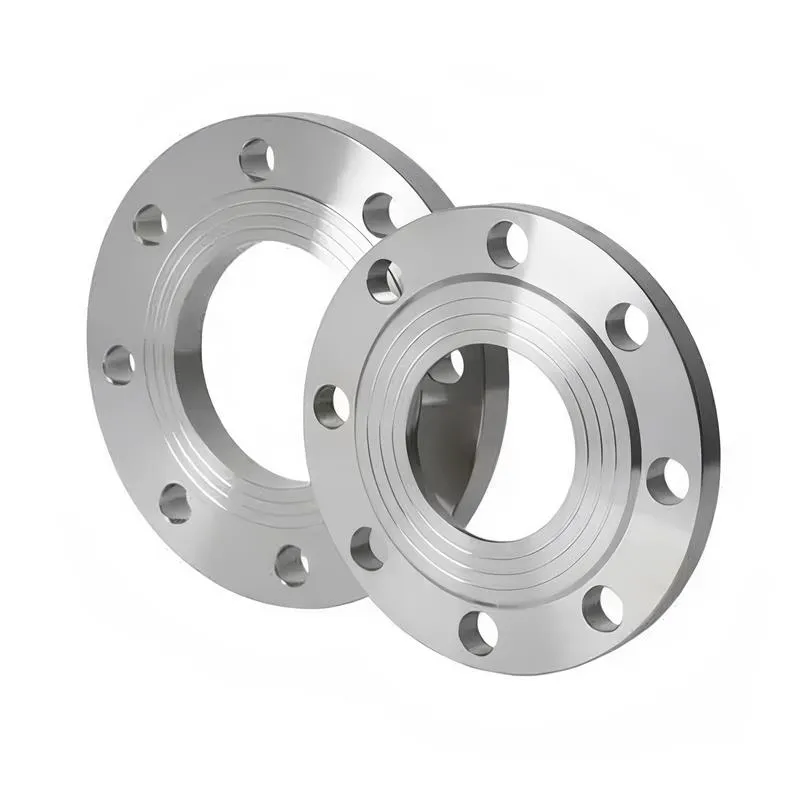
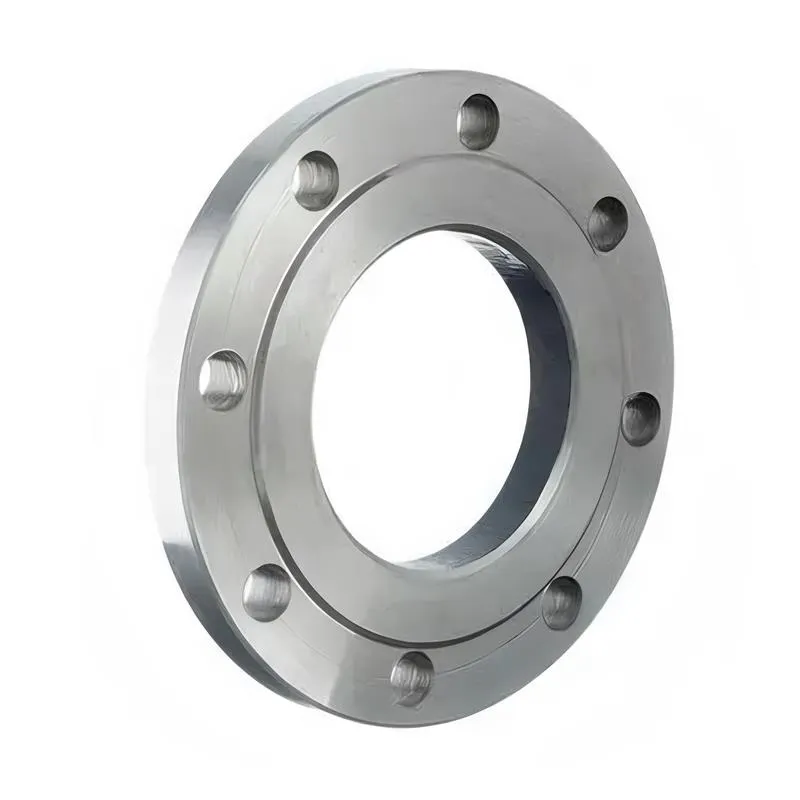
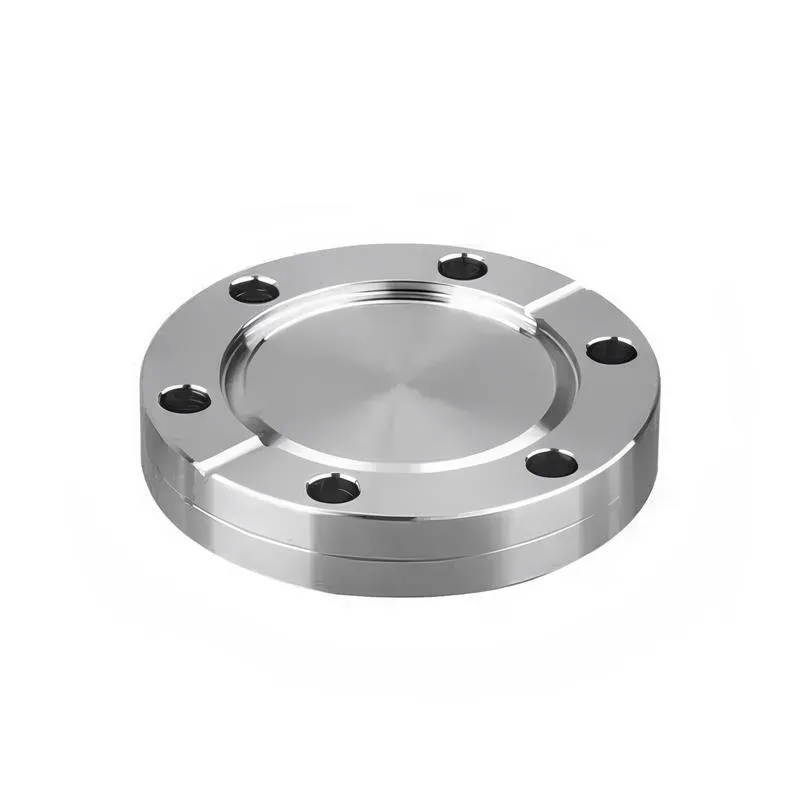
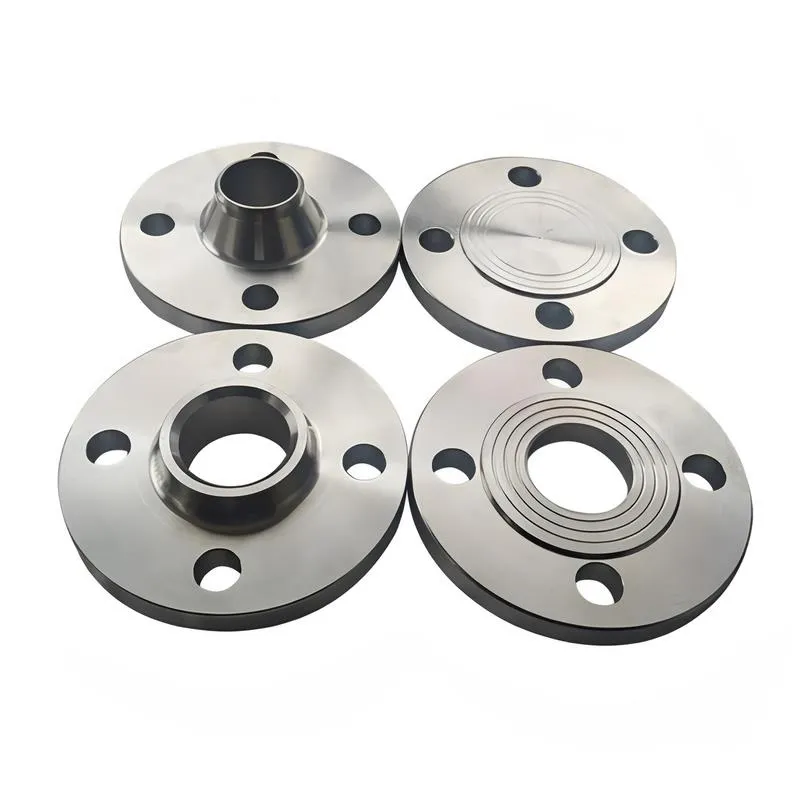
1,We Manufacturing processes are primarily classified into four types:
1:Forging,
2:Casting,
3:Cutting,
4:Rolling.
2,We can manufacture in accordance with these standards.
Standards:
GB Series (Chinese Standards), JB Series (Machinery Standards), HG Series (Chemical Industry Standards), ASME B16.5 (American Standards), BS4504 (British Standards), DIN (German Standards), and JIS (Japanese Standards).
Internationally, there are two primary systems of pipe flange standards: the European system, represented by the German DIN standards (including those of the former Soviet Union), and the American system, represented by the US ANSI pipe flange standards. Other common standards include: the Chinese Ministry of Machinery Industry standards (JB series), the Ministry of Chemical Industry standards (HG series), the Chinese National Standard *GB/T 9112–9124-2010 Steel Pipe Flanges*, as well as US standards (ASME B16.5), British standards (BS4504), German standards (DIN), Japanese standards (JIS), and marine standards (CBM), among others.
The nominal pressure ratings for the PN series are designated by "PN" and comprise the following nine levels: PN2.5, PN6, PN10, PN16, PN25, PN40, PN63, PN100, and PN160.
The nominal pressure ratings for the Class series are designated by "Class" and comprise the following six levels: Class150, Class300, Class600, Class900, Class1500, and Class2500.
Flange Classification
1. **According to Chemical Industry Standards:** Flanges are classified as follows:
Plate Flat Welding Flange (PL), Necked Flat Welding Flange (SO), Necked Butt Welding Flange (WN), Integral Flange (IF), Socket Welding Flange (SW), Threaded Flange (Th), Butt Welding Ring Loose Flange (PJ/SE), Blind Flange (BL), Flat Welding Ring Loose Flange (PJ/PJ), and Lined Blind Flange (BL(s)).
2. **According to Petrochemical (SH) Industry Standards:** Flanges are classified as follows:
Threaded Flange (PL), Butt Welding Flange (WN), Flat Welding Flange (SO), Socket Welding Flange (SW), Loose Flange (LJ), and Blind Flange (no specific designation).
3. **According to Machinery (JB) Industry Standards:** Flanges are classified as follows:
Integral Flange, Butt Welding Flange, Plate Flat Welding Flange, Butt Welding Ring Plate Loose Flange, Flat Welding Ring Plate Loose Flange, Lap Joint Ring Plate Loose Flange, and Blind Flange.
4. **According to Connection Method/Type:** Flanges are classified as follows:
Plate Flat Welding Flange, Necked Flat Welding Flange, Necked Butt Welding Flange, Socket Welding Flange, Threaded Flange, Blind Flange, Necked Butt Welding Ring Loose Flange, Flat Welding Ring Loose Flange, Ring-Type Joint (RTJ) Flange and Blind Flange, Large-Diameter Plate Flange, Large-Diameter High-Neck Flange, Figure-8 Blind Plate, Butt Welding Ring Loose Flange, etc.
5. **According to the Component Being Connected:** Flanges can be classified into Vessel Flanges and Pipe Flanges.
6. **According to Structural Type:** Flanges include Integral Flanges, Threaded Flanges, Flat Welding Flanges, Butt Welding Flanges, Lap Joint (Loose/Swivel) Flanges, and Blind Flanges.
A flange—also referred to as a flange plate or rim—is a component used to connect shafts to one another, or, more commonly, to join the ends of pipes. Flanges are also utilized at the inlet and outlet ports of equipment to facilitate connections between two devices—for instance, the flange on a speed reducer. A "flange connection" or "flanged joint" refers to a detachable joint assembly comprising three interconnected elements—a flange, a gasket, and bolts—that together form a sealed structural unit. In the context of piping systems, a "pipe flange" specifically denotes a flange used for plumbing within the installation; when applied to equipment, it refers to the inlet or outlet flange of that specific device. Flanges feature a series of holes through which bolts are inserted to securely fasten the two flanges together, while a gasket placed between the flanges ensures a leak-proof seal. Flanges are broadly categorized into three types: threaded (screw-in) flanges, welded flanges, and clamp-type flanges. Flanges are invariably used in pairs; threaded flanges are suitable for low-pressure piping applications, whereas welded flanges are required for systems operating at pressures exceeding 4 kilograms per square centimeter. A sealing gasket is inserted between the two flange plates, which are then firmly secured using bolts. The thickness of a flange—as well as the specifications of the bolts used to fasten it—vary depending on the specific pressure rating required for the application. When connecting equipment such as water pumps or valves to piping systems, the corresponding connection points on these devices are often manufactured in the shape of a matching flange; this method of attachment is also referred to as a "flange connection." Generally, any connecting component that utilizes bolts to join and seal the perimeters of two flat surfaces—such as the joints in ventilation ducts—is termed a "flange"; such components may collectively be classified as "flange-type parts." However, since such a connection often constitutes merely a *portion* of a larger device—for instance, the interface between a flange and a water pump—it would be inappropriate to classify the entire water pump itself as a "flange-type part." Conversely, smaller components—such as valves—that feature such flanged interfaces may indeed be appropriately categorized as "flange-type parts."
-:-
For detailed product information, please contact sales.
-:
Crucible Steel Flange CPM® Rex® 54® (HS) High Speed Steel Flange Product Information
-:-
For detailed product information, please contact sales.
-:
Crucible Steel Flange CPM® Rex® 54® (HS) High Speed Steel Flange Synonyms
-:-
For detailed product information, please contact sales.
-:
Crucible Steel CPM® Rex® 54® (HS) High Speed Steel Product Information
-:-
For detailed product information, please contact sales.
-:
# **Technical Datasheet: Crucible Steel CPM® Rex® 54® (HS) High Speed Steel**
---
## **1. Product Overview**
**Crucible CPM® Rex® 54®** is a specialized, ultra-high-performance **powder metallurgy (PM), high-cobalt, high-carbon high-speed steel (HSS)** designed to push the boundaries of **hot hardness (red-hardness) and cutting edge stability** under extreme thermal and mechanical loads. The "54" designation reflects its strategic position as a high-end cobalt steel within the Rex family, engineered to surpass the hot hardness of conventional 8-10% Co steels while maintaining usable toughness. Manufactured via Crucible's proprietary CPM process, it delivers a **fully dense, segregation-free microstructure** with uniform distribution of hard carbides and cobalt, eliminating the performance inconsistencies of wrought super-high-speed steels.
This material is formulated for the most demanding **high-speed, high-temperature machining applications**, particularly where conventional cobalt HSS (like M42) or even some carbide grades reach their thermal limits. It represents a bridge between premium HSS and advanced cutting materials, offering exceptional heat resistance for machining superalloys, hardened steels, and abrasive composites under aggressive cutting conditions.
---
## **2. Key International Standards & Designations**
| Country/System | Standard Designation | Equivalent/Closest Specification |
| :--- | :--- | :--- |
| **USA (Crucible)** | **CPM® Rex® 54®** | Proprietary PM Super Cobalt HSS |
| **USA (AISI/SAE)** | **- -** | Exceeds specifications of M42, M48-type steels |
| **USA (ASTM)** | **ASTM A600** | Custom PM Grade |
| **ISO** | **ISO 4957:2018** | **HS10-4-3-10 / Custom** (Beyond standard) |
| **Europe (EN)** | **- -** | Proprietary composition |
| **Common Industry Names** | Super Red-Hardness HSS, Ultra-Cobalt HSS | - |
| **Performance Class** | **Ultra-High-Speed Steel (UHS)** | - |
**Note:** CPM Rex 54 is a proprietary, beyond-standard alloy. It is engineered for maximum performance rather than compliance with historical specifications, placing it in the ultra-high-speed steel (UHS) category.
---
## **3. Chemical Composition (Typical %)**
The chemistry is aggressively optimized to maximize hot hardness through synergistic alloying, with a focus on high cobalt and carbon for peak performance.
| Element | Weight % (Typical) | Metallurgical Function & Rationale |
| :--- | :--- | :--- |
| **Carbon (C)** | **1.40 - 1.55** | **Higher than standard cobalt HSS.** Ensures a fully saturated martensitic matrix for maximum base hardness and provides carbon for enhanced secondary carbide precipitation, contributing to hot hardness. |
| **Tungsten (W)** | 9.00 - 10.50 | Very high tungsten content for exceptional **solid solution strengthening and hot hardness**. Forms stable, heat-resistant tungsten carbides. |
| **Molybdenum (Mo)** | 3.00 - 4.00 | Works synergistically with tungsten to enhance hardenability, refine grain, and contribute to secondary hardening. |
| **Chromium (Cr)** | 3.50 - 4.50 | Provides necessary hardenability and oxidation resistance at high temperatures. |
| **Vanadium (V)** | 2.80 - 3.30 | Provides critical **wear resistance** through vanadium carbide (VC) formation. Level is balanced to protect the edge without making grinding impractical. |
| **Cobalt (Co)** | **9.50 - 10.50** | **The core performance driver.** Cobalt dramatically increases the matrix's **tempering resistance and elevated-temperature hardness** by raising the alloy's "red-hardness" threshold. This level targets the upper practical limit for HSS toughness. |
| **Silicon (Si), Manganese (Mn)** | < 0.50 | Standard additions. |
**Key Microstructural Advantages:**
- **Cobalt Homogeneity:** The PM process prevents cobalt segregation, ensuring uniform hot hardness throughout the tool.
- **Refined, Heat-Resistant Carbides:** Fine, uniformly dispersed complex carbides (W, Mo, V) resist coarsening at high temperatures.
- **Isotropic Thermal Stability:** Predictable thermal expansion and contraction in all directions during heating/cooling cycles.
---
## **4. Physical & Mechanical Properties**
### **4.1 Standard Heat Treatment**
* **Annealing:** Heat to 870-900°C (1600-1650°F), slow cool. Annealed hardness: **~280-310 HB** (very high due to alloy content).
* **Preheating:** **Critical.** Triple preheat at 550°C, 750°C, and 950°C is recommended for complex parts.
* **Austenitizing:** **1210-1240°C (2210-2265°F).** Very high temperature required for solutionizing. **Precise control (±3°C) is essential.** Vacuum furnace mandatory.
* **Quenching:** **High-pressure gas quench (6+ bar) or salt bath.**
* **Tempering:** **Triple or quadruple tempering is mandatory.** Temper at **550-580°C (1020-1075°F)** for 2+ hours each. **Deep cryogenic treatment (-120°C/-184°F)** is strongly recommended.
* **Expected Hardness:** **68-70 HRC** (can reach 70-71 HRC with optimized treatment).
### **4.2 Mechanical Properties (Hardened & Tempered)**
| Property | Value / Rating (Typical) | Performance Context |
| :--- | :--- | :--- |
| **Hardness** | **68 - 70 HRC** | **Extreme base hardness**, enabling extremely sharp and geometrically stable cutting edges. |
| **Hot Hardness (600°C/1112°F)** | **~64-66 HRC** | **Exceptional / Best-in-Class (HSS).** Maintains cutting capability at temperatures where most HSS has softened significantly. |
| **Abrasive Wear Resistance** | **Excellent** | Very good due to high hardness and vanadium content, though optimized for heat over pure abrasion. |
| **Transverse Rupture Strength (TRS)** | **2,600 - 3,200 MPa** | **Moderate.** High cobalt and carbon reduce toughness; design must avoid impact. |
| **Compressive Strength** | **~ 3,500 - 4,000 MPa** | Outstanding, suitable for high-pressure cutting. |
| **Thermal Fatigue Resistance** | **Excellent** | Resists cracking from repeated heating/cooling cycles in intermittent cutting. |
| **Grindability** | **Fair** | Challenging due to high hardness and carbide content. **CBN grinding is essential** for efficient stock removal. |
### **4.3 Physical Properties (Approximate)**
* Density: ~8.40 g/cm³
* Thermal Conductivity: ~26 W/m·K (Slightly higher than standard HSS due to high Co)
* Coefficient of Thermal Expansion: 11.0 x 10⁻⁶/K
* Modulus of Elasticity: 225 GPa
* Specific Heat: 460 J/kg·K
---
## **5. Typical Product Applications**
CPM Rex 54 is reserved for **extreme machining applications** where heat is the primary enemy and no other HSS can maintain an edge.
* **Ultra-High-Speed Cutting Tools:**
* **Drills & End Mills:** For **dry, high-speed machining of nickel-based superalloys (Inconel 718, 725, Rene alloys), cobalt alloys, and hardened die steels (55+ HRC).**
* **Gear Hobs & Shaper Cutters:** For machining high-strength, heat-resistant gear materials.
* **Broaches & Reamers:** For precision finishing of superalloy components in aerospace.
* **Inserts & Tool Bits:** For turning superalloys at parameters approaching those used with ceramics.
* **High-Temperature Wear Parts:** Components requiring dimensional stability and wear resistance at sustained temperatures up to 550°C (1020°F).
---
## **6. Processing & Manufacturing Guidelines**
* **Machinability (Annealed):** **Extremely Poor.** The annealed state is very hard and abrasive. **EDM is the primary shaping method** for finished tool geometries.
* **Grindability:** **Fair to Poor.** **CBN wheels are mandatory.** Requires rigid grinding machines, light infeeds, and excellent coolant delivery. Diamond grinding can be used for finishing.
* **EDM Machining:** **The preferred manufacturing method.** Provides excellent accuracy and surface finish. A post-EDM temper at 150-180°C is critical to relieve surface stresses.
* **Surface Treatments/Coatings:** An **excellent substrate for advanced PVD coatings (AlTiN, AlCrN, SiAlN)**. The extreme base hardness and thermal stability allow these coatings to perform at their theoretical limits.
---
## **7. Comparative Performance & Selection Notes**
| Criterion | **CPM Rex 54** | **CPM Rex 20 (M42-type)** | **CPM M4** | **Whisker-Reinforced Ceramic** |
| :--- | :--- | :--- | :--- | :--- |
| **Hot Hardness (600°C)** | **~64-66 HRC** | ~62-64 HRC | ~58-60 HRC | **Hardness retained** |
| **Room Temp Hardness** | **68-70 HRC** | 67-69 HRC | 64-66 HRC | 92-94 HRA |
| **Toughness** | Low | Fair | Good | **Very Low** |
| **Optimal Cutting Speed** | **Very High (HSS)** | High | Moderate-High | **Extremely High** |
| **Thermal Shock Resistance** | Good | Good | Good | Poor |
| **Cost** | Very High | High | Moderate-High | High |
**When to Choose CPM Rex 54:**
1. Machining **advanced aerospace superalloys** where cutting zone temperatures exceed the capacity of M42-type steels.
2. **Dry or high-speed machining** strategies are employed, and HSS is preferred over carbide for toughness or tool geometry reasons.
3. **Extended tool life at elevated temperatures** is the critical economic factor, justifying the high material and processing cost.
4. It serves as a **high-performance alternative to ceramic or CBN** in applications where those materials are too brittle or costly to shape.
**Limitations:**
- **Low toughness:** Not for interrupted cuts or unstable conditions.
- **Very high cost:** Material and processing costs are significant.
- **Complex heat treatment:** Requires sophisticated furnace technology.
---
## **8. Conclusion**
**Crucible CPM® Rex® 54® represents the zenith of hot hardness development in high-speed steel technology.** It is a **specialist material engineered for a specific, extreme environment**: the cutting zone in high-temperature alloy machining where thermal softening is the dominant failure mechanism.
By leveraging a **high-cobalt, high-carbon matrix refined through powder metallurgy**, Rex 54 achieves a level of red-hardness that redefines the capabilities of steel cutting tools. Its value is realized in **high-value machining operations** where maximizing cutting speed, feed rate, or tool life on expensive components directly impacts profitability.
While not a general-purpose steel, for the **niche of ultra-high-speed machining of heat-resistant alloys**, **CPM Rex 54 provides an unrivaled HSS solution, offering a unique combination of extreme heat resistance and sufficient toughness to be manufactured and used in complex cutting tool geometries.** It is the ultimate choice when pushing the thermal limits of HSS machining.
---
-:-
For detailed product information, please contact sales.
-:
Crucible Steel CPM® Rex® 54® (HS) High Speed Steel Specification
Dimensions
Size:
Diameter 20-1000 mm Length <5235 mm
Size:We can customized as required
Standard:
Per your request or drawing
We can customized as required
Properties(Theoretical)
Chemical Composition
-:-
For detailed product information, please contact sales.
-:
Crucible Steel CPM® Rex® 54® (HS) High Speed Steel Properties
-:-
For detailed product information, please contact sales.
-:
Applications of Crucible Steel Flange CPM® Rex® 54® (HS) High Speed Steel Flange
-:-
For detailed product information, please contact sales.
-:
Chemical Identifiers Crucible Steel Flange CPM® Rex® 54® (HS) High Speed Steel Flange
-:-
For detailed product information, please contact sales.
-:
Packing of Crucible Steel Flange CPM® Rex® 54® (HS) High Speed Steel Flange
-:-
For detailed product information, please contact sales.
-:
Standard Packing:
-:-
For detailed product information, please contact sales.
-:
Typical bulk packaging includes palletized plastic 5 gallon/25 kg. pails, fiber and Steel Flange drums to 1 ton super sacks in full container (FCL) or truck load (T/L) quantities. Research and sample quantities and hygroscopic, oxidizing or other air sensitive materials may be packaged under argon or vacuum. Solutions are packaged in polypropylene, plastic or glass jars up to palletized 1706 gallon liquid totes Special package is available on request. E FORUs’ is carefully handled to minimize damage during storage and transportation and to preserve the quality of our products in their original condition