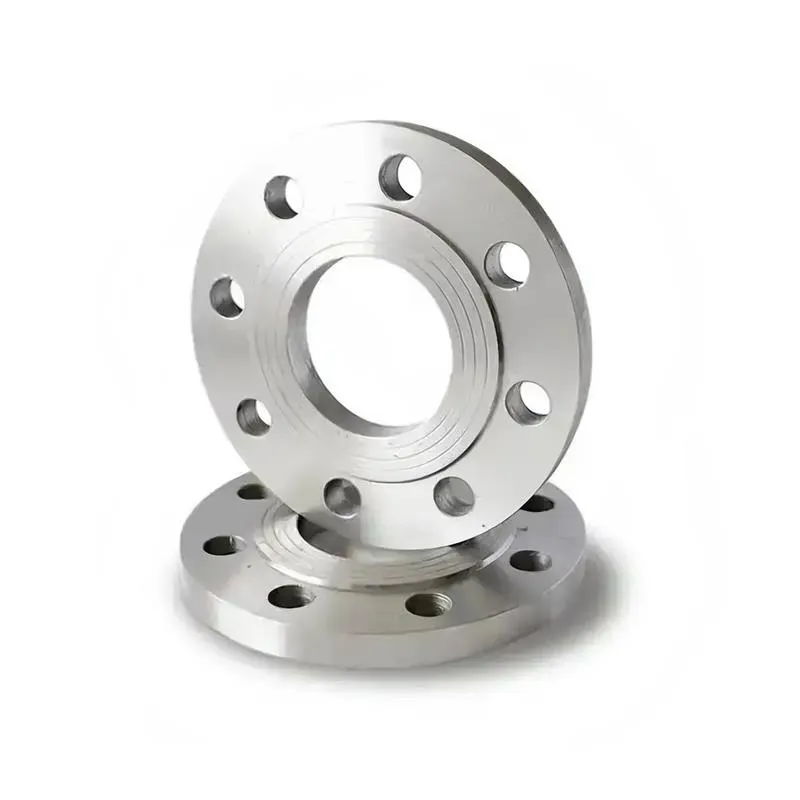
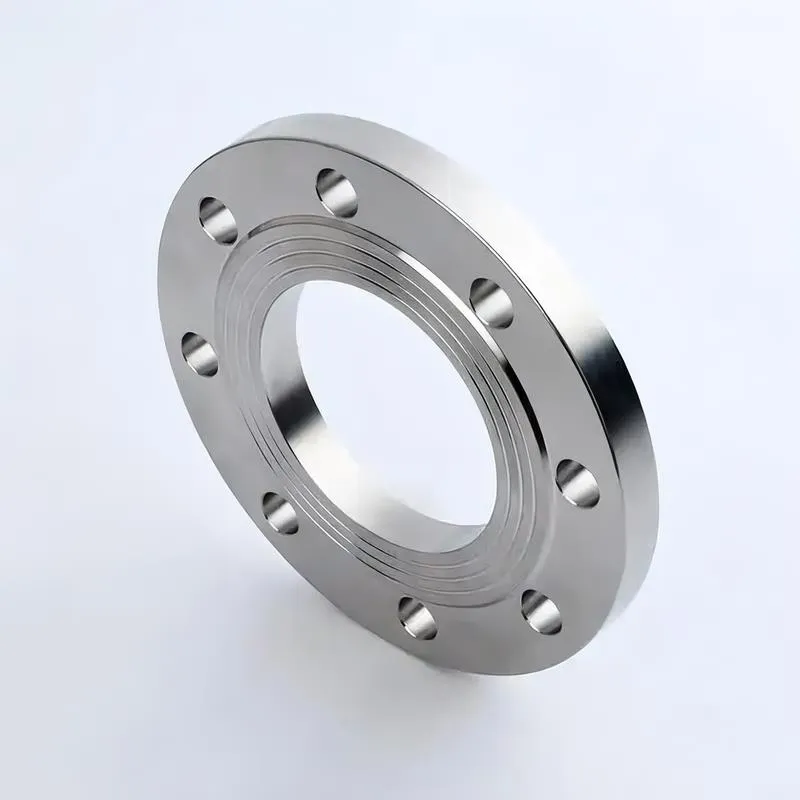
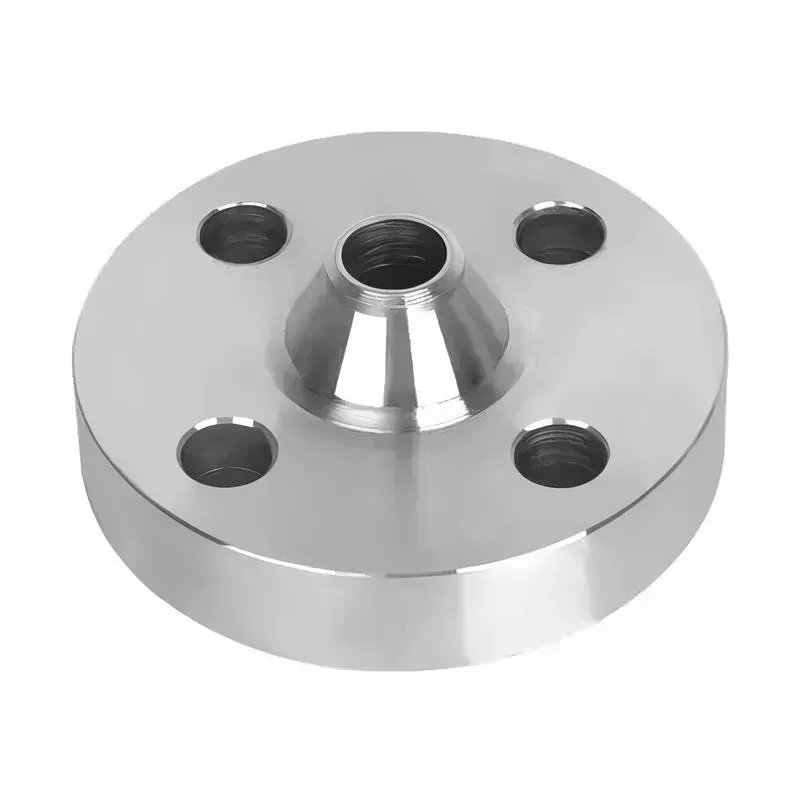
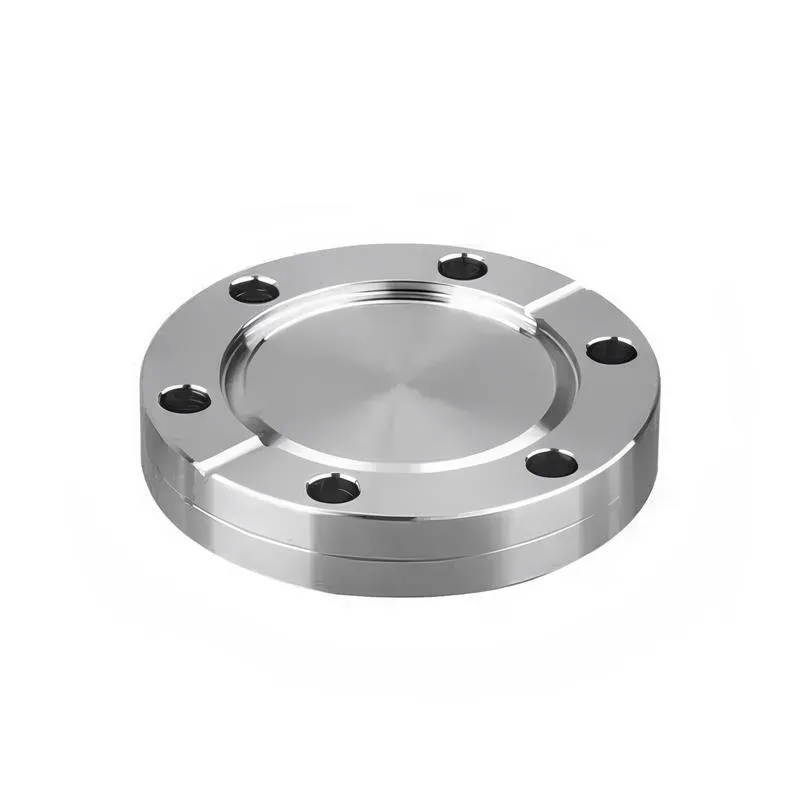
1,We Manufacturing processes are primarily classified into four types:
1:Forging,
2:Casting,
3:Cutting,
4:Rolling.
2,We can manufacture in accordance with these standards.
Standards:
GB Series (Chinese Standards), JB Series (Machinery Standards), HG Series (Chemical Industry Standards), ASME B16.5 (American Standards), BS4504 (British Standards), DIN (German Standards), and JIS (Japanese Standards).
Internationally, there are two primary systems of pipe flange standards: the European system, represented by the German DIN standards (including those of the former Soviet Union), and the American system, represented by the US ANSI pipe flange standards. Other common standards include: the Chinese Ministry of Machinery Industry standards (JB series), the Ministry of Chemical Industry standards (HG series), the Chinese National Standard *GB/T 9112–9124-2010 Steel Pipe Flanges*, as well as US standards (ASME B16.5), British standards (BS4504), German standards (DIN), Japanese standards (JIS), and marine standards (CBM), among others.
The nominal pressure ratings for the PN series are designated by "PN" and comprise the following nine levels: PN2.5, PN6, PN10, PN16, PN25, PN40, PN63, PN100, and PN160.
The nominal pressure ratings for the Class series are designated by "Class" and comprise the following six levels: Class150, Class300, Class600, Class900, Class1500, and Class2500.
Flange Classification
1. **According to Chemical Industry Standards:** Flanges are classified as follows:
Plate Flat Welding Flange (PL), Necked Flat Welding Flange (SO), Necked Butt Welding Flange (WN), Integral Flange (IF), Socket Welding Flange (SW), Threaded Flange (Th), Butt Welding Ring Loose Flange (PJ/SE), Blind Flange (BL), Flat Welding Ring Loose Flange (PJ/PJ), and Lined Blind Flange (BL(s)).
2. **According to Petrochemical (SH) Industry Standards:** Flanges are classified as follows:
Threaded Flange (PL), Butt Welding Flange (WN), Flat Welding Flange (SO), Socket Welding Flange (SW), Loose Flange (LJ), and Blind Flange (no specific designation).
3. **According to Machinery (JB) Industry Standards:** Flanges are classified as follows:
Integral Flange, Butt Welding Flange, Plate Flat Welding Flange, Butt Welding Ring Plate Loose Flange, Flat Welding Ring Plate Loose Flange, Lap Joint Ring Plate Loose Flange, and Blind Flange.
4. **According to Connection Method/Type:** Flanges are classified as follows:
Plate Flat Welding Flange, Necked Flat Welding Flange, Necked Butt Welding Flange, Socket Welding Flange, Threaded Flange, Blind Flange, Necked Butt Welding Ring Loose Flange, Flat Welding Ring Loose Flange, Ring-Type Joint (RTJ) Flange and Blind Flange, Large-Diameter Plate Flange, Large-Diameter High-Neck Flange, Figure-8 Blind Plate, Butt Welding Ring Loose Flange, etc.
5. **According to the Component Being Connected:** Flanges can be classified into Vessel Flanges and Pipe Flanges.
6. **According to Structural Type:** Flanges include Integral Flanges, Threaded Flanges, Flat Welding Flanges, Butt Welding Flanges, Lap Joint (Loose/Swivel) Flanges, and Blind Flanges.
A flange—also referred to as a flange plate or rim—is a component used to connect shafts to one another, or, more commonly, to join the ends of pipes. Flanges are also utilized at the inlet and outlet ports of equipment to facilitate connections between two devices—for instance, the flange on a speed reducer. A "flange connection" or "flanged joint" refers to a detachable joint assembly comprising three interconnected elements—a flange, a gasket, and bolts—that together form a sealed structural unit. In the context of piping systems, a "pipe flange" specifically denotes a flange used for plumbing within the installation; when applied to equipment, it refers to the inlet or outlet flange of that specific device. Flanges feature a series of holes through which bolts are inserted to securely fasten the two flanges together, while a gasket placed between the flanges ensures a leak-proof seal. Flanges are broadly categorized into three types: threaded (screw-in) flanges, welded flanges, and clamp-type flanges. Flanges are invariably used in pairs; threaded flanges are suitable for low-pressure piping applications, whereas welded flanges are required for systems operating at pressures exceeding 4 kilograms per square centimeter. A sealing gasket is inserted between the two flange plates, which are then firmly secured using bolts. The thickness of a flange—as well as the specifications of the bolts used to fasten it—vary depending on the specific pressure rating required for the application. When connecting equipment such as water pumps or valves to piping systems, the corresponding connection points on these devices are often manufactured in the shape of a matching flange; this method of attachment is also referred to as a "flange connection." Generally, any connecting component that utilizes bolts to join and seal the perimeters of two flat surfaces—such as the joints in ventilation ducts—is termed a "flange"; such components may collectively be classified as "flange-type parts." However, since such a connection often constitutes merely a *portion* of a larger device—for instance, the interface between a flange and a water pump—it would be inappropriate to classify the entire water pump itself as a "flange-type part." Conversely, smaller components—such as valves—that feature such flanged interfaces may indeed be appropriately categorized as "flange-type parts."
-:-
For detailed product information, please contact sales.
-:
AISI M1015 Merchant Quality Carbon Steel Flange, Composition Spec Product Information
-:-
For detailed product information, please contact sales.
-:
AISI M1015 Merchant Quality Carbon Steel Flange, Composition Spec Synonyms
-:-
For detailed product information, please contact sales.
-:
AISI M1015 Merchant Quality Carbon Steel, Composition Spec Product Information
-:-
For detailed product information, please contact sales.
-:
# Product Datasheet: AISI M1015 Merchant Quality Carbon Steel
## Composition Specification
---
### 1. PRODUCT OVERVIEW
**AISI M1015 Merchant Quality (MQ) Carbon Steel** is a standardized low-carbon steel formulation specifically designated for general-purpose manufacturing and construction applications where **chemical composition consistency** is the primary procurement requirement, rather than guaranteed mechanical properties. The "M" prefix explicitly denotes **Merchant Quality**, establishing a clear commercial agreement that the material is supplied to meet precise chemical composition limits while mechanical properties are reported as typical values but **not guaranteed** by the producer.
This quality designation represents the most economical tier of standardized steel procurement, optimized for applications where cost-effectiveness, predictable fabricability (weldability, formability, machinability), and consistent chemical response are prioritized over certified mechanical performance. M1015 MQ steel serves as a reliable, cost-controlled base material for non-critical components where design incorporates substantial safety factors or where the application does not require specific minimum strength values.
---
### 2. KEY SPECIFICATIONS & INTERNATIONAL STANDARDS
| **Parameter** | **Specification** |
|---------------|-------------------|
| **AISI/SAE Designation** | **M1015** (Critical "M" prefix indicates Merchant Quality) |
| **UNS Designation** | G10150 (Note: Shares UNS with standard AISI 1015; quality distinction is commercial) |
| **Primary Governing Standard** | **ASTM A283/A283M** - Standard Specification for Low and Intermediate Tensile Strength Carbon Steel Plates |
| **Relevant Supporting Standards** | **ASTM A575/A575M** - Steel Bars, Carbon, Merchant Quality, M-Grades
**ASTM A576/A576M** - Steel Bars, Carbon, Hot-Wrought, Special Quality (for comparison)
**ASTM A36/A36M** - Structural Steel (different philosophy: guaranteed mechanical properties) |
| **Quality Philosophy** | **Composition-Constrained, Properties-Typical** |
| **Common Product Forms** | Hot-rolled bars, merchant bars (angles, channels, flats), plates, occasionally sheets |
**International Context & Quality Philosophy:**
- **Europe:** No direct equivalent; similar to "non-alloy steel" with standard composition but without EN 10204 Type 3.1/3.2 certification
- **General International:** Represents a specific North American commercial practice; other regions may use "Commercial Quality" or similar with different implications
- **Key Distinction:** Unlike most international standards that either guarantee properties or are completely generic, MQ establishes explicit chemical limits without property guarantees
---
### 3. CHEMICAL COMPOSITION (% BY WEIGHT) - SPECIFICATION REQUIREMENTS
| **Element** | **Composition Range** | **AISI 1015 Standard Range** | **Significance of Control in MQ** |
|-------------|----------------------|------------------------------|-----------------------------------|
| **Carbon (C)** | **0.13 - 0.18%** | Same as standard 1015 | Primary controlled element; ensures consistent weldability and formability response |
| **Manganese (Mn)** | **0.30 - 0.60%** | Same as standard 1015 | Controlled for predictable hardenability and hot workability |
| **Phosphorus (P)** | **≤ 0.040% max** | Same as standard 1015 | Residual control for consistent cold formability and weld integrity |
| **Sulfur (S)** | **≤ 0.050% max** | Same as standard 1015 | Residual control balancing machinability and hot workability |
| **Silicon (Si)** | **0.10 - 0.20% (typical)** | Same as standard 1015 | Deoxidizer control for consistent internal quality |
| **Copper (Cu)** | **≥ 0.20% min (when specified)** | Optional in standard 1015 | **Key MQ option:** When specified for enhanced atmospheric corrosion resistance |
| **Residual Elements** | Typically not specified | Varies | MQ may have less stringent control than SQ (Special Quality) grades |
**Critical Manufacturing & Procurement Notes:**
1. **"When Specified" Elements:**
- Copper content ≥ 0.20% is **optional** but becomes mandatory when specified on purchase order
- This allows procurement of either standard or copper-bearing steel from the same M1015 designation
2. **Comparison with Special Quality (SQ):**
- MQ typically has **less restrictive controls** on residual elements (Cr, Ni, Mo, Cu)
- SQ grades (ASTM A576) may specify maximum limits for these elements to ensure weldability
- MQ prioritizes chemical consistency of major elements over comprehensive residual control
3. **Certification Basis:**
- Mill certifies **chemical composition only**
- Mechanical properties may be reported but are **informational only**
- No guarantee of meeting any specific mechanical property values
---
### 4. TYPICAL PHYSICAL & MECHANICAL PROPERTIES (INFORMATIONAL)
*Important Notice: The following properties are **typical** for hot-rolled M1015 MQ steel but are **NOT GUARANTEED** by the Merchant Quality specification. Actual properties may vary significantly between heats, producers, and processing conditions.*
#### 4.1 Typical Mechanical Properties (Hot-Rolled Condition)
| **Property** | **Typical Range** | **Condition** | **Reliability Note** |
|--------------|-------------------|---------------|----------------------|
| **Tensile Strength** | 400-490 MPa (58-71 ksi) | As hot-rolled | Can vary ±15% between heats |
| **Yield Strength (0.2% offset)** | 250-310 MPa (36-45 ksi) | As hot-rolled | Design should not rely on minimum values |
| **Elongation in 50 mm** | 23-30% | As hot-rolled | Ductility generally good but not guaranteed |
| **Reduction of Area** | 45-55% | As hot-rolled | - |
| **Hardness (Brinell)** | 110-135 HB | As hot-rolled | Suitable for many machining operations |
| **Modulus of Elasticity** | 200 GPa (29,000 ksi) | - | Consistent across all low-carbon steels |
| **Shear Strength** | 280-340 MPa (41-49 ksi) | - | Estimated as 0.7 × tensile |
| **Fatigue Strength** (10⁷ cycles) | 180-220 MPa (26-32 ksi) | Polished specimen | Highly variable; testing recommended |
#### 4.2 Typical Physical Properties
| **Property** | **Value** | **Notes** |
|--------------|-----------|-----------|
| **Density** | 7.85 g/cm³ (0.284 lb/in³) | Standard for carbon steels |
| **Melting Point** | 1480-1520°C (2696-2768°F) | - |
| **Thermal Conductivity** | 49.8 W/m·K at 100°C | - |
| **Electrical Resistivity** | 0.170 μΩ·m at 20°C | - |
| **Coefficient of Thermal Expansion** | 11.7 × 10⁻⁶/°C (20-100°C) | - |
| **Specific Heat Capacity** | 486 J/kg·K at 20°C | - |
#### 4.3 Fabrication Properties (Based on Chemistry)
| **Characteristic** | **Rating** | **Basis in M1015 Chemistry** |
|-------------------|------------|------------------------------|
| **Weldability** | **Excellent** | Low carbon equivalent (CE ≈ 0.20-0.25): CE = C + Mn/6 |
| **Machinability** | **Good** (60-70% of 1212) | Controlled sulfur provides some chip breaking |
| **Cold Formability** | **Very Good** | Low carbon and controlled phosphorus |
| **Hot Formability** | **Excellent** | - |
| **Hardenability** | **Very Low** | Cannot be through-hardened; suitable for case hardening |
| **Forgability** | **Excellent** | - |
---
### 5. METALLURGICAL & QUALITY PHILOSOPHY
#### 5.1 The Merchant Quality Rationale
The M1015 designation exists within a specific commercial framework:
1. **Cost Optimization:** Eliminates costs associated with mechanical testing and certification
2. **Risk Allocation:** Shifts responsibility for property verification to purchaser/fabricator
3. **Application-Specific:** For uses where chemistry dictates performance more than strength
4. **Supply Chain Efficiency:** Streamlines procurement for non-critical applications
5. **Historical Practice:** Established commercial tradition in North American steel distribution
#### 5.2 Comparison with Other Quality Designations
| **Aspect** | **Merchant Quality (MQ)** | **Commercial Quality (CQ)** | **Structural Quality (SQ)** | **Special Quality (ASTM A576)** |
|------------|---------------------------|-----------------------------|----------------------------|---------------------------------|
| **Primary Focus** | **Chemical Composition** | Dimensional/Surface Quality | **Mechanical Properties** | **Both Chemistry & Properties** |
| **Guarantees** | Chemistry Only | Chemistry, Dimensions, Surface | Minimum Mechanical Properties | Chemistry & Minimum Properties |
| **Testing** | Chemistry Only | Limited Mechanical (typical) | Full Mechanical Testing | Full Testing with Certification |
| **Cost Premium** | **Lowest** | Low | Moderate | Higher |
| **Typical Use** | Non-critical fabrication | General manufacturing | Structural applications | Critical components |
#### 5.3 Implications for Design & Fabrication
**When M1015 MQ is Appropriate:**
- Non-load-bearing components
- Applications with high safety factors (>4:1)
- Where weldability/formability are critical, strength is secondary
- Prototype or development work
- Educational or research applications
**When to Specify Higher Quality Grades:**
- Code-governed structures (AISC, AWS, ASME)
- Safety-critical components
- Applications with dynamic or impact loading
- Where consistent mechanical properties are essential
- When design utilizes material minimum properties
---
### 6. TYPICAL APPLICATIONS
#### 6.1 Construction & Infrastructure (Non-Structural)
- **Architectural Elements:** Ornamental metalwork, decorative features
- **Temporary Structures:** Formwork, shoring, temporary bracing
- **Non-Load-Bearing Components:** Partitions, wall studs (light duty)
- **Site Fabrications:** Field-fabricated brackets, temporary supports
- **Building Hardware:** Base plates for non-critical equipment
#### 6.2 General Manufacturing & Fabrication
- **Machine Guards & Covers:** Safety enclosures, protective covers
- **Workplace Equipment:** Workbenches, shelving, storage racks (light/medium duty)
- **Jigs & Fixtures:** Manufacturing aids, assembly fixtures
- **Material Handling:** Pallet components, dunnage, shipping fixtures
- **Prototype Development:** Experimental components, mock-ups
#### 6.3 Agricultural & Light Industrial
- **Equipment Housings:** Covers, guards, access panels
- **Implement Components:** Non-stressed parts of agricultural equipment
- **Storage Systems:** Bin components, tank supports (light duty)
- **Processing Equipment:** Non-critical parts of food processing, packaging equipment
#### 6.4 Consumer & Commercial Products
- **Furniture Frames:** Commercial furniture, shelving units
- **Display Equipment:** Store fixtures, exhibition structures
- **Recreational Equipment:** Non-critical components of playground, exercise equipment
- **Signage & Displays:** Structural frames for signs, display boards
#### 6.5 Automotive & Transportation (Non-Critical)
- **Trailer Components:** Non-structural members, accessories
- **Vehicle Accessories:** Racks, carriers, aftermarket additions
- **Service Equipment:** Maintenance stands, service tools
- **Transportation Infrastructure:** Non-critical parts of loading docks, ramps
---
### 7. PROCESSING & FABRICATION GUIDELINES
#### 7.1 Standard Fabrication Processes
| **Process** | **Suitability** | **Special Considerations for MQ** |
|-------------|-----------------|-----------------------------------|
| **Welding** | Excellent - all processes | Chemistry ensures good weldability; no special restrictions |
| **Cold Forming** | Very Good | Consistent chemistry provides predictable springback and formability |
| **Hot Forming** | Excellent | - |
| **Machining** | Good | Typical hardness provides reasonable tool life |
| **Shearing/Punching** | Excellent | - |
| **Heat Treatment** | Case hardening only | Through-hardening not possible; excellent for carburizing |
#### 7.2 Welding Recommendations
- **Processes:** SMAW, GMAW, GTAW, FCAW all suitable
- **Filler Metals:** ER70S-X, E70XX series appropriate
- **Preheat:** Not required for most thicknesses
- **Procedures:** Standard low-carbon steel procedures applicable
- **Quality:** Chemistry control ensures consistent weld metal behavior
#### 7.3 Machining Parameters (Typical)
- **Turning:** 100-180 m/min, feed 0.15-0.30 mm/rev
- **Drilling:** 20-35 m/min, feed 0.10-0.20 mm/rev
- **Milling:** 80-150 m/min, feed 0.08-0.15 mm/tooth
- **Tooling:** HSS or carbide, standard geometries
---
### 8. PROCUREMENT & QUALITY ASSURANCE
#### 8.1 Purchase Specification Requirements
When procuring M1015 Merchant Quality steel, the purchase order should clearly specify:
1. **Grade Designation:** "AISI M1015 Merchant Quality" (M prefix is critical)
2. **Product Form:** Bar, plate, shape - with dimensions
3. **Chemical Requirements:** Any special requirements (e.g., Cu ≥ 0.20%)
4. **Testing/Certification:** Typically "Chemical analysis only" or "No mechanical testing"
5. **Exceptions:** Any deviation from standard MQ requirements
6. **Application Disclosure:** For supplier awareness (non-critical vs. critical)
#### 8.2 Typical Documentation
- **Certificate of Analysis:** Chemical composition report
- **Material Test Report (MTR):** Basic information only (may state "Merchant Quality")
- **Mill Certificate:** May note "Typical properties only - not guaranteed"
- **Shipping Documents:** Standard commercial documentation
#### 8.3 Incoming Quality Assurance (Purchaser's Responsibility)
For MQ material, the purchaser typically assumes responsibility for:
1. **Verification Testing:** If properties are critical, perform sampling testing
2. **Application Qualification:** Ensure material suitability for intended use
3. **Supplier Qualification:** Assess supplier capability and consistency
4. **Design Margin:** Incorporate appropriate safety factors
#### 8.4 Supplier Qualification Considerations
- **Steelmaking Practice:** Basic oxygen or electric arc furnace capability
- **Quality Systems:** Understanding of MQ vs. other quality designations
- **Technical Support:** Ability to advise on MQ limitations
- **Traceability:** Heat/lot traceability capabilities
- **Consistency:** Historical performance in meeting chemical specifications
---
### 9. INDUSTRY PRACTICES & COMMERCIAL CONSIDERATIONS
#### 9.1 Cost Structure & Economics
- **Base Price:** Typically 5-15% lower than equivalent SQ material
- **Testing Costs:** Eliminated from material price
- **Inventory Impact:** Often stocked as standard merchant bar
- **Minimum Orders:** May have higher minimums than specialty grades
- **Availability:** Widely available through steel service centers
#### 9.2 Supply Chain Considerations
- **Lead Times:** Generally shorter than certified materials
- **Stock Availability:** Commonly stocked in standard shapes and sizes
- **Distribution Network:** Available through full-line steel distributors
- **International Sourcing:** Primarily North American practice; other regions may not recognize "MQ"
#### 9.3 Risk Management Strategies
1. **Application Review:** Formal assessment of MQ suitability
2. **Safety Factors:** Increased design safety factors (4:1 or higher recommended)
3. **Quality Gates:** In-process verification for critical characteristics
4. **Supplier Partnerships:** Long-term relationships with qualified suppliers
5. **Insurance Considerations:** Disclosure of material quality level
---
### 10. TECHNICAL LIMITATIONS & CONSTRAINTS
#### 10.1 Explicit Limitations of M1015 MQ
1. **No Mechanical Property Guarantees:** Cannot be used where design relies on minimum properties
2. **Code Restrictions:** Generally not acceptable for code-governed construction (AISC, AWS, etc.)
3. **Limited Certification:** Cannot provide EN 10204 3.1 or 3.2 certificates
4. **Variable Performance:** Properties may vary significantly between heats
5. **Limited Traceability:** May have less rigorous traceability than SQ grades
#### 10.2 Applications Where M1015 MQ Should NOT Be Used
- **Structural Frameworks:** Buildings, bridges, towers
- **Pressure Components:** Vessels, piping, boilers
- **Dynamic Load Applications:** Rotating machinery, fatigue-loaded components
- **Safety-Critical Parts:** Lifting equipment, personnel protection systems
- **Aerospace Components:** Any flight-critical applications
- **Medical Devices:** Implants or critical surgical instruments
- **Transportation Safety Components:** Brake systems, steering components
#### 10.3 Regulatory & Compliance Considerations
- **Building Codes:** Typically require certified material properties
- **Product Liability:** Increased exposure if used outside intended applications
- **Insurance Requirements:** May mandate certified materials
- **Customer Specifications:** Often require property guarantees
- **Industry Standards:** Many require material certification
---
### 11. COMPARISON WITH RELATED GRADES
| **Grade** | **Quality Designation** | **Carbon Range** | **Key Differentiator** | **Typical Cost Relative to M1015 MQ** |
|-----------|-------------------------|------------------|------------------------|---------------------------------------|
| **M1015** | **Merchant Quality** | 0.13-0.18% | **Chemistry only** guaranteed | 1.00 (base) |
| **1015 CQ** | Commercial Quality | 0.13-0.18% | Dimensional/surface focus | 1.05-1.10 |
| **1015 SQ** | Structural Quality | 0.13-0.18% | Minimum mechanical properties | 1.10-1.20 |
| **A36** | Structural | ≤0.25% C | Code-accepted, guaranteed properties | 1.15-1.25 |
| **1018 MQ** | Merchant Quality | 0.15-0.20% | Higher carbon variant | 1.02-1.05 |
---
### 12. BEST PRACTICES FOR SPECIFICATION & USE
#### 12.1 Specification Guidelines
1. **Use Complete Designation:** Always specify "M1015" not just "1015"
2. **Define Quality Requirements:** Explicitly state "Merchant Quality" or "MQ"
3. **Document Application:** Provide context to supplier for appropriate guidance
4. **Establish Requirements:** Clearly state any special chemical requirements
5. **Review with Engineering:** Ensure technical staff understand implications
#### 12.2 Design Considerations
1. **Conservative Design:** Use high safety factors (minimum 4:1 recommended)
2. **Failure Analysis:** Consider consequences of material variability
3. **Testing Protocol:** Establish in-house verification if properties are important
4. **Alternative Materials:** Identify backup materials if MQ proves unsuitable
5. **Documentation:** Maintain records of material certification and application
#### 12.3 Quality Assurance Recommendations
1. **Supplier Qualification:** Audit suppliers for MQ understanding and consistency
2. **Incoming Verification:** Periodic chemical verification testing
3. **Process Validation:** Validate fabrication processes with actual material
4. **Lot Control:** Maintain heat/lot segregation when possible
5. **Performance Monitoring:** Track field performance of MQ components
---
### 13. FUTURE TRENDS & INDUSTRY EVOLUTION
#### 13.1 Market Trends
- **Declining Usage:** Increasing quality requirements reducing MQ applications
- **Global Harmonization:** International standards reducing MQ distinctions
- **Risk Awareness:** Greater understanding of liability reducing MQ specification
- **Digital Documentation:** Increasing expectation for full material traceability
#### 13.2 Technical Developments
- **Improved Testing:** Lower-cost testing making certification more economical
- **Process Control:** Better steelmaking reducing property variability
- **Alternative Materials:** Engineered alternatives competing with traditional MQ
- **Quality Expectations:** Rising minimum standards across industries
#### 13.3 Strategic Considerations
1. **Application Review:** Regular reassessment of MQ suitability
2. **Supply Chain Strategy:** Consider total cost, not just material price
3. **Quality Evolution:** Plan for potential migration to higher quality grades
4. **Documentation Strategy:** Maintain adequate records for future reference
---
### 14. SUMMARY & RECOMMENDATIONS
#### 14.1 When to Specify M1015 Merchant Quality
- Non-critical, non-code applications
- Where chemistry controls performance more than strength
- Prototype or development work
- Applications with very high safety factors
- Cost-sensitive projects with appropriate risk management
#### 14.2 Critical Success Factors
1. **Clear Understanding:** All stakeholders understand MQ implications
2. **Appropriate Application:** Used only in suitable applications
3. **Supplier Capability:** Qualified, consistent suppliers
4. **Quality Systems:** Appropriate verification and control
5. **Documentation:** Complete records of specifications and applications
#### 14.3 Risk Mitigation Checklist
- [ ] Application reviewed for MQ suitability
- [ ] Design incorporates appropriate safety factors
- [ ] Suppliers qualified for MQ production
- [ ] Quality plan includes material verification
- [ ] Documentation maintains material traceability
- [ ] Liability considerations addressed
- [ ] Alternative materials identified if needed
---
**IMPORTANT LEGAL & TECHNICAL DISCLAIMER:**
This product datasheet describes AISI M1015 Merchant Quality Carbon Steel based on industry standards, practices, and typical characteristics. **Merchant Quality steel has NO GUARANTEED MECHANICAL PROPERTIES.** The information provided regarding typical properties is for reference only and should not be used for design purposes.
Material selection should be made by qualified engineering personnel with full understanding of:
1. Application requirements and criticality
2. Material quality implications
3. Regulatory and code requirements
4. Liability and risk considerations
Always consult current edition of relevant standards and specifications. Verify all information with material suppliers. The manufacturer/supplier of M1015 MQ steel typically provides no warranty of mechanical properties or fitness for particular purpose beyond meeting specified chemical composition limits.
-:-
For detailed product information, please contact sales.
-:
AISI M1015 Merchant Quality Carbon Steel, Composition Spec Specification
Dimensions
Size:
Diameter 20-1000 mm Length <5423 mm
Size:We can customized as required
Standard:
Per your request or drawing
We can customized as required
Properties(Theoretical)
Chemical Composition
-:-
For detailed product information, please contact sales.
-:
AISI M1015 Merchant Quality Carbon Steel, Composition Spec Properties
-:-
For detailed product information, please contact sales.
-:
Applications of AISI M1015 Merchant Quality Carbon Steel Flange, Composition Spec
-:-
For detailed product information, please contact sales.
-:
Chemical Identifiers AISI M1015 Merchant Quality Carbon Steel Flange, Composition Spec
-:-
For detailed product information, please contact sales.
-:
Packing of AISI M1015 Merchant Quality Carbon Steel Flange, Composition Spec
-:-
For detailed product information, please contact sales.
-:
Standard Packing:
-:-
For detailed product information, please contact sales.
-:
Typical bulk packaging includes palletized plastic 5 gallon/25 kg. pails, fiber and Steel Flange drums to 1 ton super sacks in full container (FCL) or truck load (T/L) quantities. Research and sample quantities and hygroscopic, oxidizing or other air sensitive materials may be packaged under argon or vacuum. Solutions are packaged in polypropylene, plastic or glass jars up to palletized 1894 gallon liquid totes Special package is available on request. E FORUs’ is carefully handled to minimize damage during storage and transportation and to preserve the quality of our products in their original condition