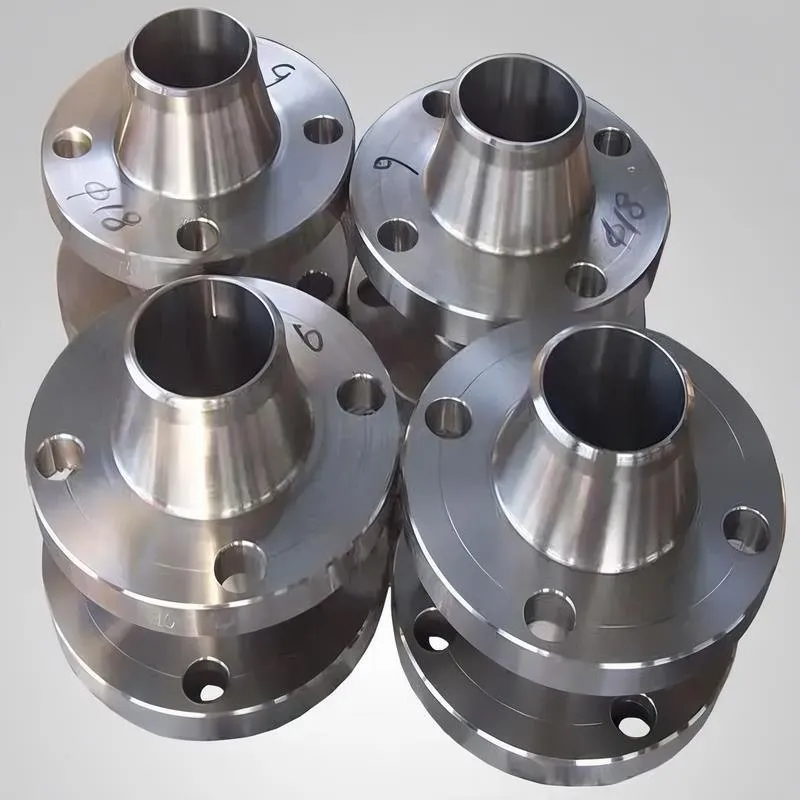
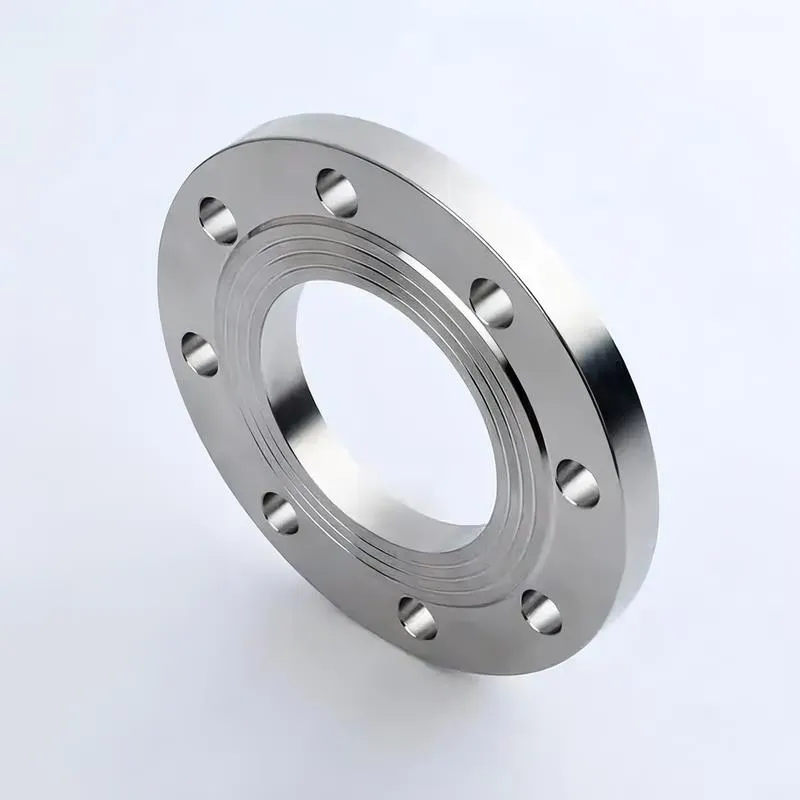
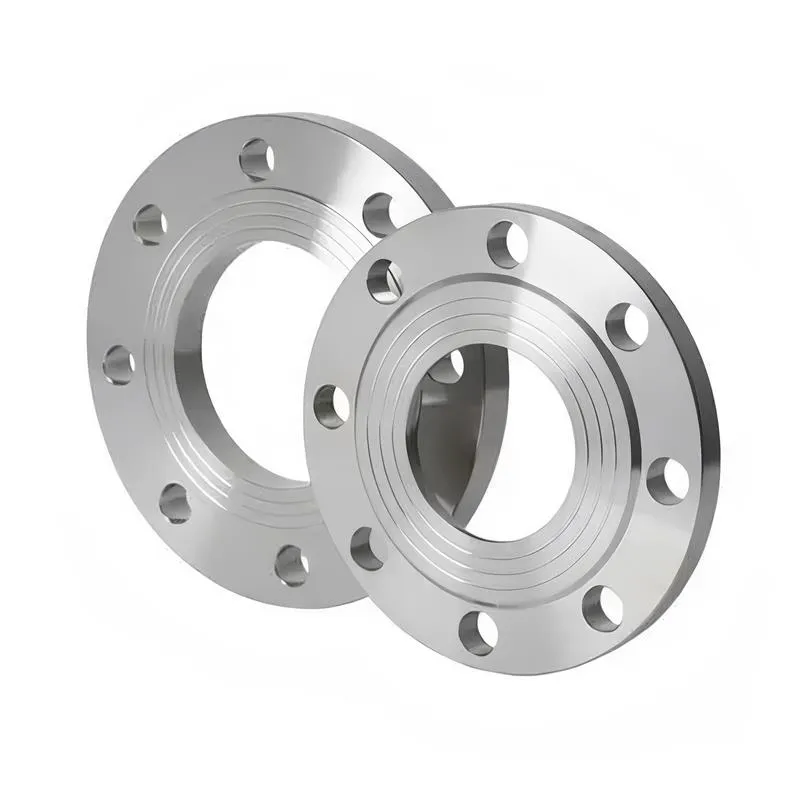
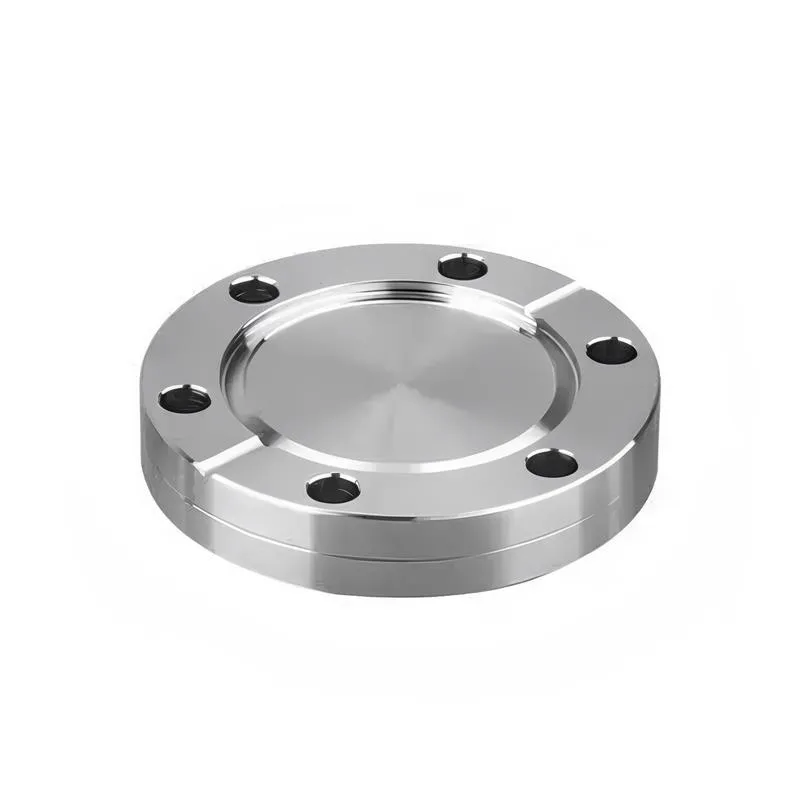
1,We Manufacturing processes are primarily classified into four types:
1:Forging,
2:Casting,
3:Cutting,
4:Rolling.
2,We can manufacture in accordance with these standards.
Standards:
GB Series (Chinese Standards), JB Series (Machinery Standards), HG Series (Chemical Industry Standards), ASME B16.5 (American Standards), BS4504 (British Standards), DIN (German Standards), and JIS (Japanese Standards).
Internationally, there are two primary systems of pipe flange standards: the European system, represented by the German DIN standards (including those of the former Soviet Union), and the American system, represented by the US ANSI pipe flange standards. Other common standards include: the Chinese Ministry of Machinery Industry standards (JB series), the Ministry of Chemical Industry standards (HG series), the Chinese National Standard *GB/T 9112–9124-2010 Steel Pipe Flanges*, as well as US standards (ASME B16.5), British standards (BS4504), German standards (DIN), Japanese standards (JIS), and marine standards (CBM), among others.
The nominal pressure ratings for the PN series are designated by "PN" and comprise the following nine levels: PN2.5, PN6, PN10, PN16, PN25, PN40, PN63, PN100, and PN160.
The nominal pressure ratings for the Class series are designated by "Class" and comprise the following six levels: Class150, Class300, Class600, Class900, Class1500, and Class2500.
Flange Classification
1. **According to Chemical Industry Standards:** Flanges are classified as follows:
Plate Flat Welding Flange (PL), Necked Flat Welding Flange (SO), Necked Butt Welding Flange (WN), Integral Flange (IF), Socket Welding Flange (SW), Threaded Flange (Th), Butt Welding Ring Loose Flange (PJ/SE), Blind Flange (BL), Flat Welding Ring Loose Flange (PJ/PJ), and Lined Blind Flange (BL(s)).
2. **According to Petrochemical (SH) Industry Standards:** Flanges are classified as follows:
Threaded Flange (PL), Butt Welding Flange (WN), Flat Welding Flange (SO), Socket Welding Flange (SW), Loose Flange (LJ), and Blind Flange (no specific designation).
3. **According to Machinery (JB) Industry Standards:** Flanges are classified as follows:
Integral Flange, Butt Welding Flange, Plate Flat Welding Flange, Butt Welding Ring Plate Loose Flange, Flat Welding Ring Plate Loose Flange, Lap Joint Ring Plate Loose Flange, and Blind Flange.
4. **According to Connection Method/Type:** Flanges are classified as follows:
Plate Flat Welding Flange, Necked Flat Welding Flange, Necked Butt Welding Flange, Socket Welding Flange, Threaded Flange, Blind Flange, Necked Butt Welding Ring Loose Flange, Flat Welding Ring Loose Flange, Ring-Type Joint (RTJ) Flange and Blind Flange, Large-Diameter Plate Flange, Large-Diameter High-Neck Flange, Figure-8 Blind Plate, Butt Welding Ring Loose Flange, etc.
5. **According to the Component Being Connected:** Flanges can be classified into Vessel Flanges and Pipe Flanges.
6. **According to Structural Type:** Flanges include Integral Flanges, Threaded Flanges, Flat Welding Flanges, Butt Welding Flanges, Lap Joint (Loose/Swivel) Flanges, and Blind Flanges.
A flange—also referred to as a flange plate or rim—is a component used to connect shafts to one another, or, more commonly, to join the ends of pipes. Flanges are also utilized at the inlet and outlet ports of equipment to facilitate connections between two devices—for instance, the flange on a speed reducer. A "flange connection" or "flanged joint" refers to a detachable joint assembly comprising three interconnected elements—a flange, a gasket, and bolts—that together form a sealed structural unit. In the context of piping systems, a "pipe flange" specifically denotes a flange used for plumbing within the installation; when applied to equipment, it refers to the inlet or outlet flange of that specific device. Flanges feature a series of holes through which bolts are inserted to securely fasten the two flanges together, while a gasket placed between the flanges ensures a leak-proof seal. Flanges are broadly categorized into three types: threaded (screw-in) flanges, welded flanges, and clamp-type flanges. Flanges are invariably used in pairs; threaded flanges are suitable for low-pressure piping applications, whereas welded flanges are required for systems operating at pressures exceeding 4 kilograms per square centimeter. A sealing gasket is inserted between the two flange plates, which are then firmly secured using bolts. The thickness of a flange—as well as the specifications of the bolts used to fasten it—vary depending on the specific pressure rating required for the application. When connecting equipment such as water pumps or valves to piping systems, the corresponding connection points on these devices are often manufactured in the shape of a matching flange; this method of attachment is also referred to as a "flange connection." Generally, any connecting component that utilizes bolts to join and seal the perimeters of two flat surfaces—such as the joints in ventilation ducts—is termed a "flange"; such components may collectively be classified as "flange-type parts." However, since such a connection often constitutes merely a *portion* of a larger device—for instance, the interface between a flange and a water pump—it would be inappropriate to classify the entire water pump itself as a "flange-type part." Conversely, smaller components—such as valves—that feature such flanged interfaces may indeed be appropriately categorized as "flange-type parts."
-:-
For detailed product information, please contact sales.
-:
Crucible Steel Flange HALGRAPH® Tool Steel Flange, AISI O6 Product Information
-:-
For detailed product information, please contact sales.
-:
Crucible Steel Flange HALGRAPH® Tool Steel Flange, AISI O6 Synonyms
-:-
For detailed product information, please contact sales.
-:
Crucible Steel HALGRAPH® Tool Steel, AISI O6 Product Information
-:-
For detailed product information, please contact sales.
-:
# **Product Introduction: Crucible Steel HALGRAPH® (AISI O6) Tool Steel**
Crucible Steel HALGRAPH® is a premium, oil-hardening, graphitic tool steel that conforms to the AISI O6 specification. It occupies a unique position in the tool steel spectrum, distinguished by its **exceptionally high silicon content and free graphite microstructure**. This composition grants HALGRAPH® **superior machinability in the annealed state—ranking among the best of all tool steels—along with good wear resistance, low distortion during heat treatment, and excellent resistance to galling and seizing**. It is specifically engineered for applications requiring intricate machining, good wear life, and reliable performance in forming and cutting operations.
The "graphitic" characteristic is key to its performance. The high silicon content promotes the formation of fine, evenly distributed graphite particles within the steel matrix. These particles act as a built-in lubricant during both the machining of the tool itself and during the tool's service life, reducing friction and chip welding. HALGRAPH® is the material of choice for producing complex, precision tools where ease of manufacture and consistent performance are paramount.
---
## **1. Chemical Composition (Weight %)**
The composition of O6 is defined by very high silicon and carbon, with balanced manganese and molybdenum.
| **Element** | **Carbon (C)** | **Silicon (Si)** | **Manganese (Mn)** | **Molybdenum (Mo)** | **Sulfur (S)** | **Phosphorus (P)** |
| :--- | :--- | :--- | :--- | :--- | :--- | :--- |
| **Content** | 1.25 - 1.55 | **1.00 - 2.00** | 0.55 - 1.20 | 0.20 - 0.30 | 0.08 - 0.15 | ≤ 0.030 |
| **Role** | Provides high hardness and wear resistance. Part of the carbon exists as free graphite, enhancing machinability and anti-galling properties. | **Primary modifier.** Promotes the formation of free graphite in the microstructure. Increases hardenability, strength, and resistance to softening. | Aids in deoxidation, contributes to hardenability, and helps control the graphite formation. | Enhances hardenability and increases strength, particularly in thicker sections. | Improves machinability by forming manganese sulfide inclusions. | Typically minimized; trace element. |
*Note: Iron (Fe) constitutes the remainder. The combination of high carbon and silicon in a specific thermal history creates the unique graphitic structure.*
---
## **2. Physical & Mechanical Properties**
*Typical properties after proper oil quenching and tempering to a working hardness of 57-61 HRC.*
* **Density:** Slightly lower than most tool steels (~7.6-7.7 g/cm³) due to the presence of graphite.
* **Modulus of Elasticity:** ~190-200 GPa, slightly lower due to the graphite phase.
* **Thermal Conductivity:** Good; graphite aids in heat dissipation.
* **Hardenability:** **Fair to Good (Oil-Hardening).** Suitable for through-hardening in moderate sections. Depth is less than some other oil-hardening grades due to its specific alloy design focused on graphite formation.
* **Hardness (Typical Working Range):** **56 - 62 HRC.** Most commonly used at **58-60 HRC**.
* **Wear Resistance:** **Good.** Provides reliable wear resistance for many cold work applications. The hard martensitic matrix resists abrasion, while the graphite reduces adhesive wear (galling).
* **Machinability (Annealed):** **Exceptional.** HALGRAPH® is renowned as one of the most machinable tool steels. It can be machined at high speeds and feeds with excellent surface finish and long tool life, similar to free-machining steels like 12L14 but with the ability to be hardened.
* **Resistance to Galling & Seizing:** **Excellent.** The free graphite particles act as a solid lubricant, making it ideal for forming tools and applications involving sliding contact against metals (especially aluminum and brass).
* **Dimensional Stability:** **Very Good.** Exhibits low and predictable distortion during oil quenching, similar to other quality oil-hardening grades.
* **Toughness:** **Moderate.** Adequate for most cold work applications but lower than tougher grades like S7 or A9. Not recommended for high-impact uses.
---
## **3. Heat Treatment**
Heat treatment is straightforward but requires control to achieve the desired graphite structure and hardness.
* **Annealing:** Furnace cool from 790-815°C (1450-1500°F) to develop the optimal soft, graphitic structure for machining. Annealed hardness: 183-229 HB.
* **Stress Relieving:** 595-650°C (1100-1200°F), hold, then slow cool.
* **Preheating:** Recommended at 650-700°C (1200-1290°F).
* **Austenitizing:** **790-815°C (1450-1500°F).** A common temperature is **800°C (1475°F)**. **Soaking time is critical**—too short prevents proper austenitization; too long can dissolve excessive graphite, reducing its beneficial effects. Typical soak is 20-30 minutes per inch of thickness.
* **Quenching:** **Oil quench** in warm, agitated oil (40-60°C / 100-140°F).
* **Tempering:** **Mandatory.** Temper immediately after quenching.
* **Typical Tempering Range:** **150-315°C (300-600°F).**
* For a hardness of 58-60 HRC, temper at **175-230°C (350-450°F)** for 1-2 hours.
* **Avoid tempering between 260-370°C (500-700°F)** due to risk of embrittlement and loss of beneficial graphite effects.
* A double temper is often beneficial.
---
## **4. Key Applications**
HALGRAPH® (O6) is uniquely suited for applications that benefit from its machinability and anti-galling properties.
* **Intricate Forming and Drawing Dies:** Especially for non-ferrous metals like aluminum, brass, and copper, where galling is a common problem.
* **Knurls, Thread Rolls, and Form Rolls:** Tools for cold forming where smooth, non-seizing operation is critical.
* **Plastic Injection Molds and Cores:** For molding abrasive or sticky plastics, where the graphite helps with part release.
* **Master Hubs, Patterns, and Model Tools:** Where complex shapes must be easily machined and then hardened for durability.
* **Gears, Cams, and Wear Plates:** In mechanisms with sliding contact where lubrication is difficult.
* **General Purpose Tooling Requiring Complex Machining:** Punches, dies, and fixtures that are too intricate to be economically made from less machinable steels.
---
## **5. International Standards & Cross-References**
Crucible HALGRAPH® is the brand name for Crucible's AISI O6 grade.
* **AISI/SAE:** **O6**
* **UNS:** T31506
* **European (EN):** No direct equivalent. The closest in concept might be a graphitic steel like **1.2210** but compositions differ significantly.
* **Japanese (JIS):** No direct JIS equivalent.
* **Common Trade Names:** Graphitic Tool Steel O6, Oil-Hardening Graphitic Steel.
---
## **6. Advantages & Limitations**
**Advantages:**
* **Unsurpassed Machinability:** Allows for fast, low-cost fabrication of complex tooling with excellent finishes.
* **Excellent Anti-Galling Properties:** The graphite provides built-in lubrication, reducing friction and part sticking.
* **Good Wear Resistance:** Suitable for a wide range of industrial applications.
* **Low Distortion:** Predictable behavior during heat treatment.
* **Good Surface Finish:** Both in the machined and in-service condition.
**Limitations:**
* **Limited Hardenability Depth:** Not for very large sections.
* **Moderate Toughness:** Not suitable for high-shock applications.
* **Heat Treatment Sensitivity:** Requires precise control of austenitizing time/temperature to preserve graphite benefits.
* **Not Stainless:** Will rust if not protected.
* **Lower Hot Hardness:** Not for elevated temperature service.
---
## **7. Summary**
**Crucible Steel HALGRAPH® (AISI O6) is a specialized, problem-solving tool steel that excels where ease of manufacturing and friction reduction are critical design parameters.** Its unique graphitic microstructure makes it the ultimate choice for machining intricate tools that also require good wear resistance and anti-galling characteristics. For toolmakers facing the challenge of producing complex forming dies for aluminum or intricate plastic molds, HALGRAPH® provides a practical path: machine it easily like a low-carbon steel, then harden it to perform like a durable tool steel. It is the intelligent choice for applications where the cost and difficulty of machining are primary concerns, without sacrificing the functional performance of the finished tool.
-:-
For detailed product information, please contact sales.
-:
Crucible Steel HALGRAPH® Tool Steel, AISI O6 Specification
Dimensions
Size:
Diameter 20-1000 mm Length <6980 mm
Size:We can customized as required
Standard:
Per your request or drawing
We can customized as required
Properties(Theoretical)
Chemical Composition
-:-
For detailed product information, please contact sales.
-:
Crucible Steel HALGRAPH® Tool Steel, AISI O6 Properties
-:-
For detailed product information, please contact sales.
-:
Applications of Crucible Steel Flange HALGRAPH® Tool Steel Flange, AISI O6
-:-
For detailed product information, please contact sales.
-:
Chemical Identifiers Crucible Steel Flange HALGRAPH® Tool Steel Flange, AISI O6
-:-
For detailed product information, please contact sales.
-:
Packing of Crucible Steel Flange HALGRAPH® Tool Steel Flange, AISI O6
-:-
For detailed product information, please contact sales.
-:
Standard Packing:
-:-
For detailed product information, please contact sales.
-:
Typical bulk packaging includes palletized plastic 5 gallon/25 kg. pails, fiber and Steel Flange drums to 1 ton super sacks in full container (FCL) or truck load (T/L) quantities. Research and sample quantities and hygroscopic, oxidizing or other air sensitive materials may be packaged under argon or vacuum. Solutions are packaged in polypropylene, plastic or glass jars up to palletized 3451 gallon liquid totes Special package is available on request. E FORUs’ is carefully handled to minimize damage during storage and transportation and to preserve the quality of our products in their original condition