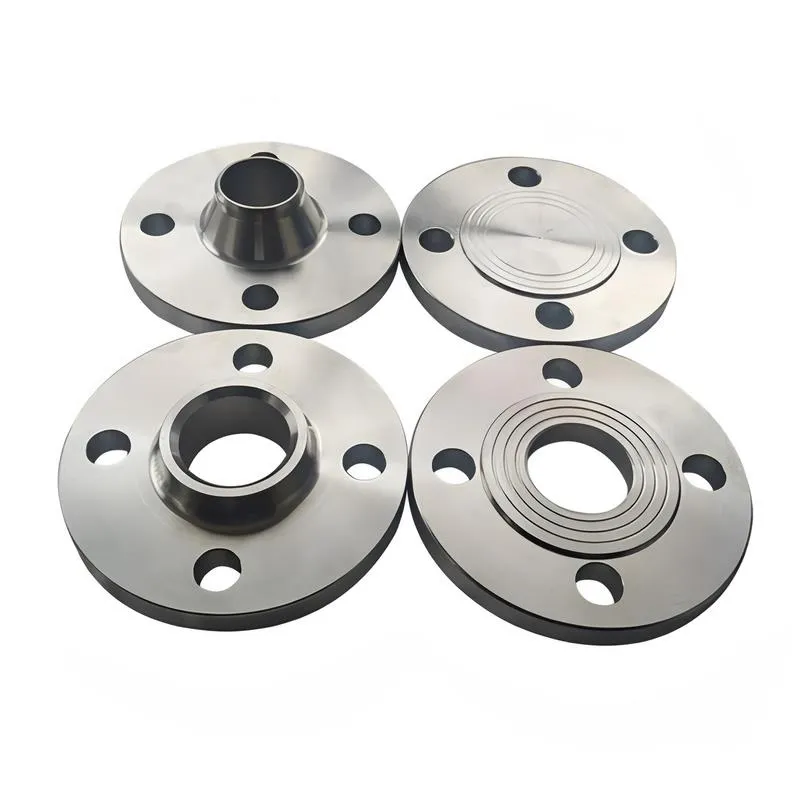
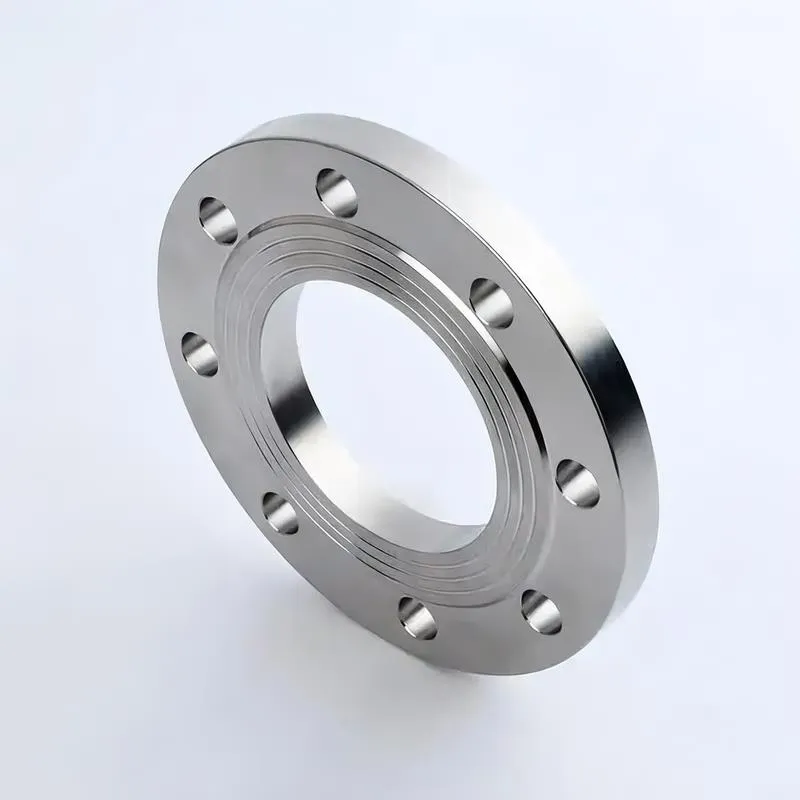
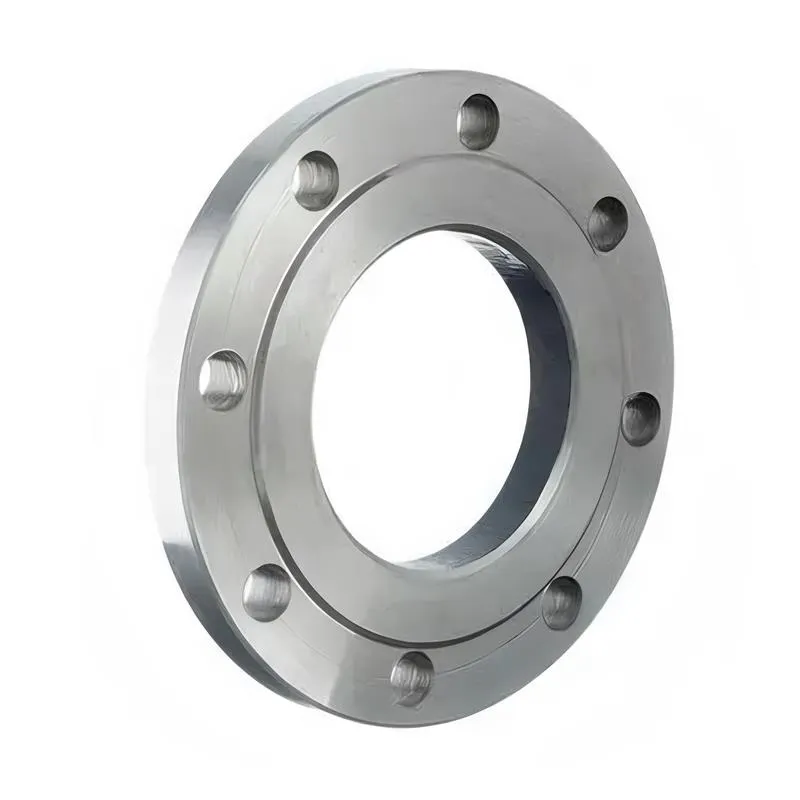
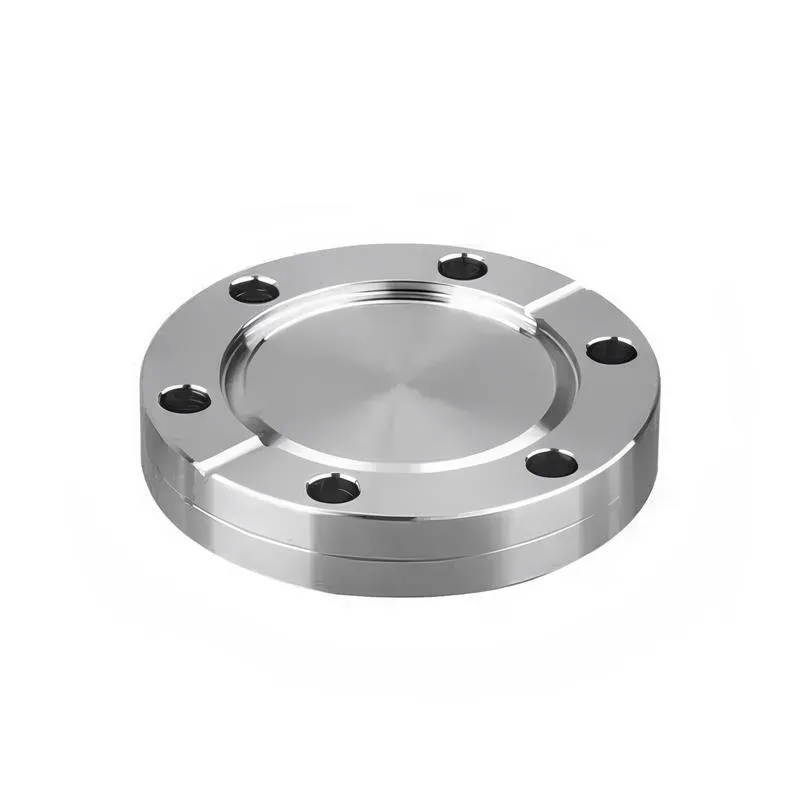
1,We Manufacturing processes are primarily classified into four types:
1:Forging,
2:Casting,
3:Cutting,
4:Rolling.
2,We can manufacture in accordance with these standards.
Standards:
GB Series (Chinese Standards), JB Series (Machinery Standards), HG Series (Chemical Industry Standards), ASME B16.5 (American Standards), BS4504 (British Standards), DIN (German Standards), and JIS (Japanese Standards).
Internationally, there are two primary systems of pipe flange standards: the European system, represented by the German DIN standards (including those of the former Soviet Union), and the American system, represented by the US ANSI pipe flange standards. Other common standards include: the Chinese Ministry of Machinery Industry standards (JB series), the Ministry of Chemical Industry standards (HG series), the Chinese National Standard *GB/T 9112–9124-2010 Steel Pipe Flanges*, as well as US standards (ASME B16.5), British standards (BS4504), German standards (DIN), Japanese standards (JIS), and marine standards (CBM), among others.
The nominal pressure ratings for the PN series are designated by "PN" and comprise the following nine levels: PN2.5, PN6, PN10, PN16, PN25, PN40, PN63, PN100, and PN160.
The nominal pressure ratings for the Class series are designated by "Class" and comprise the following six levels: Class150, Class300, Class600, Class900, Class1500, and Class2500.
Flange Classification
1. **According to Chemical Industry Standards:** Flanges are classified as follows:
Plate Flat Welding Flange (PL), Necked Flat Welding Flange (SO), Necked Butt Welding Flange (WN), Integral Flange (IF), Socket Welding Flange (SW), Threaded Flange (Th), Butt Welding Ring Loose Flange (PJ/SE), Blind Flange (BL), Flat Welding Ring Loose Flange (PJ/PJ), and Lined Blind Flange (BL(s)).
2. **According to Petrochemical (SH) Industry Standards:** Flanges are classified as follows:
Threaded Flange (PL), Butt Welding Flange (WN), Flat Welding Flange (SO), Socket Welding Flange (SW), Loose Flange (LJ), and Blind Flange (no specific designation).
3. **According to Machinery (JB) Industry Standards:** Flanges are classified as follows:
Integral Flange, Butt Welding Flange, Plate Flat Welding Flange, Butt Welding Ring Plate Loose Flange, Flat Welding Ring Plate Loose Flange, Lap Joint Ring Plate Loose Flange, and Blind Flange.
4. **According to Connection Method/Type:** Flanges are classified as follows:
Plate Flat Welding Flange, Necked Flat Welding Flange, Necked Butt Welding Flange, Socket Welding Flange, Threaded Flange, Blind Flange, Necked Butt Welding Ring Loose Flange, Flat Welding Ring Loose Flange, Ring-Type Joint (RTJ) Flange and Blind Flange, Large-Diameter Plate Flange, Large-Diameter High-Neck Flange, Figure-8 Blind Plate, Butt Welding Ring Loose Flange, etc.
5. **According to the Component Being Connected:** Flanges can be classified into Vessel Flanges and Pipe Flanges.
6. **According to Structural Type:** Flanges include Integral Flanges, Threaded Flanges, Flat Welding Flanges, Butt Welding Flanges, Lap Joint (Loose/Swivel) Flanges, and Blind Flanges.
A flange—also referred to as a flange plate or rim—is a component used to connect shafts to one another, or, more commonly, to join the ends of pipes. Flanges are also utilized at the inlet and outlet ports of equipment to facilitate connections between two devices—for instance, the flange on a speed reducer. A "flange connection" or "flanged joint" refers to a detachable joint assembly comprising three interconnected elements—a flange, a gasket, and bolts—that together form a sealed structural unit. In the context of piping systems, a "pipe flange" specifically denotes a flange used for plumbing within the installation; when applied to equipment, it refers to the inlet or outlet flange of that specific device. Flanges feature a series of holes through which bolts are inserted to securely fasten the two flanges together, while a gasket placed between the flanges ensures a leak-proof seal. Flanges are broadly categorized into three types: threaded (screw-in) flanges, welded flanges, and clamp-type flanges. Flanges are invariably used in pairs; threaded flanges are suitable for low-pressure piping applications, whereas welded flanges are required for systems operating at pressures exceeding 4 kilograms per square centimeter. A sealing gasket is inserted between the two flange plates, which are then firmly secured using bolts. The thickness of a flange—as well as the specifications of the bolts used to fasten it—vary depending on the specific pressure rating required for the application. When connecting equipment such as water pumps or valves to piping systems, the corresponding connection points on these devices are often manufactured in the shape of a matching flange; this method of attachment is also referred to as a "flange connection." Generally, any connecting component that utilizes bolts to join and seal the perimeters of two flat surfaces—such as the joints in ventilation ducts—is termed a "flange"; such components may collectively be classified as "flange-type parts." However, since such a connection often constitutes merely a *portion* of a larger device—for instance, the interface between a flange and a water pump—it would be inappropriate to classify the entire water pump itself as a "flange-type part." Conversely, smaller components—such as valves—that feature such flanged interfaces may indeed be appropriately categorized as "flange-type parts."
-:-
For detailed product information, please contact sales.
-:
EOS MS1 Maraging Steel Flange Sintered on EOSINT M 270 Product Information
-:-
For detailed product information, please contact sales.
-:
EOS MS1 Maraging Steel Flange Sintered on EOSINT M 270 Synonyms
-:-
For detailed product information, please contact sales.
-:
EOS MS1 Maraging Steel Sintered on EOSINT M 270 Product Information
-:-
For detailed product information, please contact sales.
-:
# EOS MS1 Maraging Steel (18Ni-300)
## Sintered on EOSINT M 270 System
---
### **Product Overview**
**EOS MS1** (previously designated **EOS MaragingSteel MS1**) is a gas-atomized, precipitation-hardenable maraging steel powder specifically formulated for **Direct Metal Laser Sintering (DMLS®)** on the **EOSINT M 270** system. This pioneering industrial additive manufacturing platform utilizes a 200W fiber laser to selectively sinter/smelt fine metal powder layers, producing fully dense (≥99.5%) maraging steel components. After a post-sintering aging treatment, the material achieves mechanical properties directly comparable to wrought 18Ni-300 maraging steel, including a yield strength exceeding 1900 MPa and hardness up to 54 HRC. The EOSINT M 270 with MS1 was a foundational system for the production of **high-performance, complex tooling inserts and aerospace components**, establishing many of the process standards still used in modern Laser Powder Bed Fusion (LPBF).
---
### **Chemical Composition (Weight %)**
*Conforms to the 18Ni-300 maraging steel specification (similar to 1.2709/X3NiCoMoTi 18-9-5).*
| Element | EOS MS1 Specification (M 270) | Typical Wrought 18Ni(300) | Key Function in Sintering Process |
|---------|-------------------------------|---------------------------|-----------------------------------|
| **Nickel (Ni)** | 17.0 - 19.0 | 18.0 - 19.0 | Forms the primary martensitic matrix upon solidification; ensures hardenability. |
| **Cobalt (Co)** | 8.5 - 9.5 | 8.5 - 9.5 | Enhances precipitation hardening response; critical for achieving final strength. |
| **Molybdenum (Mo)** | 4.5 - 5.2 | 4.6 - 5.2 | Primary precipitation hardener (forms Ni₃Mo). |
| **Titanium (Ti)** | 0.6 - 0.8 | 0.55 - 0.80 | Secondary precipitation hardener (forms Ni₃Ti); controlled for minimal oxidation during sintering. |
| **Aluminum (Al)** | ≤ 0.10 | 0.05 - 0.15 | Deoxidizer. |
| **Carbon (C)** | ≤ 0.03 | ≤ 0.03 | Kept ultra-low for excellent weldability/sinterability and toughness. |
| **Manganese (Mn)** | ≤ 0.10 | ≤ 0.10 | Residual. |
| **Silicon (Si)** | ≤ 0.10 | ≤ 0.10 | Residual; affects melt pool wetting. |
| **Oxygen (O)** | **< 0.10% (1000 ppm)** | Not Specified | **Critical.** High oxygen content leads to porosity and poor mechanical properties. |
| **Iron (Fe)** | Balance | Balance | Base element. |
**Powder Characteristics for EOSINT M 270:**
* **Particle Size Distribution:** **20 - 50 µm** (optimized for the system's 200W laser and recoating system).
* **Morphology:** Spherical, gas-atomized.
* **Layer Thickness:** **20 µm** (Standard), 30 µm or 40 µm (for faster builds with specific parameters).
---
### **EOSINT M 270 Build Process & Parameters**
**System Configuration (Legacy/Production):**
* **Laser:** **Yb-fibre laser, 200 W**.
* **Scan Speed:** Up to 7.0 m/s.
* **Beam Focus Diameter:** ~100 µm.
* **Build Volume:** **250 x 250 x 215 mm** (or 250 x 250 x 325 mm for extended Z-axis models).
* **Process Atmosphere:** High-purity **Argon**, maintaining O₂ level below 0.1%.
* **Process Name:** **Direct Metal Laser Sintering (DMLS®)** - EOS's proprietary term for the LPBF process.
**Standard Sintering Parameters:**
* **Laser Power:** 160 - 195 W (depending on scan speed and layer thickness).
* **Scan Strategy:** **Meander (raster) scanning** with layer rotation.
* **Core Parameters:** Optimized for high density and minimal porosity.
* **As-Built State:** Primarily martensitic, with hardness of approximately **30-35 HRC**, suitable for machining.
---
### **Post-Sintering Heat Treatment**
To achieve final high-strength properties, a two-step heat treatment is required:
1. **Solution Annealing (Homogenization):**
* **Temperature:** 820°C ± 10°C (1508°F)
* **Time:** 1 hour per 25 mm of cross-section, furnace cool under protective atmosphere (Argon/Vacuum).
* **Purpose:** Homogenizes the as-sintered microstructure and dissolves any segregations.
2. **Aging (Precipitation Hardening):**
* **Temperature:** 480°C - 500°C (896°F - 932°F)
* **Time:** 3 - 6 hours (typically 6 hours for AM parts), air cool.
* **Purpose:** Precipitates fine intermetallic compounds (Ni₃Mo, Ni₃Ti), dramatically increasing strength and hardness.
---
### **Mechanical Properties (After Full Heat Treatment)**
*Properties are for material in the XY (horizontal) build plane. Slight anisotropy is present, with Z-direction properties typically 5-10% lower in ductility/toughness.*
| Property | Typical Value (Aged, XY Plane) | Test Standard | Notes |
|----------|-------------------------------|---------------|-------|
| **Ultimate Tensile Strength (UTS)** | 1950 - 2050 MPa (283 - 297 ksi) | DIN EN ISO 6892-1 / ASTM E8 | Meets or exceeds wrought spec. |
| **0.2% Yield Strength (YS)** | 1900 - 2000 MPa (276 - 290 ksi) | DIN EN ISO 6892-1 / ASTM E8 | |
| **Elongation at Break** | 8 - 12% | DIN EN ISO 6892-1 / ASTM E8 | Good ductility for this strength level. |
| **Hardness** | 50 - 54 HRC | DIN EN ISO 6508 / ASTM E18 | |
| **Fatigue Strength** (R = -1, polished) | ~500 - 600 MPa (10⁷ cycles) | DIN 50100 / ASTM E466 | Highly surface-finish dependent. |
| **Impact Toughness (Charpy V-notch)** | 20 - 35 J | DIN EN ISO 148-1 / ASTM E23 | |
| **Density** | ≥ 99.5% (typically > 99.7%) | Archimedes' method | |
---
### **Physical Properties (Aged Condition)**
| Property | Typical Value |
|----------|--------------|
| **Density** | 8.0 - 8.1 g/cm³ |
| **Melting Temperature** | ~1400 - 1440°C |
| **Thermal Conductivity** | ~20 W/(m·K) |
| **Coefficient of Thermal Expansion (20-100°C)** | ~10.5 x 10⁻⁶ /K |
---
### **Key Characteristics & Advantages**
* **High Strength & Hardness:** Achieves properties equivalent to conventionally processed 18Ni-300 maraging steel.
* **Excellent As-Sintered Machinability:** The as-built hardness of ~33 HRC allows for easy milling, drilling, and tapping to achieve final dimensions and tolerances **before** the final aging step.
* **Design Freedom:** Enables the manufacturing of complex geometries with internal conformal cooling channels, lightweight structures, and part consolidation.
* **Good Surface Finish (for AM):** With optimized parameters, as-sintered surface roughness can be Ra 5 - 12 µm. Can be improved via machining, polishing, or bead blasting.
* **Material Efficiency:** Near-net-shape process minimizes waste of expensive material.
---
### **International Standards & Certifications**
* **Material Standard:** The powder and final material properties align with:
* **DIN 1.2709** / **ISO X3NiCoMoTi 18-9-5**
* **AMS 6521** (Maraging Steel, 18.5Ni-9.0Co-4.9Mo-0.65Ti)
* **AISI 18Ni (300)**
* **Process:** The EOSINT M 270 system and its DMLS® process for MS1 are often qualified under:
* **VDI 3405 Blatt 2** (Additive manufacturing processes, materials)
* Customer-specific quality assurance protocols for aerospace and tooling.
---
### **Primary Applications**
The EOSINT M 270 with MS1 was revolutionary for producing:
1. **Conformal-Cooled Injection Molds & Inserts:** The dominant application. Complex internal cooling channels placed directly behind the mold surface dramatically reduce cycle times (by 20-40%) and improve part quality.
2. **Die Casting Tooling:** Cores, inserts, and nozzles for aluminum and magnesium die casting.
3. **Other Tooling:** Stamping dies, forming tools, blow molds, and fixtures/jigs.
4. **Aerospace & Defense Components:** Lightweight brackets, housings, antenna mounts, and prototype parts.
5. **Medical & Dental:** Surgical guides and custom instruments (with appropriate post-processing and sterilization validation).
6. **Automotive & Motor Sports:** High-performance, lightweight components.
---
### **Design Guidelines & Limitations (for M 270)**
* **Maximum Part Size:** Limited to **250 x 250 x 215 mm** build envelope.
* **Minimum Feature Size:** ~0.3 - 0.5 mm (depending on orientation).
* **Wall Thickness:** Minimum ~0.5 mm for self-supporting structures.
* **Overhangs:** Require support structures for angles less than ~45° from horizontal.
* **Holes & Channels:** Minimum recommended diameter for internal channels is **1.0 mm**. Larger diameters (≥3 mm) are preferred for powder removal and fluid flow.
* **Post-Processing:** **Mandatory.** Includes support removal, stress relief (optional), machining of critical surfaces, and the full solution+aging heat treatment cycle.
---
### **Legacy Status & Technological Progression**
* **EOSINT M 270** is a **legacy system**, having been superseded by the **EOS M 290** and later **M 300** and **M 400** series.
* The **M 290** improved upon the M 270 with a more powerful 400W laser, larger build volume (250 x 250 x 325 mm), enhanced process monitoring, and more robust parameter sets for MS1.
* **MS1 material** remains essentially unchanged and is fully compatible with these newer, more productive systems.
* Parts and tooling produced on M 270 systems remain in service worldwide, demonstrating the long-term reliability of the technology.
---
### **Summary**
**EOS MS1 Maraging Steel** processed on the **EOSINT M 270 DMLS® system** established the commercial viability of metal additive manufacturing for **high-value, functional tooling and end-use parts**. It proved that additively manufactured maraging steel could achieve **wrought-like mechanical properties** through a controlled sintering and aging process. While the M 270 platform is now legacy technology, the material (MS1) and the fundamental process knowledge developed with it continue to underpin the production of **conformal-cooled injection molds** and **high-strength, complex aerospace components** on modern EOS systems. Its success paved the way for the widespread industrial adoption of Laser Powder Bed Fusion for metals.
-:-
For detailed product information, please contact sales.
-:
EOS MS1 Maraging Steel Sintered on EOSINT M 270 Specification
Dimensions
Size:
Diameter 20-1000 mm Length <7371 mm
Size:We can customized as required
Standard:
Per your request or drawing
We can customized as required
Properties(Theoretical)
Chemical Composition
-:-
For detailed product information, please contact sales.
-:
EOS MS1 Maraging Steel Sintered on EOSINT M 270 Properties
-:-
For detailed product information, please contact sales.
-:
Applications of EOS MS1 Maraging Steel Flange Sintered on EOSINT M 270
-:-
For detailed product information, please contact sales.
-:
Chemical Identifiers EOS MS1 Maraging Steel Flange Sintered on EOSINT M 270
-:-
For detailed product information, please contact sales.
-:
Packing of EOS MS1 Maraging Steel Flange Sintered on EOSINT M 270
-:-
For detailed product information, please contact sales.
-:
Standard Packing:
-:-
For detailed product information, please contact sales.
-:
Typical bulk packaging includes palletized plastic 5 gallon/25 kg. pails, fiber and Steel Flange drums to 1 ton super sacks in full container (FCL) or truck load (T/L) quantities. Research and sample quantities and hygroscopic, oxidizing or other air sensitive materials may be packaged under argon or vacuum. Solutions are packaged in polypropylene, plastic or glass jars up to palletized 3842 gallon liquid totes Special package is available on request. E FORUs’ is carefully handled to minimize damage during storage and transportation and to preserve the quality of our products in their original condition