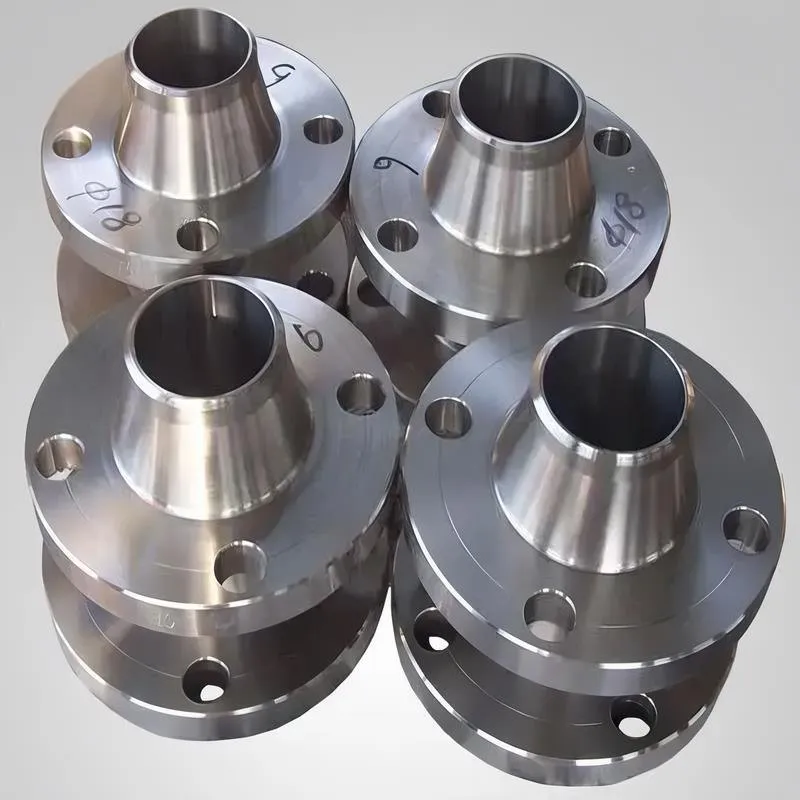
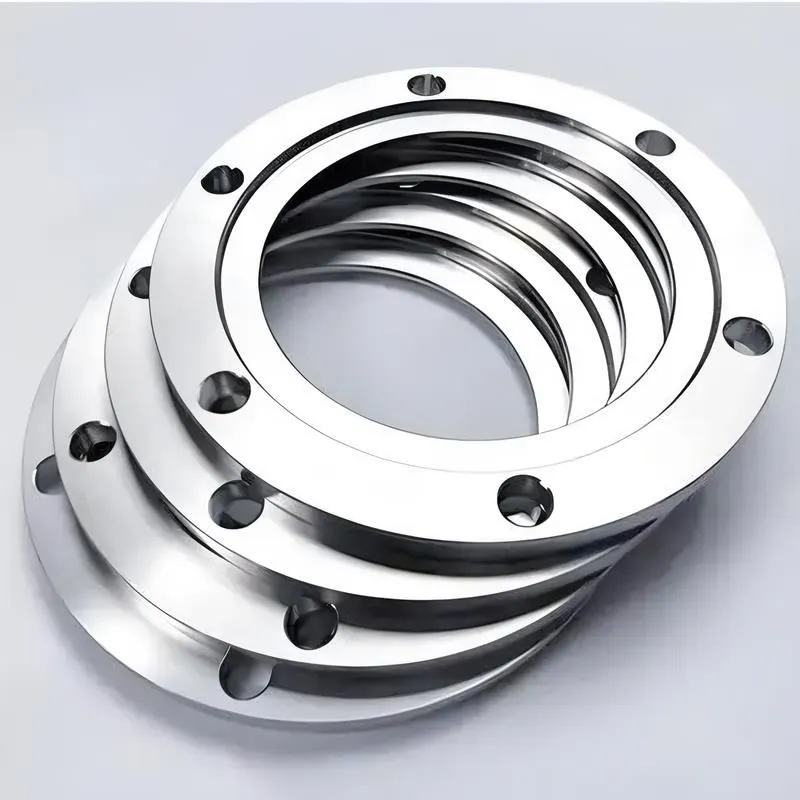
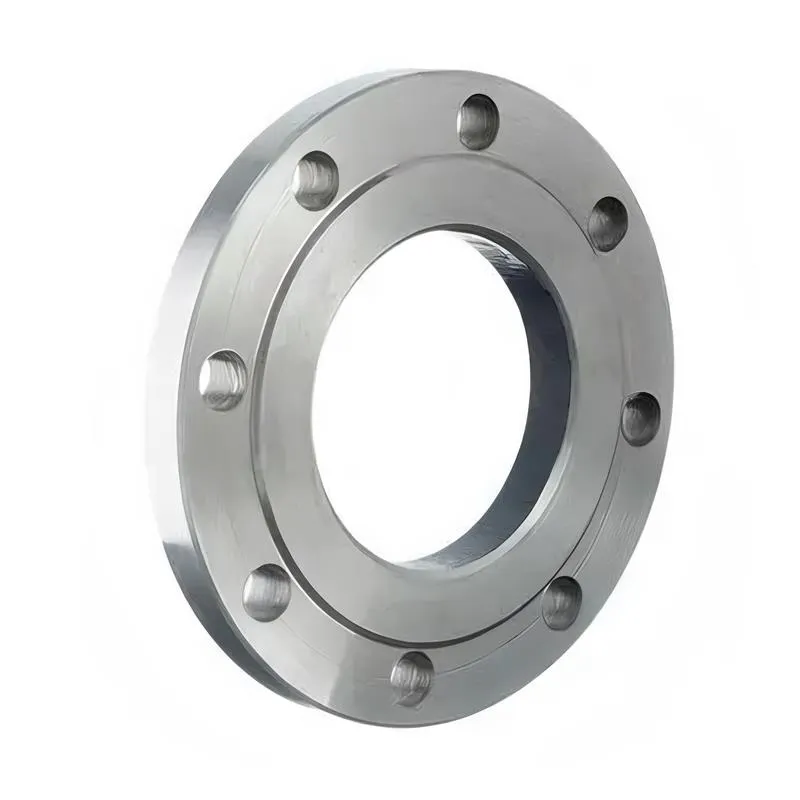
1,We Manufacturing processes are primarily classified into four types:
1:Forging,
2:Casting,
3:Cutting,
4:Rolling.
2,We can manufacture in accordance with these standards.
Standards:
GB Series (Chinese Standards), JB Series (Machinery Standards), HG Series (Chemical Industry Standards), ASME B16.5 (American Standards), BS4504 (British Standards), DIN (German Standards), and JIS (Japanese Standards).
Internationally, there are two primary systems of pipe flange standards: the European system, represented by the German DIN standards (including those of the former Soviet Union), and the American system, represented by the US ANSI pipe flange standards. Other common standards include: the Chinese Ministry of Machinery Industry standards (JB series), the Ministry of Chemical Industry standards (HG series), the Chinese National Standard *GB/T 9112–9124-2010 Steel Pipe Flanges*, as well as US standards (ASME B16.5), British standards (BS4504), German standards (DIN), Japanese standards (JIS), and marine standards (CBM), among others.
The nominal pressure ratings for the PN series are designated by "PN" and comprise the following nine levels: PN2.5, PN6, PN10, PN16, PN25, PN40, PN63, PN100, and PN160.
The nominal pressure ratings for the Class series are designated by "Class" and comprise the following six levels: Class150, Class300, Class600, Class900, Class1500, and Class2500.
Flange Classification
1. **According to Chemical Industry Standards:** Flanges are classified as follows:
Plate Flat Welding Flange (PL), Necked Flat Welding Flange (SO), Necked Butt Welding Flange (WN), Integral Flange (IF), Socket Welding Flange (SW), Threaded Flange (Th), Butt Welding Ring Loose Flange (PJ/SE), Blind Flange (BL), Flat Welding Ring Loose Flange (PJ/PJ), and Lined Blind Flange (BL(s)).
2. **According to Petrochemical (SH) Industry Standards:** Flanges are classified as follows:
Threaded Flange (PL), Butt Welding Flange (WN), Flat Welding Flange (SO), Socket Welding Flange (SW), Loose Flange (LJ), and Blind Flange (no specific designation).
3. **According to Machinery (JB) Industry Standards:** Flanges are classified as follows:
Integral Flange, Butt Welding Flange, Plate Flat Welding Flange, Butt Welding Ring Plate Loose Flange, Flat Welding Ring Plate Loose Flange, Lap Joint Ring Plate Loose Flange, and Blind Flange.
4. **According to Connection Method/Type:** Flanges are classified as follows:
Plate Flat Welding Flange, Necked Flat Welding Flange, Necked Butt Welding Flange, Socket Welding Flange, Threaded Flange, Blind Flange, Necked Butt Welding Ring Loose Flange, Flat Welding Ring Loose Flange, Ring-Type Joint (RTJ) Flange and Blind Flange, Large-Diameter Plate Flange, Large-Diameter High-Neck Flange, Figure-8 Blind Plate, Butt Welding Ring Loose Flange, etc.
5. **According to the Component Being Connected:** Flanges can be classified into Vessel Flanges and Pipe Flanges.
6. **According to Structural Type:** Flanges include Integral Flanges, Threaded Flanges, Flat Welding Flanges, Butt Welding Flanges, Lap Joint (Loose/Swivel) Flanges, and Blind Flanges.
A flange—also referred to as a flange plate or rim—is a component used to connect shafts to one another, or, more commonly, to join the ends of pipes. Flanges are also utilized at the inlet and outlet ports of equipment to facilitate connections between two devices—for instance, the flange on a speed reducer. A "flange connection" or "flanged joint" refers to a detachable joint assembly comprising three interconnected elements—a flange, a gasket, and bolts—that together form a sealed structural unit. In the context of piping systems, a "pipe flange" specifically denotes a flange used for plumbing within the installation; when applied to equipment, it refers to the inlet or outlet flange of that specific device. Flanges feature a series of holes through which bolts are inserted to securely fasten the two flanges together, while a gasket placed between the flanges ensures a leak-proof seal. Flanges are broadly categorized into three types: threaded (screw-in) flanges, welded flanges, and clamp-type flanges. Flanges are invariably used in pairs; threaded flanges are suitable for low-pressure piping applications, whereas welded flanges are required for systems operating at pressures exceeding 4 kilograms per square centimeter. A sealing gasket is inserted between the two flange plates, which are then firmly secured using bolts. The thickness of a flange—as well as the specifications of the bolts used to fasten it—vary depending on the specific pressure rating required for the application. When connecting equipment such as water pumps or valves to piping systems, the corresponding connection points on these devices are often manufactured in the shape of a matching flange; this method of attachment is also referred to as a "flange connection." Generally, any connecting component that utilizes bolts to join and seal the perimeters of two flat surfaces—such as the joints in ventilation ducts—is termed a "flange"; such components may collectively be classified as "flange-type parts." However, since such a connection often constitutes merely a *portion* of a larger device—for instance, the interface between a flange and a water pump—it would be inappropriate to classify the entire water pump itself as a "flange-type part." Conversely, smaller components—such as valves—that feature such flanged interfaces may indeed be appropriately categorized as "flange-type parts."
-:-
For detailed product information, please contact sales.
-:
AISI 1059 Steel Flange Product Information
-:-
For detailed product information, please contact sales.
-:
AISI 1059 Steel Flange Synonyms
-:-
For detailed product information, please contact sales.
-:
AISI 1059 Steel Product Information
-:-
For detailed product information, please contact sales.
-:
# **Technical Datasheet: AISI 1059 Steel**
---
## **1. Product Overview**
AISI 1059 steel is a high-carbon, non-alloy steel that falls within the standard carbon steel classification of the SAE-AISI system. Characterized by its elevated carbon content, this grade offers superior hardness, excellent wear resistance, and good hardenability compared to lower-carbon steels. While not as commonly specified as AISI 1055 or 1060, AISI 1059 provides a specific carbon range that bridges the gap between these popular grades, making it suitable for specialized applications requiring precise hardness control and optimal wear characteristics.
---
## **2. Key Characteristics**
- **High Carbon Content**: Provides maximum hardness potential for non-alloy steels
- **Excellent Wear Resistance**: Ideal for abrasive environments and sliding wear applications
- **Superior Hardenability**: Deep hardening capability with proper quenching
- **Good Spring Properties**: Suitable for spring applications requiring high strength
- **Limited Weldability**: Requires specialized procedures due to high carbon content
- **Economical Alternative**: Cost-effective compared to alloy steels for wear applications
- **Versatile Processing**: Can be supplied in various conditions (hot-rolled, cold-drawn, heat-treated)
---
## **3. Chemical Composition**
| Element | Composition Range (%) | Standard Reference |
|---------|----------------------|-------------------|
| **Carbon (C)** | 0.55 - 0.65 | SAE J403 / ASTM A29 |
| **Manganese (Mn)** | 0.60 - 0.90 | SAE J403 / ASTM A29 |
| **Phosphorus (P)** | ≤ 0.040 | SAE J403 / ASTM A29 |
| **Sulfur (S)** | ≤ 0.050 | SAE J403 / ASTM A29 |
| **Silicon (Si)** | 0.15 - 0.35 | SAE J403 / ASTM A29 |
| **Iron (Fe)** | Balance | - |
*Note: The carbon range (0.55-0.65%) places this steel at the higher end of the 10xx series, approaching the properties of spring steels.*
---
## **4. Mechanical Properties**
### **Typical Properties in Various Conditions**
| Condition | Tensile Strength (MPa) | Yield Strength (MPa) | Elongation (%) | Hardness (HB) |
|-----------|------------------------|----------------------|----------------|---------------|
| **Hot-Rolled** | 690 - 840 | 490 - 640 | 12-16 | 201-255 |
| **Cold-Drawn** | 780 - 930 | 690 - 840 | 9-14 | 241-302 |
| **Normalized** | 730 - 880 | 510 - 660 | 13-18 | 217-269 |
| **Annealed** | 610 - 760 | 350 - 500 | 17-24 | 174-223 |
| **Quenched & Tempered** | 1100-1500 | 1000-1400 | 8-13 | 35-55 HRC |
### **Additional Properties**
| Property | Typical Value | Test Standard |
|----------|---------------|---------------|
| **Modulus of Elasticity** | 200 GPa (29,000 ksi) | ASTM E111 |
| **Shear Modulus** | 80 GPa (11,600 ksi) | ASTM E143 |
| **Poisson's Ratio** | 0.29 | ASTM E132 |
| **Charpy Impact (20°C)** | 10-22 J (7-16 ft-lb) | ASTM A370 |
| **Fatigue Limit (10⁷ cycles)** | 300-380 MPa | Rotating bending |
| **Density** | 7.87 g/cm³ (0.284 lb/in³) | - |
---
## **5. Heat Treatment Response**
### **Recommended Heat Treatment Parameters**
| Process | Temperature Range | Cooling Method | Purpose |
|---------|------------------|----------------|---------|
| **Annealing** | 790-815°C (1450-1500°F) | Furnace cool | Maximum softness |
| **Normalizing** | 870-925°C (1600-1700°F) | Air cool | Grain refinement |
| **Spheroidizing** | 700-750°C (1290-1380°F) | Very slow cool | Best machinability |
| **Quenching** | 830-855°C (1525-1575°F) | Water or oil | Maximum hardness |
| **Tempering** | 200-650°C (400-1200°F) | Air cool | Desired properties |
### **Typical Hardness After Heat Treatment**
| Treatment | Hardness (HRC) | Tensile Strength (MPa) | Applications |
|-----------|----------------|------------------------|-------------|
| **Water Quench + 150°C temper** | 58-62 | 1800-2000 | Cutting tools, blades |
| **Oil Quench + 300°C temper** | 50-54 | 1500-1700 | High-strength parts |
| **Oil Quench + 500°C temper** | 40-44 | 1200-1400 | General engineering |
| **Oil Quench + 600°C temper** | 35-39 | 1000-1200 | Springs, wear parts |
### **Hardenability Characteristics**
- **Jominy End-Quench Data (Typical)**:
- 1.5 mm (1/16"): 65-67 HRC
- 10 mm (3/8"): 50-58 HRC
- 20 mm (3/4"): 40-48 HRC
- 30 mm (1-3/16"): 32-40 HRC
- **Ideal Diameter (DI)**: ~50-60 mm for 50% martensite
- **Quenching Media**: Water preferred for maximum hardness, oil for reduced distortion
- **Effective Hardening Depth**: Up to ~60 mm diameter fully hardenable
---
## **6. Physical Properties**
| Property | Value | Conditions |
|----------|-------|------------|
| **Density** | 7.87 g/cm³ (0.284 lb/in³) | 20°C |
| **Melting Point** | 1460-1510°C (2660-2750°F) | - |
| **Thermal Conductivity** | 47.5 W/m·K (32.9 BTU·in/hr·ft²·°F) | 20°C |
| **Specific Heat Capacity** | 486 J/kg·K (0.116 BTU/lb·°F) | 20°C |
| **Coefficient of Thermal Expansion** | 11.3 µm/m·°C (6.3 µin/in·°F) | 20-100°C |
| **Electrical Resistivity** | 0.255 µΩ·m | 20°C |
| **Magnetic Properties** | Ferromagnetic | All temperatures |
---
## **7. International Standard Equivalents**
| Standard System | Designation | Comparable Specification |
|----------------|-------------|--------------------------|
| **UNS** | G10590 | Unified Numbering System |
| **SAE/AISI** | 1059 | SAE J403 |
| **ASTM** | Grade 1059 | ASTM A29 / ASTM A576 |
| **EN (Europe)** | 1.1210 (C60E) | EN 10083-2 |
| **ISO** | C60E | ISO 683-18 |
| **JIS (Japan)** | S58C | JIS G4051 |
| **GB (China)** | 60# (60钢) | GB/T 699 |
| **DIN (Germany)** | 1.1210, Ck60 | DIN 17200 |
*Note: Exact equivalents may vary slightly in composition ranges between different national standards.*
---
## **8. Processing & Fabrication Characteristics**
### **Machinability**
- **Relative Rating**: 25-30% (vs. 100% for 1212 steel)
- **Optimal Condition**: Annealed or spheroidized for best results
- **Tool Requirements**: Carbide or premium HSS tools mandatory
- **Cutting Parameters**:
- Turning: 20-35 m/min (65-115 ft/min)
- Milling: 25-40 m/min (80-130 ft/min)
- Drilling: 15-25 m/min (50-80 ft/min)
- **Coolant**: High-pressure coolant essential for tool life
- **Chip Control**: Produces continuous chips; chip breakers recommended
### **Forming & Forging**
- **Hot Working Temperature**: 1150-850°C (2100-1560°F)
- **Forging Practice**: Heat to 1150°C, finish above 850°C
- **Cold Forming**: Very limited; annealing required between operations
- **Bend Radius**: Minimum 4-5× thickness for cold bending
### **Welding**
- **Pre-heating**: 300-400°C (570-750°F) mandatory
- **Electrodes**: E11018, E12018 low-hydrogen required
- **Post-Weld Treatment**: Stress relief at 600-650°C + complete re-heat treatment
- **Weldability Rating**: Very poor - not recommended
- **Alternative Methods**: Mechanical fastening or brazing preferred
### **Grinding & Finishing**
- **Grinding Wheels**: Aluminum oxide or CBN recommended
- **Parameters**: Light cuts with frequent dressing
- **Surface Finish**: Capable of <0.4 µm Ra with proper technique
- **Stress Relief**: Additional tempering may be required after heavy grinding
---
## **9. Primary Applications**
### **Wear-Resistant Components**
- Cutting blades and shear edges
- Wear plates and liners
- Crusher hammers and impact bars
- Mining and quarrying equipment parts
- Agricultural implement cutting edges
### **Tool & Die Applications**
- Cutting tool blanks (drills, taps, reamers)
- Dies for cold forming operations
- Punches and die inserts
- Mold components requiring high hardness
- Tool holders and fixtures
### **Spring Applications**
- Heavy-duty coil springs
- Leaf springs for automotive applications
- Torsion bars and spring washers
- Spring clips and retainers
- High-stress spring components
### **Automotive Components**
- High-strength fasteners and studs
- Transmission gears and shafts
- Suspension system components
- Steering linkage parts
- Brake system components
### **Industrial Machinery**
- Machine tool spindles and arbors
- Heavy-duty shafts and axles
- Bearing races and rollers
- Hydraulic cylinder rods
- Pump and compressor components
### **Special Applications**
- Surgical instrument components
- Dental tool blanks
- High-strength measuring instruments
- Optical equipment precision parts
- Scientific instrument components
---
## **10. Comparison with Similar Grades**
### **Carbon Steel Comparison**
| Grade | Carbon Range | Typical UTS (HR) | Hardness (HB) | Key Differences |
|-------|-------------|------------------|---------------|-----------------|
| **AISI 1055** | 0.50-0.60% | 670-820 MPa | 187-241 | Slightly lower carbon |
| **AISI 1059** | 0.55-0.65% | 690-840 MPa | 201-255 | Intermediate grade |
| **AISI 1060** | 0.55-0.65% | 685-835 MPa | 201-255 | Similar carbon range |
| **AISI 1070** | 0.65-0.75% | 700-860 MPa | 217-269 | Higher carbon, spring steel |
### **Selection Guidelines**
| Application Requirement | Recommended Grade | Reasoning |
|------------------------|-------------------|-----------|
| Maximum wear resistance | 1060 or 1070 | Higher carbon content |
| Spring applications | 1059 or 1060 | Optimal carbon level |
| Better machinability | 1055 | Slightly lower carbon |
| Cutting tools | 1059 or 1060 | Good hardness/wear balance |
---
## **11. Quality Assurance & Testing**
### **Standard Testing Requirements**
- **Chemical Analysis**: Each heat/lot per ASTM E415
- **Tensile Testing**: Per lot per ASTM A370
- **Hardness Testing**: Brinell or Rockwell per ASTM E10/E18
- **Dimensional Inspection**: Per applicable product standard
- **Surface Quality**: Visual inspection for defects
### **Optional Testing Services**
- **Impact Testing**: Charpy V-notch at specified temperatures
- **Hardenability Testing**: Jominy end-quench test
- **Microstructural Analysis**: Grain size, phase distribution
- **Non-Destructive Testing**: UT, MT, PT as required
- **Fatigue Testing**: For dynamic applications
### **Certification Requirements**
- Mill Test Reports (MTRs) with full traceability
- Chemical composition certification
- Mechanical property test results
- Compliance with specified standards
- Heat treatment records (if applicable)
---
## **12. Economic Considerations**
### **Cost Factors**
- **Material Cost**: Moderate - standard carbon steel pricing
- **Processing Costs**: Additional for heat treatment or special processing
- **Availability**: Less common than 1055 or 1060; may require special order
- **Competitive Position**: Cost-effective for specialized high-wear applications
### **Value Proposition**
- **Performance**: Excellent wear resistance and hardness for carbon steel
- **Processability**: Can be machined, forged, and heat treated with proper techniques
- **Consistency**: Standard grade with predictable properties
- **Life Cycle**: Long service life in wear applications
- **Total Cost**: Economical alternative to alloy steels for many applications
---
## **13. Environmental & Sustainability**
### **Environmental Compliance**
- **REACH**: Compliant with European regulations
- **RoHS**: Contains no restricted substances
- **Recyclability**: 100% recyclable as steel scrap
- **Carbon Footprint**: Lower than equivalent alloy steels
### **Sustainable Practices**
- **Material Efficiency**: Can be processed to near-net shape
- **Energy Efficiency**: Lower processing energy than some alternatives
- **Long Service Life**: Reduces replacement frequency in wear applications
- **End-of-Life**: Fully recyclable in standard steel recycling streams
---
## **14. Technical Support & Resources**
### **Available Information**
- Complete chemical specification data
- Heat treatment guidelines and recommendations
- Fabrication and processing instructions
- Application case studies and examples
- Technical data sheets for various conditions
### **Engineering Support**
- Material selection assistance
- Heat treatment process optimization
- Fabrication guidance
- Troubleshooting and problem-solving
- Custom specification development
---
**Disclaimer**: This technical data sheet provides general information about AISI 1059 steel. Actual properties may vary based on manufacturing process, heat treatment, section size, and specific processing conditions. For engineering applications, consult official material specifications and conduct appropriate testing. Professional engineering judgment should be applied for specific applications, particularly for safety-critical components. The high carbon content requires special consideration in welding and fabrication processes.
---
**Revision**: 1.0
**Date**: November 2023
**Status**: Current Specification
**Contact**: Technical Services Department for specific requirements
-:-
For detailed product information, please contact sales.
-:
AISI 1059 Steel Specification
Dimensions
Size:
Diameter 20-1000 mm Length <4830 mm
Size:We can customized as required
Standard:
Per your request or drawing
We can customized as required
Properties(Theoretical)
Chemical Composition
-:-
For detailed product information, please contact sales.
-:
AISI 1059 Steel Properties
-:-
For detailed product information, please contact sales.
-:
Applications of AISI 1059 Steel Flange
-:-
For detailed product information, please contact sales.
-:
Chemical Identifiers AISI 1059 Steel Flange
-:-
For detailed product information, please contact sales.
-:
Packing of AISI 1059 Steel Flange
-:-
For detailed product information, please contact sales.
-:
Standard Packing:
-:-
For detailed product information, please contact sales.
-:
Typical bulk packaging includes palletized plastic 5 gallon/25 kg. pails, fiber and Steel Flange drums to 1 ton super sacks in full container (FCL) or truck load (T/L) quantities. Research and sample quantities and hygroscopic, oxidizing or other air sensitive materials may be packaged under argon or vacuum. Solutions are packaged in polypropylene, plastic or glass jars up to palletized 1301 gallon liquid totes Special package is available on request. E FORUs’ is carefully handled to minimize damage during storage and transportation and to preserve the quality of our products in their original condition