1,We Manufacturing processes are primarily classified into four types:
1:Forging,
2:Casting,
3:Cutting,
4:Rolling.
2,We can manufacture in accordance with these standards.
Standards:
GB Series (Chinese Standards), JB Series (Machinery Standards), HG Series (Chemical Industry Standards), ASME B16.5 (American Standards), BS4504 (British Standards), DIN (German Standards), and JIS (Japanese Standards).
Internationally, there are two primary systems of pipe flange standards: the European system, represented by the German DIN standards (including those of the former Soviet Union), and the American system, represented by the US ANSI pipe flange standards. Other common standards include: the Chinese Ministry of Machinery Industry standards (JB series), the Ministry of Chemical Industry standards (HG series), the Chinese National Standard *GB/T 9112–9124-2010 Steel Pipe Flanges*, as well as US standards (ASME B16.5), British standards (BS4504), German standards (DIN), Japanese standards (JIS), and marine standards (CBM), among others.
The nominal pressure ratings for the PN series are designated by "PN" and comprise the following nine levels: PN2.5, PN6, PN10, PN16, PN25, PN40, PN63, PN100, and PN160.
The nominal pressure ratings for the Class series are designated by "Class" and comprise the following six levels: Class150, Class300, Class600, Class900, Class1500, and Class2500.
Flange Classification
1. **According to Chemical Industry Standards:** Flanges are classified as follows:
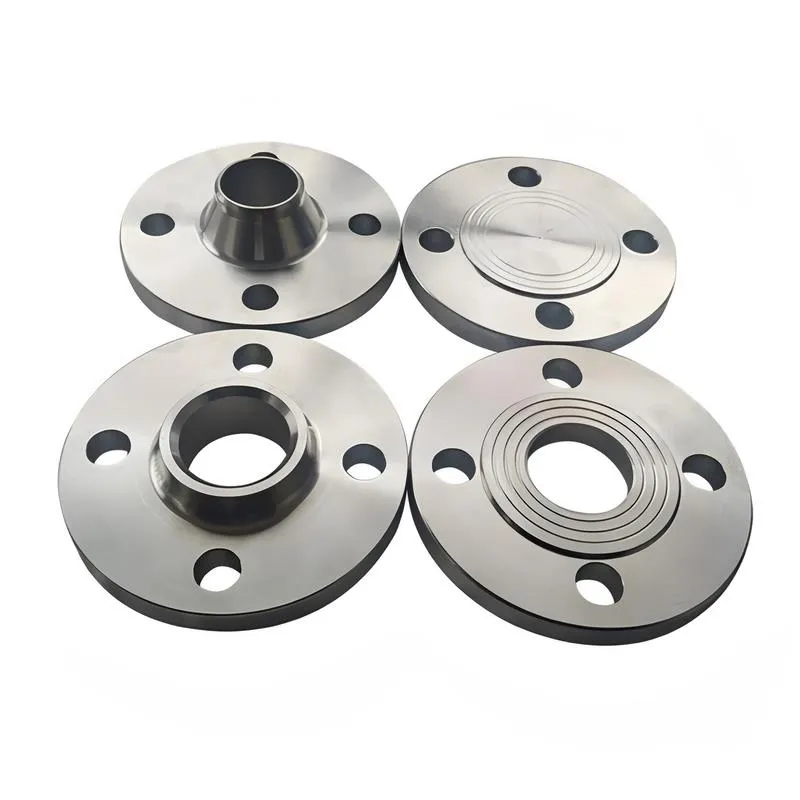
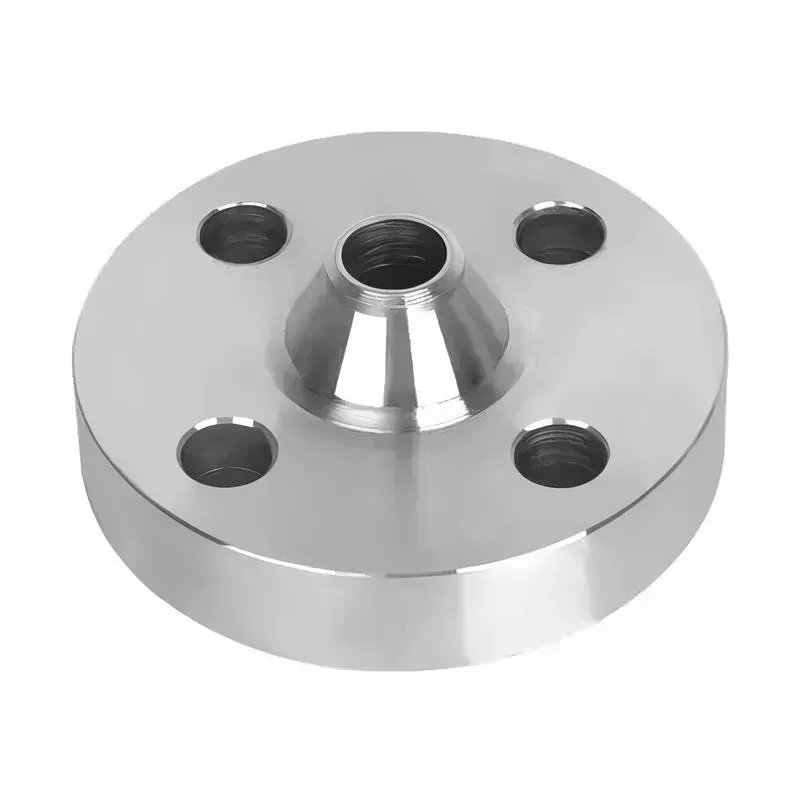
Plate Flat Welding Flange (PL), Necked Flat Welding Flange (SO), Necked Butt Welding Flange (WN), Integral Flange (IF), Socket Welding Flange (SW), Threaded Flange (Th), Butt Welding Ring Loose Flange (PJ/SE), Blind Flange (BL), Flat Welding Ring Loose Flange (PJ/PJ), and Lined Blind Flange (BL(s)).
2. **According to Petrochemical (SH) Industry Standards:** Flanges are classified as follows:
Threaded Flange (PL), Butt Welding Flange (WN), Flat Welding Flange (SO), Socket Welding Flange (SW), Loose Flange (LJ), and Blind Flange (no specific designation).
3. **According to Machinery (JB) Industry Standards:** Flanges are classified as follows:
Integral Flange, Butt Welding Flange, Plate Flat Welding Flange, Butt Welding Ring Plate Loose Flange, Flat Welding Ring Plate Loose Flange, Lap Joint Ring Plate Loose Flange, and Blind Flange.
4. **According to Connection Method/Type:** Flanges are classified as follows:
Plate Flat Welding Flange, Necked Flat Welding Flange, Necked Butt Welding Flange, Socket Welding Flange, Threaded Flange, Blind Flange, Necked Butt Welding Ring Loose Flange, Flat Welding Ring Loose Flange, Ring-Type Joint (RTJ) Flange and Blind Flange, Large-Diameter Plate Flange, Large-Diameter High-Neck Flange, Figure-8 Blind Plate, Butt Welding Ring Loose Flange, etc.
5. **According to the Component Being Connected:** Flanges can be classified into Vessel Flanges and Pipe Flanges.
6. **According to Structural Type:** Flanges include Integral Flanges, Threaded Flanges, Flat Welding Flanges, Butt Welding Flanges, Lap Joint (Loose/Swivel) Flanges, and Blind Flanges.
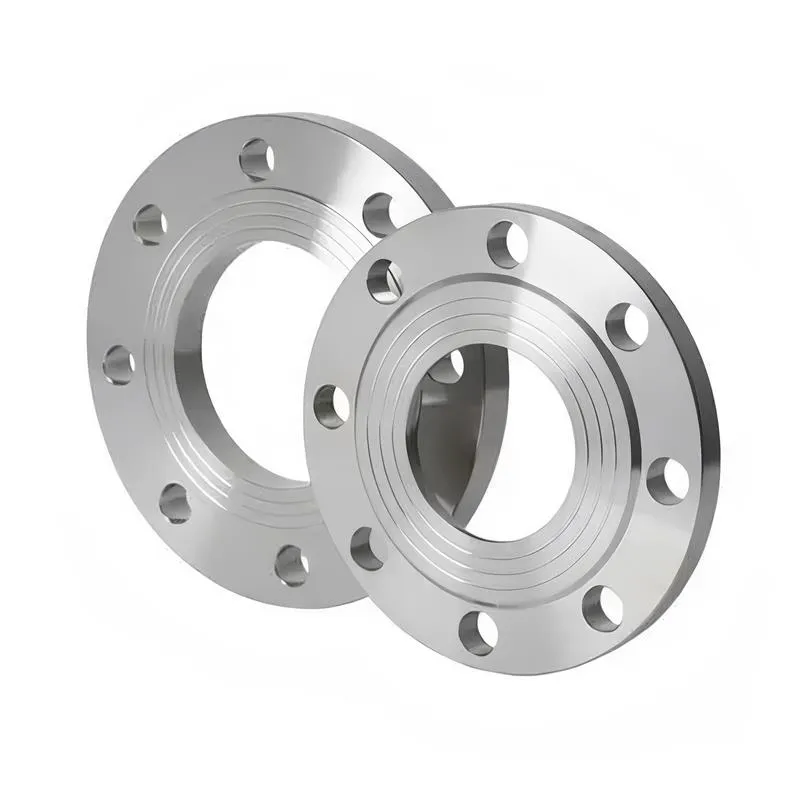
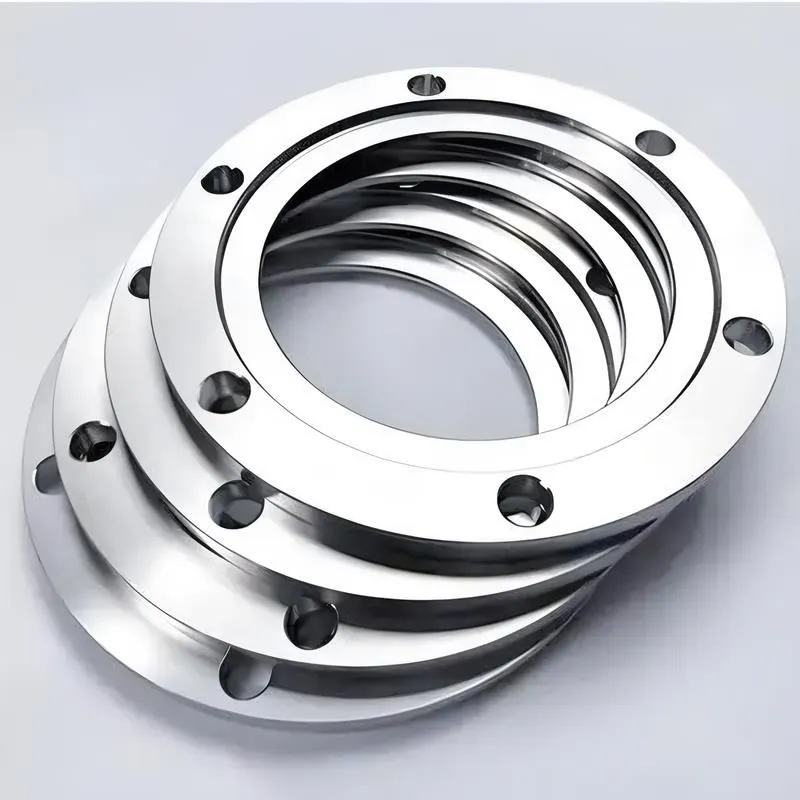
A flange—also referred to as a flange plate or rim—is a component used to connect shafts to one another, or, more commonly, to join the ends of pipes. Flanges are also utilized at the inlet and outlet ports of equipment to facilitate connections between two devices—for instance, the flange on a speed reducer. A "flange connection" or "flanged joint" refers to a detachable joint assembly comprising three interconnected elements—a flange, a gasket, and bolts—that together form a sealed structural unit. In the context of piping systems, a "pipe flange" specifically denotes a flange used for plumbing within the installation; when applied to equipment, it refers to the inlet or outlet flange of that specific device. Flanges feature a series of holes through which bolts are inserted to securely fasten the two flanges together, while a gasket placed between the flanges ensures a leak-proof seal. Flanges are broadly categorized into three types: threaded (screw-in) flanges, welded flanges, and clamp-type flanges. Flanges are invariably used in pairs; threaded flanges are suitable for low-pressure piping applications, whereas welded flanges are required for systems operating at pressures exceeding 4 kilograms per square centimeter. A sealing gasket is inserted between the two flange plates, which are then firmly secured using bolts. The thickness of a flange—as well as the specifications of the bolts used to fasten it—vary depending on the specific pressure rating required for the application. When connecting equipment such as water pumps or valves to piping systems, the corresponding connection points on these devices are often manufactured in the shape of a matching flange; this method of attachment is also referred to as a "flange connection." Generally, any connecting component that utilizes bolts to join and seal the perimeters of two flat surfaces—such as the joints in ventilation ducts—is termed a "flange"; such components may collectively be classified as "flange-type parts." However, since such a connection often constitutes merely a *portion* of a larger device—for instance, the interface between a flange and a water pump—it would be inappropriate to classify the entire water pump itself as a "flange-type part." Conversely, smaller components—such as valves—that feature such flanged interfaces may indeed be appropriately categorized as "flange-type parts."
-:-
For detailed product information, please contact sales.
-:
Schmolz + Bickenbach Holder Block Plastic Mold Steel Flange Product Information
-:-
For detailed product information, please contact sales.
-:
Schmolz + Bickenbach Holder Block Plastic Mold Steel Flange Synonyms
-:-
For detailed product information, please contact sales.
-:
Schmolz + Bickenbach Holder Block Plastic Mold Steel Product Information
-:-
For detailed product information, please contact sales.
-:
# **SCHMOLZ + BICKENBACH Holder Block Series | Specialized Plastic Mold Base Steels**
## **Overview**
The SCHMOLZ + BICKENBACH **Holder Block** series represents a family of pre-hardened, optimized mold base steels engineered specifically for the structural components of plastic injection molds. These steels prioritize **exceptional machinability, dimensional stability, and cost-effectiveness** in large cross-sections over the extreme polishability or wear resistance required for cavity steels. Developed to meet the demanding productivity requirements of mold making, the Holder Block grades enable faster machining, longer tool life, and reduced manufacturing costs for mold bases, plates, and support structures while providing the necessary mechanical integrity for mold operation.
## **Key Product Lines & Selection Guide**
| Grade Designation | Key Characteristic | Primary Application | Machinability vs. 1.2311 |
|-------------------|-------------------|---------------------|---------------------------|
| **Formadur® 2312 (Ultra Holder)** | Premium Free-Machining | High-precision mold bases, complex plates | **Superior (110-120%)** |
| **Formadur® X (Economy Holder)** | Cost-Optimized Free-Machining | Standard mold bases, large backing plates | **Excellent (105-115%)** |
| **Formadur® 2738 (Large Block)** | Enhanced Hardenability | Very large mold bases (>1000mm), heavy sections | **Good (90-100%)** |
---
## **Detailed Specifications**
### **1. Chemical Composition (wt%) - Comparative Analysis**
| Element | Formadur® 2312 | Formadur® X | Formadur® 2738 | Function in Holder Blocks |
|---------|----------------|-------------|----------------|---------------------------|
| **Carbon (C)** | 0.33-0.40 | 0.33-0.40 | 0.35-0.40 | Base strength |
| **Silicon (Si)** | ≤0.40 | ≤0.40 | ≤0.40 | Deoxidizer |
| **Manganese (Mn)** | 1.40-1.60 | 1.40-1.60 | 1.40-1.60 | Combines with S, hardenability |
| **Chromium (Cr)** | 1.80-2.00 | 1.60-1.90 | 1.80-2.10 | Hardenability, corrosion resistance |
| **Molybdenum (Mo)** | 0.15-0.25 | 0.15-0.25 | 0.15-0.30 | Hardenability, strength |
| **Nickel (Ni)** | - | - | 0.90-1.20 | **Key for thick-section hardening** |
| **Sulfur (S)** | **0.040-0.060** | **0.030-0.050** | ≤0.003 | **Free-machining agent** |
| **Phosphorus (P)** | ≤0.030 | ≤0.030 | ≤0.015 | Controlled for toughness |
**Composition Philosophy:**
- **Free-Machining Grades (2312 & X):** Controlled sulfur creates MnS inclusions that act as internal lubricants/chip breakers
- **Heavy Section Grade (2738):** Nickel addition ensures consistent hardness through large cross-sections (>1000mm)
- **Balanced Alloying:** Minimum necessary alloying for function to maximize cost-effectiveness
### **2. Physical & Mechanical Properties**
#### **Delivery Condition & Core Properties:**
| Property | Formadur® 2312 | Formadur® X | Formadur® 2738 | Test Standard |
|----------|----------------|-------------|----------------|---------------|
| **Delivery Hardness** | 290-330 HB (29-33 HRC) | 280-320 HB (28-32 HRC) | 290-330 HB (29-33 HRC) | DIN 50103 |
| **Tensile Strength** | 950-1050 MPa | 900-1000 MPa | 1000-1150 MPa | ISO 6892-1 |
| **0.2% Yield Strength** | 800-900 MPa | 750-850 MPa | 850-950 MPa | ISO 6892-1 |
| **Elongation A₅** | ≥12% | ≥12% | ≥14% | ISO 6892-1 |
| **Impact Toughness** | 25-35 J* | 25-35 J* | 40-60 J | ISO 148-1 |
| **Modulus of Elasticity** | ~210 GPa | ~210 GPa | ~210 GPa | ISO 6892-1 |
**\*Anisotropy Note:** Free-machining grades (2312 & X) exhibit directional properties. Impact values are longitudinal; transverse values are 40-60% lower.
#### **Through-Hardening Characteristics:**
| Grade | Maximum Section for Uniform Hardness | Maximum Achievable Hardness (If Hardened) |
|-------|--------------------------------------|------------------------------------------|
| 2312 | ~400mm | 52-54 HRC |
| X | ~400mm | 52-54 HRC |
| 2738 | **>1000mm** | 52-54 HRC |
### **3. Machining & Processing Performance**
#### **Machinability Comparison:**
| Operation | Formadur® 2312 | Formadur® X | Formadur® 2738 |
|-----------|----------------|-------------|----------------|
| **Turning Speed** | 120-180 m/min | 110-160 m/min | 90-130 m/min |
| **Milling Feed** | 0.20-0.35 mm/tooth | 0.18-0.30 mm/tooth | 0.15-0.25 mm/tooth |
| **Drilling Speed** | 60-100 m/min | 55-90 m/min | 45-75 m/min |
| **Tool Life Index** | 130-150% | 120-140% | 100% (baseline) |
| **Chip Formation** | Short, broken chips | Short, broken chips | Longer, continuous chips |
**Machining Recommendations:**
- **Tooling:** Carbide tools with positive rake geometry
- **Coolant:** Emulsion or oil-based for optimal tool life
- **Parameters:** Start at mid-range, optimize for specific operation
#### **Finishing Characteristics:**
| Surface Operation | Free-Machining Grades (2312/X) | 2738 Grade |
|-------------------|--------------------------------|------------|
| **Polishability** | Good (SPI B1/B2 max) | Very Good (SPI A2/B1 possible) |
| **EDM Performance** | Very Good | Excellent |
| **Texturing** | Suitable for medium textures | Suitable for fine textures |
| **Grinding** | Good | Excellent |
### **4. Thermal & Dimensional Properties**
| Property | All Holder Block Grades | Importance for Mold Bases |
|----------|------------------------|---------------------------|
| **Thermal Conductivity** | 36-38 W/m·K @ 20°C | Heat transfer from cavities |
| **Coefficient of Expansion** | 11.0-11.5 ×10⁻⁶/K (20-100°C) | Dimensional stability during cycles |
| **Specific Heat Capacity** | 460-480 J/kg·K | Thermal mass consideration |
| **Distortion during Machining** | Low to Moderate | Critical for plate flatness |
---
## **International Standards & Cross-References**
### **Primary Standard References:**
| International Standard | Formadur® 2312 | Formadur® X | Formadur® 2738 |
|-----------------------|----------------|-------------|----------------|
| **DIN/EN/W-Nr.** | 1.2312 | - | 1.2738 |
| **ISO 4957** | - | - | - |
| **AISI/ASTM** | P20+S | Modified P20 | P20+Ni (Modified) |
| **JIS G4404** | - | - | - |
| **GB/T 1299** | 3Cr2MoS* | 3Cr2MoS* | 3Cr2NiMo |
### **Competitor Equivalents:**
- **Uddeholm:** IMPAX® Hi-Hard (2312), IMPAX® Supreme (2738)
- **Böhler:** M238 (2312), M300 (2738)
- **ThyssenKrupp:** GS-312 (2312), GS-312M (2738)
- **Daido:** NAK 55 (similar concept)
---
## **Product Applications**
### **Primary Application Matrix:**
| Mold Component | Recommended Grade | Why This Grade? |
|----------------|-------------------|-----------------|
| **Standard Mold Base Sets (A/B Plates)** | Formadur® X | Optimal balance of cost and machinability |
| **Large, Complex Mold Bases (>800mm)** | Formadur® 2738 | Consistent hardness in thick sections |
| **High-Precision Base Plates** | Formadur® 2312 | Best machining precision and stability |
| **Backing/Support Plates** | Formadur® X | Cost-effective for non-critical surfaces |
| **Ejector Housing Plates** | Formadur® 2312 | Superior machinability for complex pockets |
| **Clamping Plates** | Formadur® X | Adequate strength, maximum cost efficiency |
| **Large Cavity Support Blocks** | Formadur® 2738 | Strength and stability under load |
### **Industry-Specific Applications:**
- **Automotive:** Large mold bases for bumper, dashboard, interior panels
- **Packaging:** Stack mold bases, thin-wall container molds
- **Electronics:** Precision base plates for connector molds
- **Medical:** Stable bases for high-cavitation molds
- **Consumer Goods:** Cost-effective bases for high-volume production
### **Limitations & Non-Recommended Uses:**
- **Cavity/Core Inserts:** Insufficient polishability and wear resistance
- **Hot Runner Components:** Inadequate thermal properties
- **High-Wear Applications:** Lacks necessary surface hardness
- **Corrosive Environments:** Limited corrosion resistance without treatment
---
## **Processing Guidelines**
### **Standard Workflow for Mold Base Manufacturing:**
1. **Material Selection:** Choose grade based on size, complexity, and budget
2. **Rough Machining:** Remove bulk material using aggressive parameters
3. **Stress Relieving (Optional):** 550-600°C for 2-4 hours for large/complex plates
4. **Semi-Finish Machining:** Establish critical datums and features
5. **Aging/Stabilization:** 24-48 hours at room temperature
6. **Finish Machining:** Achieve final dimensions and tolerances
7. **Fit & Assembly:** Machine guiding/locking features
### **Special Considerations:**
- **Flatness:** Allow for stress relief and multiple machining passes
- **Thread Quality:** Use proper taps and lubrication (MnS inclusions can affect thread quality in free-machining grades)
- **Welding:** Generally not recommended; if necessary, use strict procedures
- **Surface Treatment:** Nitriding possible but not typical for holder applications
---
## **Quality & Supply Specifications**
### **Standard Delivery Forms:**
- **Blocks:** Up to 3000mm length, various cross-sections
- **Plates:** Precision ground or rough sawn surfaces
- **Special Shapes:** Custom forged or machined near-net shapes
### **Quality Assurance:**
- **Ultrasonic Testing:** Standard for larger sections (>200mm)
- **Hardness Testing:** Multiple points, full cross-section mapping available
- **Chemical Certification:** EN 10204 3.1 material certificates
- **Dimensional Reports:** Machined-to-print capabilities
### **Surface Conditions Available:**
1. **Black (as-forged/rolled):** Most economical
2. **Rough Machined:** Removed scale, closer to final dimensions
3. **Precision Ground:** Ready for final machining, premium option
---
## **Economic Advantages**
### **Total Cost of Ownership Analysis:**
| Cost Factor | Holder Block vs. Cavity Steel |
|-------------|-------------------------------|
| **Material Cost** | 40-60% lower than premium cavity steels |
| **Machining Time** | 20-40% faster due to free-machining properties |
| **Tooling Cost** | 30-50% longer tool life |
| **Scrap Rate** | Lower due to easier machining control |
| **Lead Time** | Shorter due to pre-hardened state |
### **ROI Considerations:**
- **Large Mold Bases:** Highest savings potential (>€5,000 per base)
- **High-Machining Content:** Optimal for complex pocketing operations
- **Production Molds:** Justified by reduced manufacturing time
- **Prototype Molds:** Faster turnaround with adequate performance
---
**Disclaimer:** The information provided is for general reference based on typical SCHMOLZ + BICKENBACH Holder Block steel properties. Specific applications may require consultation with technical experts. Properties can vary within specified ranges and are influenced by processing conditions, section size, and heat treatment. Always refer to the latest manufacturer specifications and conduct appropriate testing for critical applications. The selection of mold steel should be based on comprehensive analysis of application requirements, including production volume, plastic material, part geometry, and surface finish requirements.
-:-
For detailed product information, please contact sales.
-:
Schmolz + Bickenbach Holder Block Plastic Mold Steel Specification
Dimensions
Size:
Diameter 20-1000 mm Length <7121 mm
Size:We can customized as required
Standard:
Per your request or drawing
We can customized as required
Properties(Theoretical)
Chemical Composition
-:-
For detailed product information, please contact sales.
-:
Schmolz + Bickenbach Holder Block Plastic Mold Steel Properties
-:-
For detailed product information, please contact sales.
-:
Applications of Schmolz + Bickenbach Holder Block Plastic Mold Steel Flange
-:-
For detailed product information, please contact sales.
-:
Chemical Identifiers Schmolz + Bickenbach Holder Block Plastic Mold Steel Flange
-:-
For detailed product information, please contact sales.
-:
Packing of Schmolz + Bickenbach Holder Block Plastic Mold Steel Flange
-:-
For detailed product information, please contact sales.
-:
Standard Packing:
-:-
For detailed product information, please contact sales.
-:
Typical bulk packaging includes palletized plastic 5 gallon/25 kg. pails, fiber and Steel Flange drums to 1 ton super sacks in full container (FCL) or truck load (T/L) quantities. Research and sample quantities and hygroscopic, oxidizing or other air sensitive materials may be packaged under argon or vacuum. Solutions are packaged in polypropylene, plastic or glass jars up to palletized 3592 gallon liquid totes Special package is available on request. E FORUs’ is carefully handled to minimize damage during storage and transportation and to preserve the quality of our products in their original condition