1,We Manufacturing processes are primarily classified into four types:
1:Forging,
2:Casting,
3:Cutting,
4:Rolling.
2,We can manufacture in accordance with these standards.
Standards:
GB Series (Chinese Standards), JB Series (Machinery Standards), HG Series (Chemical Industry Standards), ASME B16.5 (American Standards), BS4504 (British Standards), DIN (German Standards), and JIS (Japanese Standards).
Internationally, there are two primary systems of pipe flange standards: the European system, represented by the German DIN standards (including those of the former Soviet Union), and the American system, represented by the US ANSI pipe flange standards. Other common standards include: the Chinese Ministry of Machinery Industry standards (JB series), the Ministry of Chemical Industry standards (HG series), the Chinese National Standard *GB/T 9112–9124-2010 Steel Pipe Flanges*, as well as US standards (ASME B16.5), British standards (BS4504), German standards (DIN), Japanese standards (JIS), and marine standards (CBM), among others.
The nominal pressure ratings for the PN series are designated by "PN" and comprise the following nine levels: PN2.5, PN6, PN10, PN16, PN25, PN40, PN63, PN100, and PN160.
The nominal pressure ratings for the Class series are designated by "Class" and comprise the following six levels: Class150, Class300, Class600, Class900, Class1500, and Class2500.
Flange Classification
1. **According to Chemical Industry Standards:** Flanges are classified as follows:
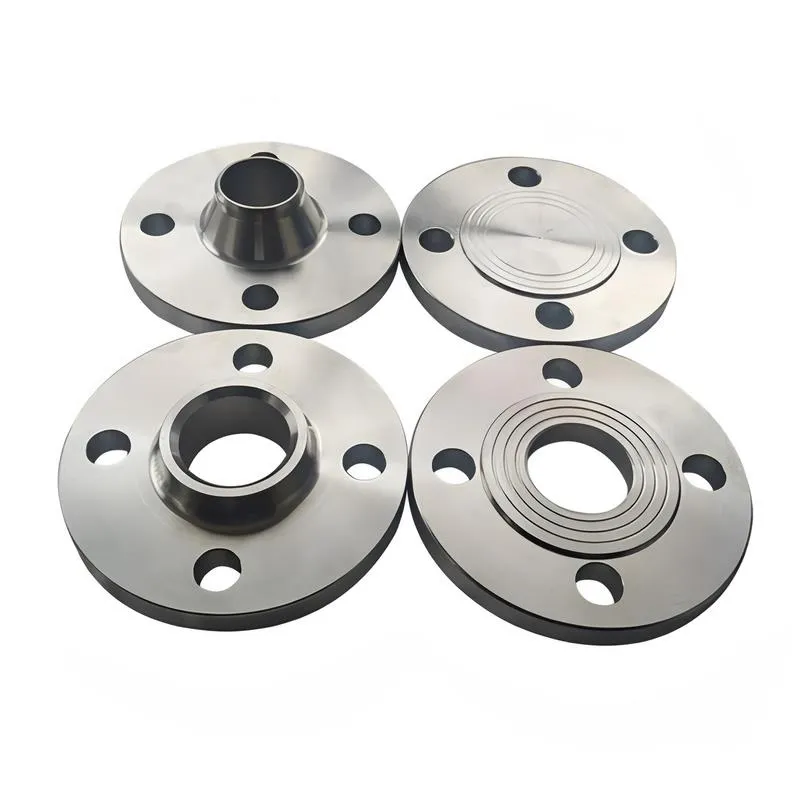
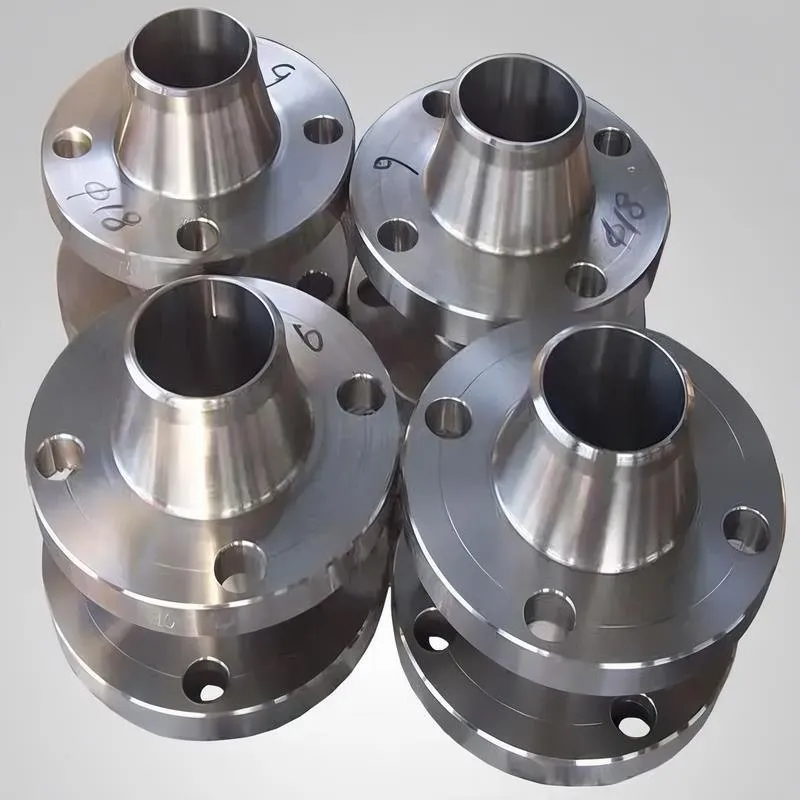
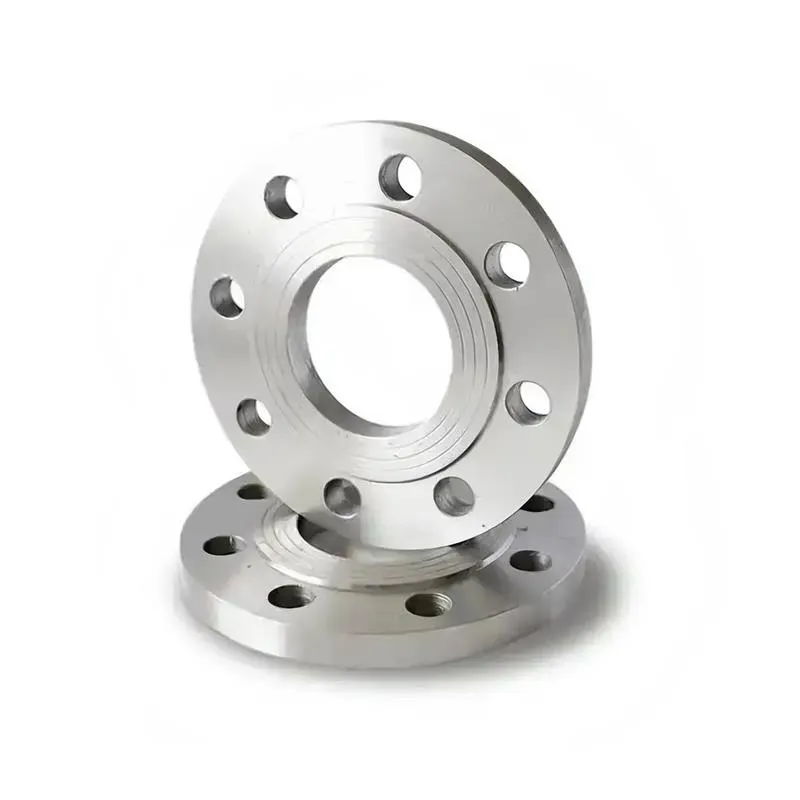
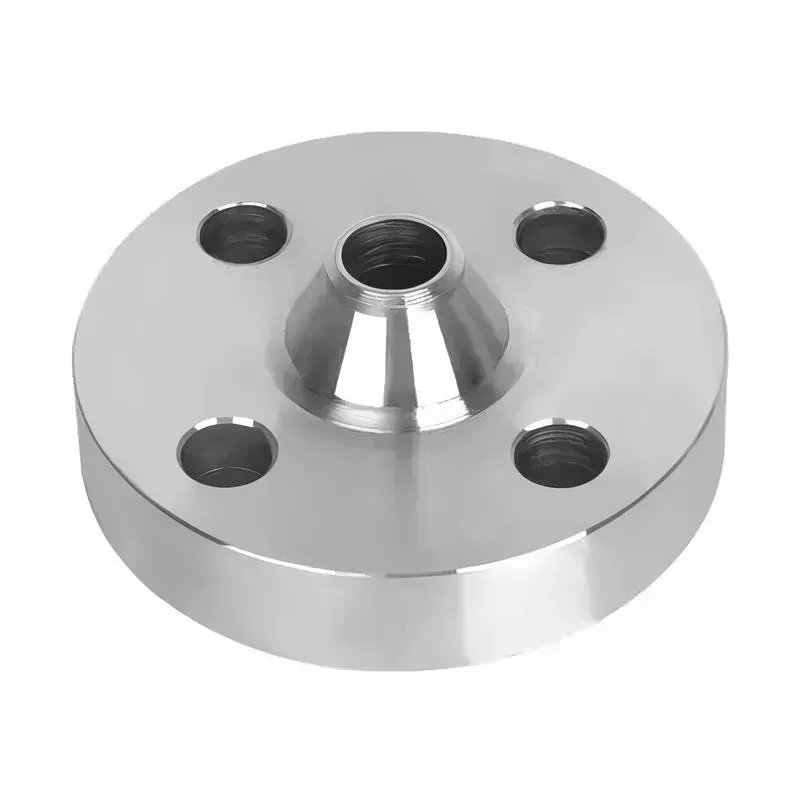
Plate Flat Welding Flange (PL), Necked Flat Welding Flange (SO), Necked Butt Welding Flange (WN), Integral Flange (IF), Socket Welding Flange (SW), Threaded Flange (Th), Butt Welding Ring Loose Flange (PJ/SE), Blind Flange (BL), Flat Welding Ring Loose Flange (PJ/PJ), and Lined Blind Flange (BL(s)).
2. **According to Petrochemical (SH) Industry Standards:** Flanges are classified as follows:
Threaded Flange (PL), Butt Welding Flange (WN), Flat Welding Flange (SO), Socket Welding Flange (SW), Loose Flange (LJ), and Blind Flange (no specific designation).
3. **According to Machinery (JB) Industry Standards:** Flanges are classified as follows:
Integral Flange, Butt Welding Flange, Plate Flat Welding Flange, Butt Welding Ring Plate Loose Flange, Flat Welding Ring Plate Loose Flange, Lap Joint Ring Plate Loose Flange, and Blind Flange.
4. **According to Connection Method/Type:** Flanges are classified as follows:
Plate Flat Welding Flange, Necked Flat Welding Flange, Necked Butt Welding Flange, Socket Welding Flange, Threaded Flange, Blind Flange, Necked Butt Welding Ring Loose Flange, Flat Welding Ring Loose Flange, Ring-Type Joint (RTJ) Flange and Blind Flange, Large-Diameter Plate Flange, Large-Diameter High-Neck Flange, Figure-8 Blind Plate, Butt Welding Ring Loose Flange, etc.
5. **According to the Component Being Connected:** Flanges can be classified into Vessel Flanges and Pipe Flanges.
6. **According to Structural Type:** Flanges include Integral Flanges, Threaded Flanges, Flat Welding Flanges, Butt Welding Flanges, Lap Joint (Loose/Swivel) Flanges, and Blind Flanges.
A flange—also referred to as a flange plate or rim—is a component used to connect shafts to one another, or, more commonly, to join the ends of pipes. Flanges are also utilized at the inlet and outlet ports of equipment to facilitate connections between two devices—for instance, the flange on a speed reducer. A "flange connection" or "flanged joint" refers to a detachable joint assembly comprising three interconnected elements—a flange, a gasket, and bolts—that together form a sealed structural unit. In the context of piping systems, a "pipe flange" specifically denotes a flange used for plumbing within the installation; when applied to equipment, it refers to the inlet or outlet flange of that specific device. Flanges feature a series of holes through which bolts are inserted to securely fasten the two flanges together, while a gasket placed between the flanges ensures a leak-proof seal. Flanges are broadly categorized into three types: threaded (screw-in) flanges, welded flanges, and clamp-type flanges. Flanges are invariably used in pairs; threaded flanges are suitable for low-pressure piping applications, whereas welded flanges are required for systems operating at pressures exceeding 4 kilograms per square centimeter. A sealing gasket is inserted between the two flange plates, which are then firmly secured using bolts. The thickness of a flange—as well as the specifications of the bolts used to fasten it—vary depending on the specific pressure rating required for the application. When connecting equipment such as water pumps or valves to piping systems, the corresponding connection points on these devices are often manufactured in the shape of a matching flange; this method of attachment is also referred to as a "flange connection." Generally, any connecting component that utilizes bolts to join and seal the perimeters of two flat surfaces—such as the joints in ventilation ducts—is termed a "flange"; such components may collectively be classified as "flange-type parts." However, since such a connection often constitutes merely a *portion* of a larger device—for instance, the interface between a flange and a water pump—it would be inappropriate to classify the entire water pump itself as a "flange-type part." Conversely, smaller components—such as valves—that feature such flanged interfaces may indeed be appropriately categorized as "flange-type parts."
-:-
For detailed product information, please contact sales.
-:
Malleable Iron Flange casting, Class M8501 liquid quenched and tempered Product Information
-:-
For detailed product information, please contact sales.
-:
Malleable Iron Flange casting, Class M8501 liquid quenched and tempered Synonyms
-:-
For detailed product information, please contact sales.
-:
Malleable iron casting, Class M8501 liquid quenched and tempered Product Information
-:-
For detailed product information, please contact sales.
-:
## **Malleable Iron Casting - Class M8501 Liquid Quenched & Tempered**
### **1. Overview**
**Class M8501 Liquid Quenched & Tempered** represents the **absolute pinnacle of standardized malleable iron technology**, achieving **minimum tensile strength of 850 MPa (123,300 psi)** with **1% minimum elongation**. This grade operates at the extreme boundary where cast iron properties overlap with those of high-strength alloy steels. Through **sophisticated multi-alloy chemistry** and **precision-controlled liquid quenching and tempering processes**, M8501 delivers an unparalleled combination of **ultra-high strength, exceptional wear resistance, and retained castability**. It is engineered for the most demanding applications where component failure is not an option and where its unique property profile provides a critical advantage over forged or machined alternatives.
---
### **2. International Standards & Specifications**
**Primary Standard References:**
* **ASTM A220/A220M** - *Standard Specification for Pearlitic Malleable Iron Castings*. Class M8501 performance targets the uppermost limits of this specification, often requiring **supplemental customer-specific requirements**.
* **ASTM A602** - *Automotive Malleable Iron Castings*.
* **ISO 5922** - *Malleable cast irons - Classification*. While the standard nominally lists JMB 800 as the highest grade, M8501 is recognized as an **extended capability variant**.
**International Performance Equivalents & Market Designations:**
| Standard / Market | Common Designation | Status / Notes |
| :--- | :--- | :--- |
| **ISO 5922 (Extended)** | **JMB 850-1** | De facto industry designation for this performance level |
| **EN 1562** | EN-GJMB-800-2 / Proprietary | Often supplied under OEM-specific material codes |
| **JIS G 5705** | Special Grade FCMB 850 | Japanese special application grade |
| **GB/T 9440** | Special JMB 850 | Chinese special performance classification |
| **Major Automotive OEMs** | Various Proprietary Codes (e.g., GM xxx, Ford WHT-xxx) | Specified in confidential engineering material standards |
**Process Criticality:** The **"Liquid Quenched & Tempered"** designation is non-negotiable and implies a rigorously defined protocol, often involving:
* **Quench Media:** High-speed oil, specialized polymer, or direct water spray for maximum cooling rate.
* **Process Control:** Real-time monitoring of quenchant temperature, agitation, and cooling curves.
* **Tempering Regime:** Multi-stage tempering with precise temperature-time profiles to optimize the strength-toughness balance.
---
### **3. Chemical Composition**
Achieving Class M8501 properties requires a **highly engineered, multi-alloy system** with extremely tight compositional control to ensure sufficient hardenability for full martensitic transformation and to resist tempering during the high-temperature draw.
**Typical Composition Ranges (Weight %):**
| Element | Target Range | Metallurgical Function & Rationale |
| :--- | :--- | :--- |
| **Carbon (C)** | 2.70 – 3.00 | **Maximum usable carbon for iron.** Provides the primary basis for martensite hardness and secondary carbide formation during tempering. |
| **Silicon (Si)** | 1.90 – 2.40 | **Potent solid solution strengthener.** Raises the Ac1 temperature, allowing higher tempering temperatures without softening. Critical for graphitization control. |
| **Manganese (Mn)** | **1.40 – 2.00** | **Fundamental hardenability driver.** Must be high to ensure through-hardening of substantial sections in a severe quench. |
| **Chromium (Cr)** | **0.50 – 1.00** | **Key secondary hardener.** Forms stable (Cr,Fe)₇C₃ and (Cr,Fe)₂₃C₆ carbides during tempering, providing **secondary hardening peak** and exceptional wear resistance. |
| **Molybdenum (Mo)** | **0.30 – 0.60** | **Essential for heavy sections and tempering resistance.** Suppresses temper embrittlement, allows high tempering temperatures for toughness, and significantly boosts hardenability. |
| **Nickel (Ni)** | **0.50 – 1.00** | **Critical toughness enhancer.** Improves fracture toughness and Charpy impact values at this ultra-high strength level without forming harmful carbides. |
| **Vanadium (V)** | **0.15 – 0.30** | **Grain refiner and potent hardener.** Forms fine, stable V₄C₃ carbides that pin austenite grain boundaries and contribute to precipitation hardening. |
| **Copper (Cu)** | 0.50 – 1.00 | Aids hardenability and can improve atmospheric corrosion resistance. |
| **Boron (B)** | 0.002 – 0.005 (Trace) | **Powerful hardenability multiplier.** Dramatically increases the effectiveness of other alloying elements, allowing leaner overall chemistry. |
| **Phosphorus (P)** | ≤ 0.04 | **Ultra-low limit.** Essential to minimize intergranular embrittlement. |
| **Sulfur (S)** | ≤ 0.04 | **Ultra-low limit.** Improves transverse ductility and fracture toughness. |
**Alloy Design Philosophy for M8501:**
* **Total Alloy Content (excluding C, Si):** Typically > 4.0%.
* **Hardenability Target:** Ideal Critical Diameter (Dᵢ) > 8 inches for water/oil quenching, ensuring through-hardening in production-relevant sections.
* **Secondary Hardening Focus:** Chemistry is optimized to maximize the **secondary hardening peak** during high-temperature tempering (450-550°C), where strength can actually *increase* due to the precipitation of alloy carbides.
* **Tramp Element Control:** Strict limits on elements like Sn, Sb, As, and Pb (<0.020% each) to prevent temper embrittlement.
---
### **4. Physical & Mechanical Properties**
**Minimum Guaranteed Properties (Typical Purchase Specification):**
| Property | Minimum Requirement | Typical / Achievable Range |
| :--- | :--- | :--- |
| **Tensile Strength** | 850 MPa (123,300 psi) | 850 – 1000 MPa |
| **Yield Strength (0.2% offset)** | 550 MPa (79,800 psi) | 550 – 700 MPa |
| **Elongation** | 1% | 1 – 3% |
| **Reduction of Area** | 5% | 5 – 12% |
| **Brinell Hardness** | 302 – 375 HB | 321 – 363 HB |
**Comprehensive Property Profile:**
* **Strength:** Operates in the same range as quenched and tempered medium-carbon alloy steels (e.g., 4340, 4140 at high strength levels). The high silicon content provides exceptional **tempering resistance**, allowing high tempering temperatures for toughness while retaining strength.
* **Ductility/Toughness:** The 1% elongation is a **minimum** engineering safety margin. Charpy V-notch values are low (typically 5-10 J at room temperature) but sufficient for well-designed components in **controlled loading** environments. **Fracture toughness (K₁c)** is a critical design parameter.
* **Fatigue Strength:** **Exceptional.** Fine tempered martensite with secondary carbides provides very high fatigue limits, often 40-50% of tensile strength. Surface compressive stresses from quenching further enhance fatigue performance.
* **Wear Resistance:** **Outstanding.** The combination of high matrix hardness and a high volume fraction of hard, alloy carbides (Cr, Mo, V) provides wear resistance surpassing many tool steels in abrasive/ adhesive wear scenarios.
* **Damping Capacity:** Maintains a significant advantage over steel (2-4x better), beneficial in reducing noise and vibration in dynamic systems.
---
### **5. Liquid Quenching & Tempering Process**
The heat treatment is the **defining and most critical** manufacturing step for M8501, requiring state-of-the-art equipment and control.
**1. Austenitization:**
* **Temperature:** 870 – 900°C. Precise control is vital to dissolve sufficient carbon and alloying elements into austenite without excessive grain growth.
* **Atmosphere:** Protective (endothermic gas) to prevent decarburization and oxidation, which would be catastrophic for surface properties.
* **Soak Time:** Calculated based on section size to ensure complete homogenization.
**2. Severe Liquid Quenching:**
* **Objective:** Achieve > 95% martensite at the core of the design section.
* **Media:** **High-speed quenching oil** (e.g., fast cool rates) or **polymer quenchants** are standard. For simpler shapes, **water or brine quenching** may be specified for maximum cooling rate, with extreme care to avoid cracking.
* **Agitation:** High-pressure, turbulent flow to break down vapor blanket and ensure uniform, rapid heat extraction.
* **Cracking Risk Mitigation:** This is the highest risk step. Designs must avoid sharp corners, severe section changes, and internal stresses from casting.
**3. Multi-Stage Tempering (Critical for M8501):**
* **First Temper (Low-Temperature):** ~200°C. Relieves quenching stresses, begins transformation of retained austenite, initiates tempering of martensite.
* **Second Temper (High-Temperature / Secondary Hardening):** 450 – 550°C. **This is the key stage.** The alloying elements (Cr, Mo, V) precipitate as fine, coherent carbides. This **secondary hardening** can cause a slight *increase* in hardness/strength, allowing the use of high tempering temperatures to achieve toughness while maintaining ultra-high strength.
* **Third Temper (Stress Relief):** ~300°C. Final stress equalization and stabilization.
* **Cryogenic Treatment (Optional):** After quenching, a treatment at -80°C to -120°C may be used to transform virtually all retained austenite to martensite, maximizing dimensional stability and hardness before tempering.
**Final Microstructure:** A matrix of **very fine tempered martensite**, densely populated with **nanoscale alloy carbides**, and uniformly dispersed **temper carbon aggregates**.
---
### **6. Product Applications**
Class M8501 is reserved for **extreme-performance, safety-critical components** where its high cost and processing complexity are justified by unparalleled performance or by enabling a design impossible with other materials.
**Automotive & Heavy Truck (Racing & Ultra Heavy-Duty):**
* **Monster Truck & Top Fuel Dragster Axle Housings & Hubs**
* **High-Performance Racing** (NASCAR, F1) **suspension uprights, wheel hubs, and drive flanges.**
* **Military & Armored Vehicle** drive train components, suspension links, and weapon mounts subject to ballistic shock.
* **Heavy Mining Truck** (e.g., 400-ton capacity) **wheel hubs, kingpins, and final drive gear blanks.**
**Industrial & Heavy Machinery:**
* **Oil & Gas:** **Drill bit cones**, high-pressure fracking pump **fluid end components**, Christmas tree valve bodies for ultra-deep wells.
* **Mining & Mineral Processing:** **Crusher jaw plates**, hammer mill hammers, grinding mill liners for the most abrasive ores.
* **Power Generation:** Critical components in **steam and gas turbine control systems**, heavy-duty pump shafts.
* **Metal Forming:** **Die casting machine shot end components** (gooseneck, plunger tip), high-wear guides and wear plates in rolling mills.
**Specialized & Defense:**
* **Aerospace Ground Support Equipment:** Landing gear test fixtures, aircraft tow bars for largest aircraft.
* **Ballistic Applications:** Components within **armor systems** requiring high hardness and multi-hit capability.
* **High-Security Hardware:** **Vault lock bolts, safe hinges,** and other breach-resistant components.
---
### **7. Advantages and Limitations**
**Advantages:**
* **Unmatched Strength in a Cast Form:** Enables the production of complex, high-strength components that would be prohibitively expensive or impossible to forge and machine.
* **Superior Wear & Abrasion Resistance:** The alloy carbide structure provides exceptional service life in severe wear environments.
* **Excellent Strength-to-Weight Ratio:** Stronger than many steels at a lower density.
* **Design Freedom:** Net-shape or near-net-shape casting of intricate geometries.
* **Material Damping:** Inherent vibration damping reduces noise and can improve fatigue life in assemblies.
**Limitations & Critical Considerations:**
* **Extreme Cost:** High alloy costs, stringent foundry requirements, and complex heat treatment make it a **premium material**.
* **Limited Ductility & Toughness:** **Brittle material behavior.** Design must avoid stress concentrators (sharp corners, notches). **Fracture mechanics** (flaw tolerance) is a primary design criterion, not just yield strength.
* **High Sensitivity to Defects:** Inclusions, micro-shrinkage, or surface defects that would be tolerable in a ductile material can be initiation points for catastrophic failure.
* **Quenching Cracking Risk:** The severe thermal gradients during quenching make the process unforgiving. Part design and process control are paramount.
* **Machining Difficulty:** Requires carbide or ceramic tooling, slow speeds, and high power. Grinding is often necessary for final dimensions.
* **Weldability:** **Essentially non-weldable.** Components cannot be repaired or modified by welding.
* **Limited Global Supply:** Very few foundries worldwide possess the capability and certification to produce this grade reliably.
---
### **8. Conclusion**
**Class M8501 Liquid Quenched & Tempered Malleable Iron** is not a general-purpose engineering material; it is a **specialized, high-performance solution** for the most challenging applications. It represents the culmination of cast iron metallurgy, pushing the boundaries of strength while retaining the unique manufacturing advantages of casting.
Its successful implementation demands a **holistic approach**:
* **Collaborative Design:** Early involvement of metallurgists and foundry engineers is essential to design for castability, quenchability, and brittle fracture resistance.
* **Rigorous Quality Assurance:** 100% non-destructive testing (ultrasonic, magnetic particle) is often mandatory. Statistical process control is critical.
* **Total Cost Justification:** The high unit cost must be justified by performance, system cost savings, or enabling a revolutionary design.
For engineers facing problems where **extreme strength, complex geometry, and severe wear** intersect, and where traditional steel fabrication reaches its economic or technical limits, **Class M8501 offers a viable and powerful alternative**. It stands as a testament to the ongoing evolution and relevance of advanced cast iron in the 21st-century engineering landscape.
-:-
For detailed product information, please contact sales.
-:
Malleable iron casting, Class M8501 liquid quenched and tempered Specification
Dimensions
Size:
Diameter 20-1000 mm Length <6589 mm
Size:We can customized as required
Standard:
Per your request or drawing
We can customized as required
Properties(Theoretical)
Chemical Composition
-:-
For detailed product information, please contact sales.
-:
Malleable iron casting, Class M8501 liquid quenched and tempered Properties
-:-
For detailed product information, please contact sales.
-:
Applications of Malleable Iron Flange casting, Class M8501 liquid quenched and tempered
-:-
For detailed product information, please contact sales.
-:
Chemical Identifiers Malleable Iron Flange casting, Class M8501 liquid quenched and tempered
-:-
For detailed product information, please contact sales.
-:
Packing of Malleable Iron Flange casting, Class M8501 liquid quenched and tempered
-:-
For detailed product information, please contact sales.
-:
Standard Packing:
-:-
For detailed product information, please contact sales.
-:
Typical bulk packaging includes palletized plastic 5 gallon/25 kg. pails, fiber and Steel Flange drums to 1 ton super sacks in full container (FCL) or truck load (T/L) quantities. Research and sample quantities and hygroscopic, oxidizing or other air sensitive materials may be packaged under argon or vacuum. Solutions are packaged in polypropylene, plastic or glass jars up to palletized 3060 gallon liquid totes Special package is available on request. E FORUs’ is carefully handled to minimize damage during storage and transportation and to preserve the quality of our products in their original condition